

Product
-
Weather station
-
Road Weather Station
-
Photovoltaic Inspection
-
Atmospheric monitoring
-
Operating condition monitoring
Recommended article
- Meteorological observation station Suitable for High-Precision Meteorological Monitoring Across Diverse Field Scenarios
- photovoltaic testers is designed for high-precision testing at large-scale photovoltaic (PV) power plants
- Meteorological observation station Field High-Precision Monitoring: Applications and Performance Advantages
- Power Quality Analyzers Precise Detection of Various Power Quality Issues in the Grid
- Mobile Monitoring Applications and Performance Advantages of Vehicle-Mounted Five-Parameter Meteorological Equipment
- Power Quality Monitoring Equipment Enables Precise Real-Time Monitoring of Multi-Dimensional Power Grid Parameters
Contact us
Shandong Fengtu IOT Technology Co., Ltd
Sales Manager:Ms. Emily Wang
Cel,Whatsapp,Wechat:+86 15898932201
Email:info@fengtutec.com
Add:No. 155 Optoelectronic Industry Accelerator, Gaoxin District, Weifang, Shandong, China
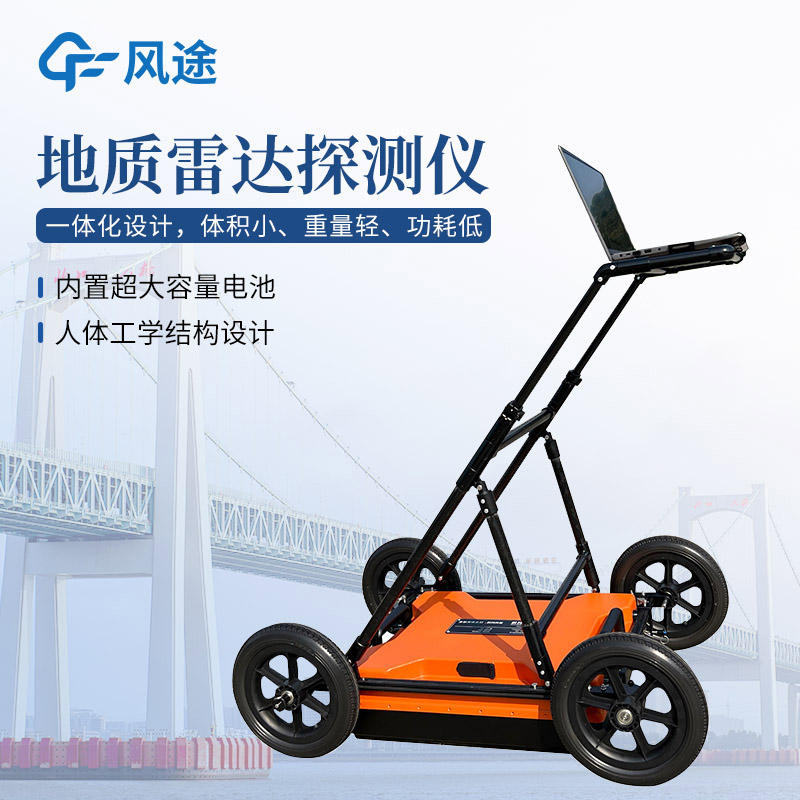
Ground Penetrating Radar for Detecting Roadway Surrounding Rock Loose Zone
Article source:Weather station time:2025-07-29 09:17:28 viewed:517times
In underground engineering construction, the stability of roadway surrounding rock is related to construction safety and project service life. After roadway excavation, the original rock stress balance is broken, and a certain range of loose areas will form inside the surrounding rock, namely the surrounding rock loose zone. The rock mass structure in this area is fragmented, with reduced strength, which is prone to geological disasters such as collapse and spalling. Therefore, construction parties need to accurately detect the scope and characteristics of the loose zone.
Ground Penetrating Radar realizes the detection of the loose zone based on the principle of electromagnetic wave propagation. The core principle is to use the differences in propagation speed and reflection intensity of high-frequency electromagnetic waves in different media to judge the changes in rock mass structure. When electromagnetic waves are transmitted from the transmitting antenna into the surrounding rock, they will be reflected when encountering the interface between the loose zone and the intact rock mass. After the receiving antenna captures the reflected signal, it is processed to form a radar image.
Due to the high degree of fragmentation and developed fractures, the rock mass in the loose zone has obvious differences in dielectric constant from the intact rock mass. This causes changes in speed and energy attenuation when electromagnetic waves propagate in this area. These characteristics will form specific reflected waveforms in the radar image. By analyzing these waveform characteristics and combining with geological data, the boundary position and scope of the loose zone can be determined. Areas with strong reflected wave energy and disordered waveforms usually correspond to the scope of the loose zone, while the reflected signals in the intact rock mass area are relatively stable and continuous.
Ground Penetrating Radar has the advantages of non-destructiveness, high efficiency and high resolution, and has become one of the main means for detecting the loose zone of roadway surrounding rock, providing reliable technical support for the safe construction of underground engineering.
This paper addresses:https://www.fengtuweather.com/industry/756.html
Related products
Related article
-
Dust Monitoring Equipment: Real-Time Monitoring Solution for Fugitive Dust Pollution Management
2025-09-11 -
What Weather Station Models Are Worth Recommending?
2025-03-04 -
Negative Oxygen Ion Monitoring Station: An Automated Solution for 24/7 Air Cleanliness Monitoring in Scenic Areas
2025-09-01 -
Scenic Weather Station: Empowering Tourism with Meteorological Resources
2024-09-26 -
The Working Principle and Application of Particulate Monitor in Pollution Prevention
2024-12-10 -
The All - in - One Grassland Ecological Monitoring Station (FT - CQX9)
2025-01-23 -
Detecting Deep - Buried Non - Metallic Pipelines with Ground Penetrating Radar
2025-03-05 -
Forestry Weather Stations: Building a Multi-Dimensional Fire Prevention Barrier for Forests via "Technological Prevention + Human Prevention"
2025-07-22