

Product
-
Weather station
-
Road Weather Station
-
Photovoltaic Inspection
-
Atmospheric monitoring
-
Operating condition monitoring
Recommended article
- Electrical Power Analyzer enables multi-channel power grid parameter acquisition and the detection of harmonics and unbalance
- Shandong Fengtu, a manufacturer of meteorological stations, offers high-precision weather observation equipment designed for field use
- Series power supply for EL-Based Internal Defect Detection in Photovoltaic Modules
- Shandong Fengtu, a manufacturer of meteorological monitoring instruments, produces advanced weather observation equipment
- Odor gas detector On-site Monitoring of Odorous Pollutants in Compliance with the GB14554 Standard
- Integrated Four-Parameter Weather Station for Field Meteorological Data Collection (Temperature, Humidity, Wind Speed, and Wind Direction)
Contact us
Shandong Fengtu IOT Technology Co., Ltd
Sales Manager:Ms. Emily Wang
Cel,Whatsapp,Wechat:+86 15898932201
Email:info@fengtutec.com
Add:No. 155 Optoelectronic Industry Accelerator, Gaoxin District, Weifang, Shandong, China
FT-SW2: An River Level Monitoring Station
Article source:Weather station time:2025-11-06 09:17:37 viewed:709times
In fields such as water resources and hydrology, urban drainage, environmental monitoring, and industrial production, the continuous and accurate monitoring of water level and flow in rivers, channels, and pipelines is a fundamental task. Traditional water level measurement often relies on manual gauge readings or float-type water level gauges, while flow measurement typically uses current meter methods or constructed measuring structures. These methods generally suffer from limitations such as low efficiency, poor continuity, susceptibility to environmental influences, or high construction costs. With the rapid development of modern sensing technology, microprocessor technology, and communication technology, integrated monitoring systems that combine measurement principles with intelligent data processing have gradually become the mainstream choice in the industry. The FT-SW2 River Level Monitoring Station is a representative product designed to meet the demands of high precision, high reliability, and remote monitoring.
The FT-SW2 is an automated monitoring system that integrates both water level and flow measurement functions. Its measurement principle is based on non-contact radar wave (microwave) technology. The system emits a specific frequency of electromagnetic wave towards the water surface and receives the reflected wave, analyzing two physical changes in the radar wave to obtain data:
It uses the time difference of the radar wave's round trip to the water surface, calculating the precise instantaneous water level based on the wave speed and time.
Based on the Doppler effect, it analyzes the frequency change of the reflected wave compared to the transmitted wave to calculate the surface velocity of the water body.
This non-contact radar measurement method completely avoids the issues of sensor damage or data inaccuracy common in traditional contact sensors, which can be caused by water corrosion, sediment siltation, or debris entanglement.
Compared to ultrasonic technology, radar waves are far less affected by environmental factors such as air temperature, humidity, pressure, and wind speed during propagation. There is no need for sound velocity compensation, enabling the system to provide more stable and reliable measurement results in complex and variable atmospheric conditions. This makes it particularly suitable for applications involving large diameters, high evaporation rates, or presence of vapor.
After obtaining precise water level and surface velocity data, the FT-SW2 calculates the cross-sectional flow rate using its built-in intelligent algorithm model. The system converts the radar-measured surface velocity into the average cross-sectional velocity using empirical formulas or preset hydraulic models (such as the Manning formula), combined with the channel's geometric parameters (e.g., shape, slope, roughness). This average velocity is then multiplied by the cross-sectional area of the water flow to ultimately determine the instantaneous flow rate and cumulative flow volume.
The FT-SW2 integrates a complete data acquisition, storage, and transmission unit. The system features built-in large-capacity storage for long-term retention of historical data. It also incorporates various wireless communication modules such as GPRS, 4G, and NB-IoT, supporting the remote transmission of real-time data and alarm information to a central monitoring platform. This enables management personnel to monitor hydrological conditions at observation points anytime and anywhere, facilitating intelligent management across wide areas. When water levels or flow rates exceed preset thresholds, the system can immediately trigger alarms, providing critical decision-making support for flood control dispatch, water resource management, and pollution warning.
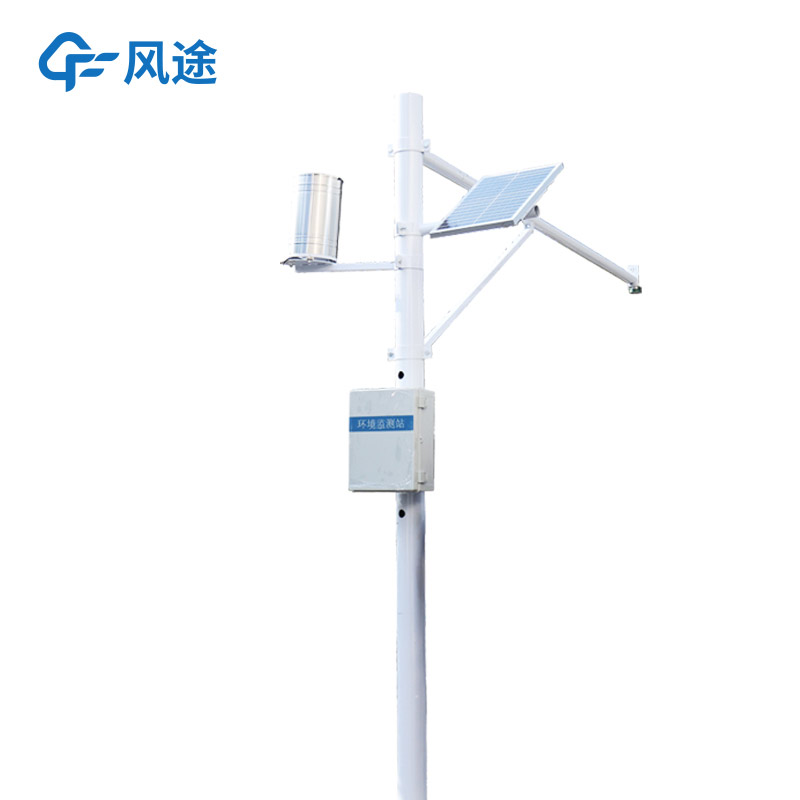
This paper addresses:https://www.fengtuweather.com/industry/828.html
Related products
Related article
-
How to select sensors for four-element automatic weather stations?
2024-07-08 -
Small Automatic Weather Stations: Tailored Solutions for Hazardous Chemical Environments
2025-06-09 -
10 metre manual common lightning rod is convenient and easy to use
2024-04-25 -
Agrometeorological Station, Intelligent Platform Integrating Internet of Things (IoT) Technology
2024-02-02 -
Ultrasonic Snow Depth Detectors: Enabling Accurate, 24/7 Snow Depth Monitoring for Meteorological and Traffic Sectors
2025-08-29 -
Vehicle-Mount Weather Station: A Mobile Solution for Wind Data Acquisition
2024-12-03 -
Harnessing the Power of Negative Oxygen Ions for Healthier Environments
2024-10-31 -
Recommend a weather monitoring equipment company
2024-06-26