

Product
-
Weather station
-
Road Weather Station
-
Photovoltaic Inspection
-
Atmospheric monitoring
-
Operating condition monitoring
Recommended article
- Electrical Power Analyzer enables multi-channel power grid parameter acquisition and the detection of harmonics and unbalance
- Shandong Fengtu, a manufacturer of meteorological stations, offers high-precision weather observation equipment designed for field use
- Series power supply for EL-Based Internal Defect Detection in Photovoltaic Modules
- Shandong Fengtu, a manufacturer of meteorological monitoring instruments, produces advanced weather observation equipment
- Odor gas detector On-site Monitoring of Odorous Pollutants in Compliance with the GB14554 Standard
- Integrated Four-Parameter Weather Station for Field Meteorological Data Collection (Temperature, Humidity, Wind Speed, and Wind Direction)
Contact us
Shandong Fengtu IOT Technology Co., Ltd
Sales Manager:Ms. Emily Wang
Cel,Whatsapp,Wechat:+86 15898932201
Email:info@fengtutec.com
Add:No. 155 Optoelectronic Industry Accelerator, Gaoxin District, Weifang, Shandong, China
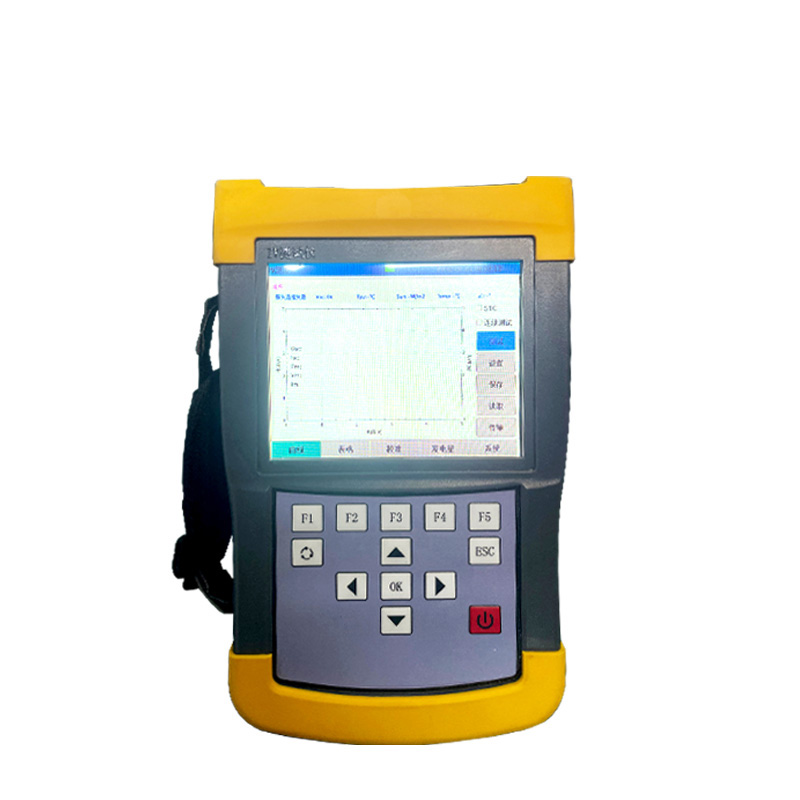
photovoltaic testers is a portable photovoltaic module testing device
Article source:Weather station time:2025-12-01 10:04:27 viewed:615times
photovoltaic testers is a portable device specifically designed for on-site testing of photovoltaic module performance. It can quickly plot current-voltage characteristic curves and obtain parameters such as open-circuit voltage and short-circuit current. This device supports accurate testing of power generation efficiency and conversion rate for modules and strings within the 1000W range, suitable for power plant acceptance, operation and maintenance fault diagnosis, and other scenarios.
photovoltaic testers is a core testing tool in the construction, acceptance, and operation and maintenance phases of photovoltaic power plants. Its core function is to quickly assess the actual power generation performance and health status of photovoltaic modules by measuring the current-voltage characteristic curve of the modules on-site. This device can directly test photovoltaic strings installed on roofs, the ground, or in complex terrain under natural sunlight conditions, without disassembling or moving the modules, significantly improving the efficiency of on-site testing.
In terms of parameter measurement, the IV curve tester can simultaneously obtain key parameters such as open-circuit voltage, short-circuit current, peak power, and fill factor in a single scan. Taking a typical model as an example, its voltage measurement range covers 5V to 2000V, and its current detection capability reaches 0.01A to 40A, adapting to different testing needs from single modules to large strings. Some high-precision models have a voltage measurement accuracy of within ±0.5% and a current measurement accuracy of ±0.2%, ensuring the reliability of the test data.
For power generation efficiency assessment, the device integrates an irradiance sensor and a temperature probe to monitor environmental irradiance and module backplane temperature in real time, and automatically converts the measured data into nominal values under standard test conditions. This function makes the data measured under different weather conditions and at different times comparable, providing a unified benchmark for system efficiency analysis. The tester's built-in photovoltaic module model database covers mainstream products on the market. When an unknown module is detected, the system can automatically match similar models through curve characteristics, completing identification and comparison without manual input of module parameters.
In terms of testing capabilities, modern IV testers use electronic load and high-speed sampling technology, shortening the single IV curve scanning time to less than 10 seconds, with up to 2048 data acquisition points, enabling precise capture of curve inflection points and abnormal characteristics. For modules and strings with power ratings up to 1000W, the device can achieve accurate measurements within a power range of 0.1W to 1000W, with a power accuracy better than ±3% under STC conditions, meeting the on-site requirements for accurate assessment of power generation efficiency and conversion rate.
The device's on-site applicability is reflected in several aspects: its lightweight design reduces the main unit weight to less than 2.3 kilograms; the built-in lithium battery supports continuous operation for more than 8 hours; it has an IP67 protection rating and can operate stably in environments ranging from -10℃ to 50℃; and its wireless communication function allows for remote control within a 100-meter range, and when combined with a barcode scanner, enables automatic association of module information and test data.
In the full lifecycle management of photovoltaic power plants, IV curve testers are widely used in scenarios such as module acceptance testing, installation and commissioning, regular inspections, and fault diagnosis. By analyzing abnormalities in the shape of the IV curve, such as steps, dips, or multiple peaks, problems such as module hot spots, microcracks, bypass diode failures, and series mismatch can be accurately identified. For distributed photovoltaic projects, this device can quickly locate power losses caused by shading and line aging, providing data support for system optimization.
As the photovoltaic industry demands more refined operation and maintenance, IV curve testers are being deeply integrated with cloud platforms and intelligent analysis software. Test data can be uploaded to the management system via a wireless network, automatically generating inspection reports and performance trend analysis, providing objective basis for power plant asset management and transaction evaluation. This development further strengthens the crucial role of IV testing in the efficient operation and value assurance of photovoltaic systems.
This paper addresses:https://www.fengtuweather.com/industry/847.html
Related products
Related article
-
EL Test Power Supply is used for batch EL defect detection and production testing of photovoltaic modules
2025-12-24 -
Tunnel Geological Prediction and Ground Penetrating Radar
2025-03-07 -
Vehicle-Mount Weather Station by Fengtu: Integrated Monitoring for Drone Meteorological Safety
2025-07-02 -
Forestry Weather Station: The Guardian of Forests Against the Menace of Fires
2024-11-21 -
Why Small Automatic Weather Station Stands Out: Monitoring, Configuration & Practicality
2025-09-10 -
Ultrasonic Snow Depth Detector utilizes ultrasonic principles to achieve millimeter-level dynamic monitoring of snow thickness
2025-12-23 -
Negative oxygen ion monitoring system to protect the scenic environment
2024-03-22 -
Are field microclimate observatories useful?
2024-04-15