

Product
-
Weather station
-
Road Weather Station
-
Photovoltaic Inspection
-
Atmospheric monitoring
-
Operating condition monitoring
Recommended article
- Electrical Power Analyzer enables multi-channel power grid parameter acquisition and the detection of harmonics and unbalance
- Shandong Fengtu, a manufacturer of meteorological stations, offers high-precision weather observation equipment designed for field use
- Series power supply for EL-Based Internal Defect Detection in Photovoltaic Modules
- Shandong Fengtu, a manufacturer of meteorological monitoring instruments, produces advanced weather observation equipment
- Odor gas detector On-site Monitoring of Odorous Pollutants in Compliance with the GB14554 Standard
- Integrated Four-Parameter Weather Station for Field Meteorological Data Collection (Temperature, Humidity, Wind Speed, and Wind Direction)
Contact us
Shandong Fengtu IOT Technology Co., Ltd
Sales Manager:Ms. Emily Wang
Cel,Whatsapp,Wechat:+86 15898932201
Email:info@fengtutec.com
Add:No. 155 Optoelectronic Industry Accelerator, Gaoxin District, Weifang, Shandong, China
Road condition monitoring stations for road safety
Article source:Weather station time:2024-06-03 08:45:39 viewed:531times
The safety of motorway traffic is affected by meteorological conditions such as temperature, fog, rain, snow, ice, wind and dust storms, which can lead to a reduction in road surface friction and increase the risk of accidents. In order to improve road safety, it is crucial to study the traffic-meteorological linkages and provide accurate meteorological forecasts. Through the Traffic Safety Early Warning Platform and the Road Condition Monitoring Stations, staff can obtain timely data, predict risks and take measures to reduce traffic accidents caused by inclement weather and ensure road safety.
There are two main factors affecting road conditions:
1. Rainfall is the most common meteorological challenge in road driving. According to official data, up to 20 per cent of accidents on roads are caused by braking problems, with wet road surfaces being the main cause, and half of all accidents occurring during rain. In rainy weather, the friction of the road surface is much lower than in a dry state, which makes it easier for the wheels to slide. As the speed of the vehicle increases, the friction of the road surface will decrease rapidly, resulting in longer braking distance of the vehicle, which poses a great threat to driving safety.
2. Ice and snow not only reduce the clarity of vision, but also after the snow has been compacted or melted in the daytime sun, the road surface temperature drops at night leading to ice, which significantly reduces the friction coefficient of the road surface. This change can seriously affect the braking ability of the vehicle, which may lead to brake system failure, vehicle idling, skidding or sideslip, posing a serious threat to driving safety.
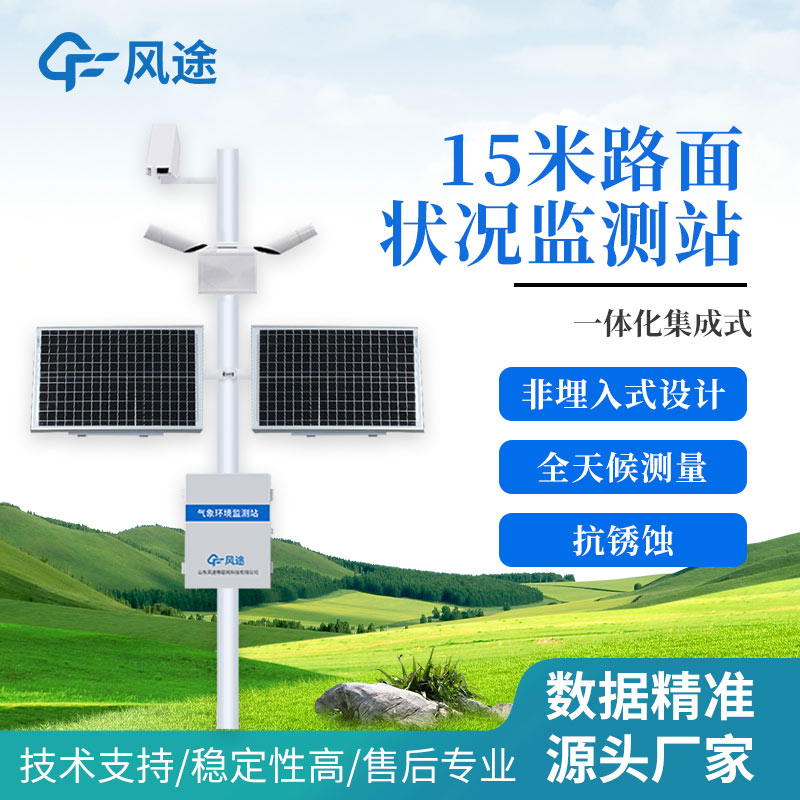
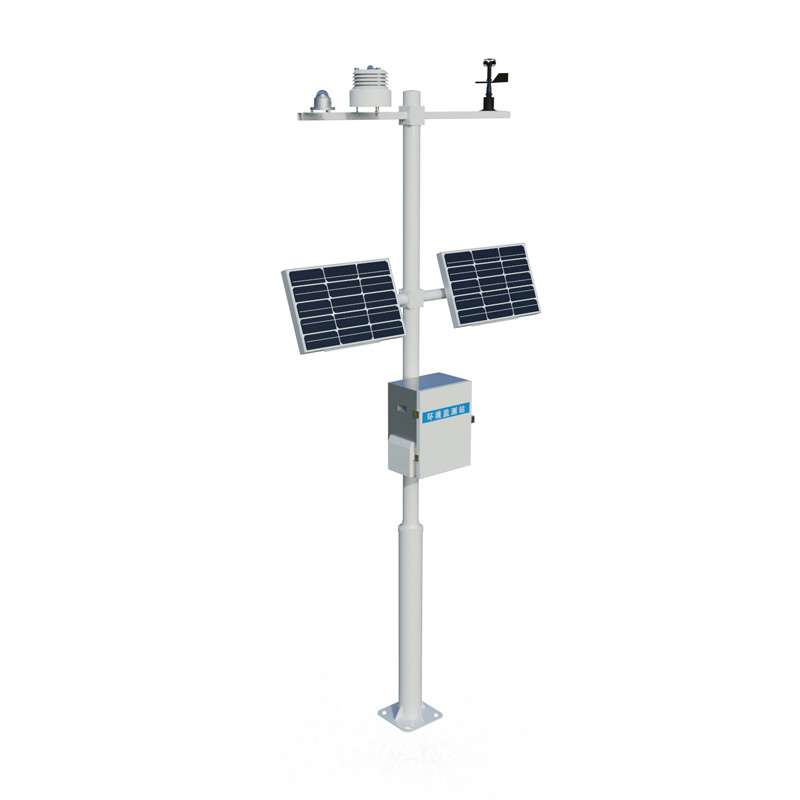
The Road Condition Monitoring Station has the capability to detect water, ice and snow on the road from a distance, and also monitors the road surface condition and degree of wetness in real time. It has an unburied design that is easy to install and maintain, and is resistant to rust and corrosion. The station utilises infrared technology for stable operation in all-weather environments, allowing real-time monitoring without the need for lane closures.
This paper addresses:https://www.fengtuweather.com/industry/389.html
Related products
Related article
-
Compact weather station with a variety of functions
2024-07-11 -
Odor gas detector On-site Monitoring of Odorous Pollutants in Compliance with the GB14554 Standard
2026-10-19 -
photovoltaic testers 400V/20A Range Meets the On-Site Testing Needs of Photovoltaic Modules
2026-07-31 -
Forest Weather Monitoring System to protect against hill fires
2024-04-29 -
All-in-one vehicle-mounted weather station
2024-04-10 -
Portable 10-Parameter Monitoring: The FT-BQX10 Portable Weather Station for Emergency & Scientific Fieldwork
2025-11-11 -
The Vehicle-Mount Weather Station: Enabling Mobile Meteorological Monitoring for Emergency Response and Beyond
2025-09-26 -
There are two types of handheld meteorological instruments
2024-01-29