

Product
-
Weather station
-
Road Weather Station
-
Photovoltaic Inspection
-
Atmospheric monitoring
-
Operating condition monitoring
Recommended article
- Series power supply for EL-Based Internal Defect Detection in Photovoltaic Modules
- Shandong Fengtu, a manufacturer of meteorological monitoring instruments, produces advanced weather observation equipment
- Odor gas detector On-site Monitoring of Odorous Pollutants in Compliance with the GB14554 Standard
- Integrated Four-Parameter Weather Station for Field Meteorological Data Collection (Temperature, Humidity, Wind Speed, and Wind Direction)
- Odor gas detector Enabling Precision, Round-the-Clock Monitoring of Fugitive Emissions in Industrial Facilities
- Compact Weather Stations: High-Precision Field Monitoring for Diverse Scenarios
Contact us
Shandong Fengtu IOT Technology Co., Ltd
Sales Manager:Ms. Emily Wang
Cel,Whatsapp,Wechat:+86 15898932201
Email:info@fengtutec.com
Add:No. 155 Optoelectronic Industry Accelerator, Gaoxin District, Weifang, Shandong, China
Series power supply for EL-Based Internal Defect Detection in Photovoltaic Modules
Article source:Weather station time:2026-10-21 09:34:35 viewed:2times
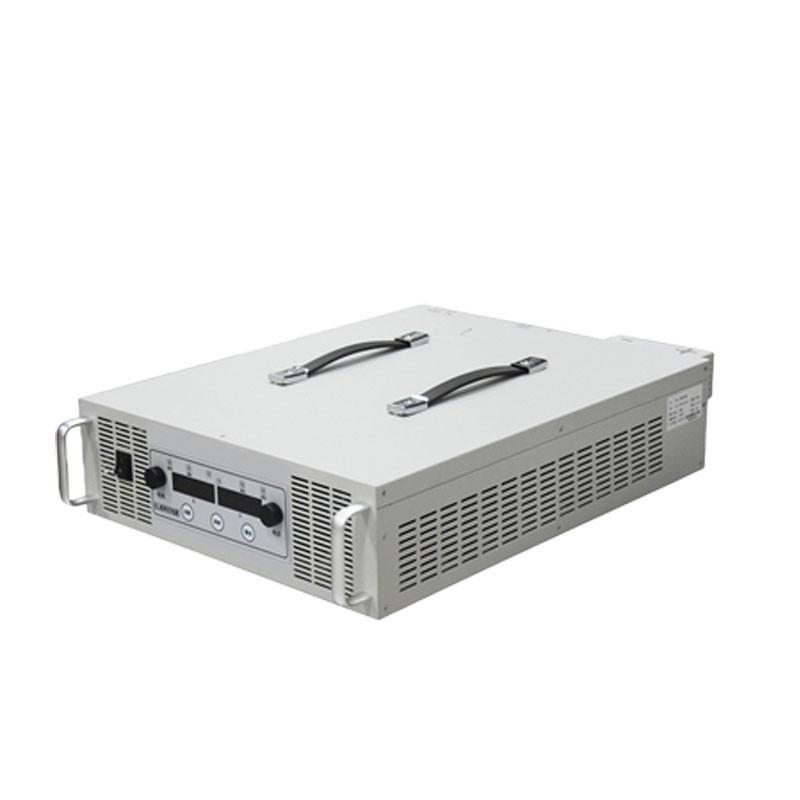
Designed specifically for the "reverse-powering" (reverse-bias) technique used in photovoltaic (PV) power plants, the Series power supply converts AC power into a controlled DC supply to induce electroluminescence (EL) in PV modules. When paired with an EL imaging device, it enables the detection of defects in individual modules or entire strings. The 150030 programmable model supports software-based control of electrical parameters, while the "Pro" version utilizes high-quality imported components to ensure stable and safe testing.
The Series power supply is a domestically produced, programmable linear power supply developed primarily for EL-based defect detection in PV systems. Its circuitry is engineered to leverage the reverse-powering characteristic of PV strings: it converts AC power into a precise, controllable DC output, which is then applied to the PV modules to trigger the electroluminescence effect. In conjunction with an EL imaging system, this allows for the identification of internal issues such as micro-cracks and cold (poor) solder joints, supporting testing for both individual modules and full strings. The 150030 model is a programmable version designed for R&D and professional use; it allows for the adjustment of output parameters via dedicated software. It also incorporates comprehensive safety mechanisms, enabling operators to manage the power supply's status through software, thereby minimizing parameter deviations that might otherwise arise from manual adjustments.
The "Pro" version features upgraded hardware and software, incorporating high-specification imported electronic components and an open-architecture programmable controller. This ensures superior consistency in voltage and current output, minimizes fluctuations during prolonged, continuous operation, enhances the stability of EL imaging, and reduces the likelihood of misdiagnosis. The device offers an output range of 0–1500V and 0–3A, with continuously adjustable voltage, meeting the testing requirements for most standard crystalline silicon PV modules. It is suitable for use in PV manufacturing facilities for factory quality control, as well as for on-site operations, maintenance, and acceptance testing at PV power plants.
Over the long-term operation of a PV power plant, internal defects within the modules can progressively degrade power generation efficiency. Since traditional visual inspections often fail to detect internal damage to the solar cells, EL testing has become a reliable industry-standard quality control method. As the power supply unit responsible for inducing electroluminescence, the Series power supply plays a critical role, as the stability of its power output directly determines the quality of the resulting EL images. This device is available in Standard and Pro versions, allowing users to select the configuration that best suits their needs—based on testing frequency, accuracy requirements, and budget—to support various operational scenarios, such as laboratory R&D, batch sampling inspections, and field inspections of power plants.
This paper addresses:https://www.fengtuweather.com/industry/1033.html
Related products
Related article
-
Forestry Weather Station is used for comprehensive monitoring and early warning of grassland and forest fire risk factors
2025-12-17 -
Dust Detector Systems: Comprehensive Environmental Monitoring for Effective Pollution Control
2025-09-25 -
10 metre manual common lightning rod is convenient and easy to use
2024-04-25 -
The PV module IV tester performs volt-ampere characteristic testing on outdoor PV modules
2026-08-07 -
Recommend a weather monitoring equipment company
2024-06-26 -
Reducing Accident Risk with Road Weather Stations
2024-09-04 -
How Ultrasonic Snow Depth Monitoring Stations Achieve Accurate Snow Depth Measurement
2026-07-16 -
How can seedling monitoring stations assist in optimising cereal management techniques?
2024-05-31