

Product
-
Weather station
-
Road Weather Station
-
Photovoltaic Inspection
-
Atmospheric monitoring
-
Operating condition monitoring
Recommended article
- Electrical Power Analyzer enables multi-channel power grid parameter acquisition and the detection of harmonics and unbalance
- Shandong Fengtu, a manufacturer of meteorological stations, offers high-precision weather observation equipment designed for field use
- Series power supply for EL-Based Internal Defect Detection in Photovoltaic Modules
- Shandong Fengtu, a manufacturer of meteorological monitoring instruments, produces advanced weather observation equipment
- Odor gas detector On-site Monitoring of Odorous Pollutants in Compliance with the GB14554 Standard
- Integrated Four-Parameter Weather Station for Field Meteorological Data Collection (Temperature, Humidity, Wind Speed, and Wind Direction)
Contact us
Shandong Fengtu IOT Technology Co., Ltd
Sales Manager:Ms. Emily Wang
Cel,Whatsapp,Wechat:+86 15898932201
Email:info@fengtutec.com
Add:No. 155 Optoelectronic Industry Accelerator, Gaoxin District, Weifang, Shandong, China
Principle of field mini weather station
Article source:Weather station time:2024-04-09 08:51:03 viewed:518times
With the increasing changes in the global climate, agriculture has been significantly affected. Traditional weather-dependent farming methods are no longer adapted to modern agriculture, and therefore weather forecasting has become increasingly important.
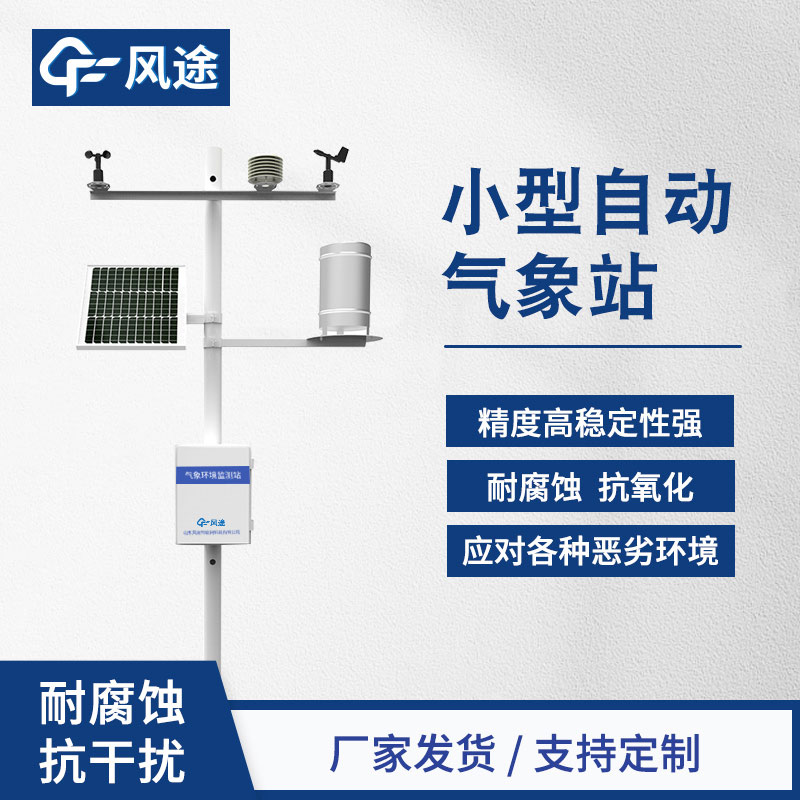
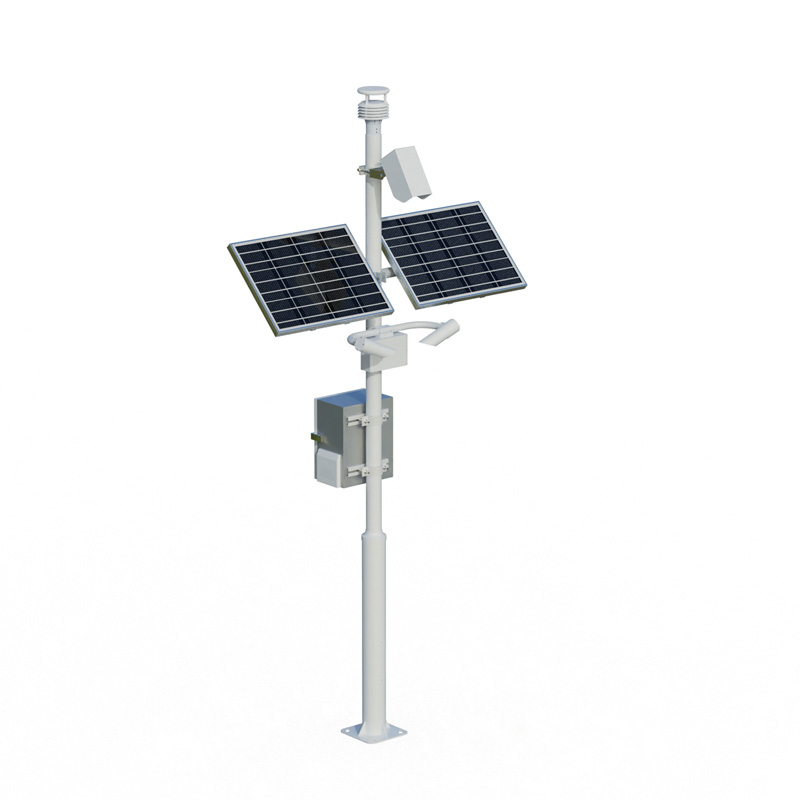
Crop growth is not only affected by temperature and precipitation, but requires a comprehensive consideration of multiple meteorological conditions. As part of the Internet of Things (IoT), small weather stations in the field are equipped with a variety of agro-meteorological sensors capable of measuring data such as air temperature, humidity, solar radiation, wind speed, wind direction, rainfall and barometric pressure, providing more comprehensive meteorological information for agricultural production.
Principle: The solar power system converts sunlight into electricity and stores it in the battery, ensuring that the weather station can continue to work day or night. Using a variety of sensors, the weather station monitors environmental data in real time and sends it to the cloud via the built-in communication module. This data can be displayed on a large local screen or viewed and analysed remotely via a mobile app.
DTU is a device that sends sensor data to the cloud for monitoring via 4G/5G network.RS485-HUB is used to extend the connection of multiple devices, similar to a hub in a network.PLC is an industrial control device that automatically manages the production process according to a programme. Gateways help in exchanging data between different networks while routers forward packets in a network. A webcam transmits video in real time, allowing users to view the monitored area remotely.
This paper addresses:https://www.fengtuweather.com/industry/315.html
Related products
Related article
-
Visibility, Road Condition & Wind Monitoring: Key Equipment Safeguarding Highway Traffic Against Meteorological Risks
2025-09-02 -
Weather monitor Enables Rapid Field Deployment Through High Integration and Low Power Consumption Design
2026-05-28 -
What are air quality monitoring stations?
2024-06-06 -
Meteorological observation station Suitable for High-Precision Meteorological Monitoring Across Diverse Field Scenarios
2026-09-16 -
Automated systems for meteorological stations
2024-04-18 -
Which is the best online meteorological monitoring system?
2024-07-05 -
photovoltaic testers 400V/20A Range Meets the On-Site Testing Needs of Photovoltaic Modules
2026-07-31 -
Fengtu's Photovoltaic Weather Station: Enabling Precise Meteorological Monitoring for Photovoltaics
2025-08-06