

Product
-
Weather station
-
Road Weather Station
-
Photovoltaic Inspection
-
Atmospheric monitoring
-
Operating condition monitoring
Recommended article
- Electrical Power Analyzer enables multi-channel power grid parameter acquisition and the detection of harmonics and unbalance
- Shandong Fengtu, a manufacturer of meteorological stations, offers high-precision weather observation equipment designed for field use
- Series power supply for EL-Based Internal Defect Detection in Photovoltaic Modules
- Shandong Fengtu, a manufacturer of meteorological monitoring instruments, produces advanced weather observation equipment
- Odor gas detector On-site Monitoring of Odorous Pollutants in Compliance with the GB14554 Standard
- Integrated Four-Parameter Weather Station for Field Meteorological Data Collection (Temperature, Humidity, Wind Speed, and Wind Direction)
Contact us
Shandong Fengtu IOT Technology Co., Ltd
Sales Manager:Ms. Emily Wang
Cel,Whatsapp,Wechat:+86 15898932201
Email:info@fengtutec.com
Add:No. 155 Optoelectronic Industry Accelerator, Gaoxin District, Weifang, Shandong, China
How Forestry Weather Stations Bolster Forest Fire Prevention Efforts
Article source:Weather station time:2025-01-15 09:11:54 viewed:533times
Forest fires are closely related to meteorological conditions. Although human factors are the main cause, meteorological factors are also crucial in the occurrence and development of forest fires. Long - term drought heats up the ground, making forest fuels prone to spontaneous combustion, and lightning strikes can also trigger fires.
In terms of time, years with little rain and consecutive droughts, as well as the hours from 10:00 to 16:00 every day, are high - risk periods for forest fires. At this time, the temperature is high, the humidity is low, and the wind speed is high, which makes the fire develop rapidly and difficult to extinguish.
The meteorological elements that affect forest fires include:
Precipitation: Precipitation affects the water content of combustibles in forest areas. If the annual precipitation exceeds 1500 mm or the monthly precipitation exceeds 100 mm, the likelihood of a fire decreases.
Temperature: The daily maximum temperature is a key indicator for ignition. The probability of a fire is high when the temperature is between - 10°C and 25°C. When the temperature is higher than 25°C, the probability of a fire decreases due to the increase in the water content of combustibles.
Relative humidity: Relative humidity is positively correlated with the water content of combustibles. When it exceeds 75%, it is not easy to start a fire; when it is between 75% and 55%, there is a possibility of a fire; when it is lower than 55%, it is easy to start a fire; when it is lower than 30%, a major fire may occur. The number of consecutive drought days, cloud cover, etc. also have an impact.
Wind speed: Wind dries out combustibles, making them more flammable, and also provides oxygen for combustion, fueling the fire.
Dry thunderstorms are a special meteorological phenomenon. During dry and hot periods, rainfall is evaporated at low altitudes, resulting in "dry thunder without rain" accompanied by thunder, lightning, and strong winds.
Given the influence of meteorological factors, the meteorological department issues fire danger level forecasts by analyzing the weather and monitoring heat source points to remind people to take precautions. During the fire - risk period, artificial rainfall operations are carried out. Meteorological satellites are used to monitor forest fires, determine their location and scope, and provide analysis images. The fire - prevention department makes fire - risk predictions and formulates fire - prevention plans based on meteorological data.
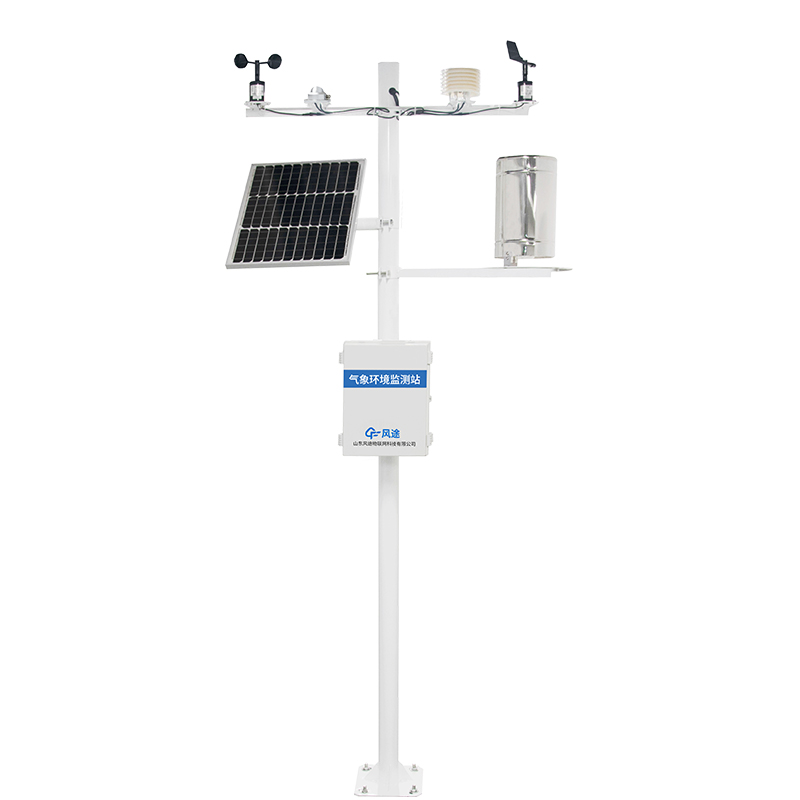
Forestry Weather Stations have the ability to monitor meteorological elements in forest areas in real - time and accurately. Key data such as temperature, humidity, wind speed, and precipitation are provided to the meteorological department as more accurate first - hand information in a timely manner. Based on in - depth analysis of these data, fluctuations in the forest fire - risk level can be predicted in advance, thus assisting the meteorological department in issuing more accurate fire - risk level forecasts.
When a forest fire unfortunately occurs, Forestry Weather Stations continuously provide meteorological information around the fire site. With this information, the fire - prevention department and firefighters can fully understand the meteorological environment on which the fire development depends. For example, if the wind direction changes, the direction of the fire spread is likely to change accordingly. This information provides crucial decision - making support for fire - fighting operations, helps to formulate more efficient fire - fighting plans, improves fire - fighting efficiency, and minimizes the losses caused by the fire.
This paper addresses:https://www.fengtuweather.com/industry/599.html
Related products
Related article
-
Introduction to the main configurations of the road weather monitoring system
2024-08-29 -
Odor Online Monitoring System Enables 24-Hour Continuous Monitoring of Odor Concentration (OU), Ammonia, and Hydrogen Sulfide
2026-04-14 -
Weather Instruments: Navigating Farms Through the Complexities of Climate for Bumper Crops
2025-02-18 -
Strategies for Using Dust Detectors to Avoid Penalties under Stringent Environmental Regulations
2025-06-10 -
Essential Meteorological Parameters: The Foundation of Weather Forecasting and Climate Analysis
2024-11-04 -
Cleanroom Cleanliness Assurance and Online Dust Particle Counter
2025-09-09 -
How Ultrasonic Snow Depth Monitoring Stations Achieve Accurate Snow Depth Measurement
2026-07-16 -
Visibility, Road Condition & Wind Monitoring: Key Equipment Safeguarding Highway Traffic Against Meteorological Risks
2025-09-02