

Product
-
Weather station
-
Road Weather Station
-
Photovoltaic Inspection
-
Atmospheric monitoring
-
Operating condition monitoring
Recommended article
- Electrical Power Analyzer enables multi-channel power grid parameter acquisition and the detection of harmonics and unbalance
- Shandong Fengtu, a manufacturer of meteorological stations, offers high-precision weather observation equipment designed for field use
- Series power supply for EL-Based Internal Defect Detection in Photovoltaic Modules
- Shandong Fengtu, a manufacturer of meteorological monitoring instruments, produces advanced weather observation equipment
- Odor gas detector On-site Monitoring of Odorous Pollutants in Compliance with the GB14554 Standard
- Integrated Four-Parameter Weather Station for Field Meteorological Data Collection (Temperature, Humidity, Wind Speed, and Wind Direction)
Contact us
Shandong Fengtu IOT Technology Co., Ltd
Sales Manager:Ms. Emily Wang
Cel,Whatsapp,Wechat:+86 15898932201
Email:info@fengtutec.com
Add:No. 155 Optoelectronic Industry Accelerator, Gaoxin District, Weifang, Shandong, China
High-Precision Meteorological observation equipment Aids Field Environmental Monitoring
Article source:Weather station time:2026-07-21 09:52:07 viewed:51times
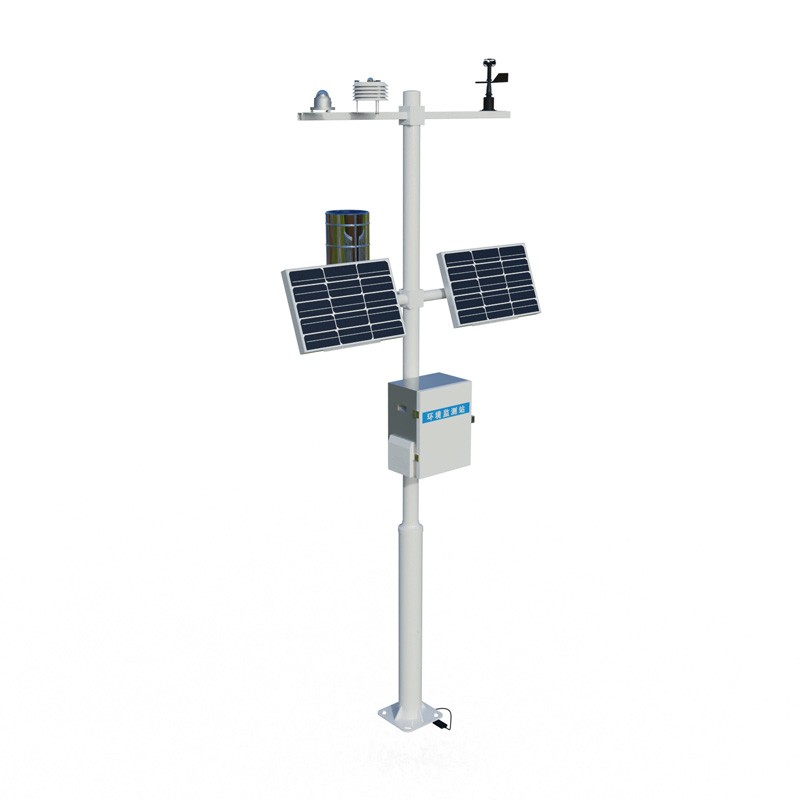
Meteorological observation equipment is a highly integrated, low-power, and quickly installable meteorological observation system. It consists of five parts: meteorological sensors, a data logger, a solar power system, a pole support, and a cloud platform. It requires no debugging and can be quickly deployed, widely used in meteorology, agriculture, forestry, environmental protection, marine science, airports, ports, scientific research, and educational institutions.
Meteorological observation equipment is a professional instrument system used to monitor and record meteorological elements such as temperature, humidity, wind speed, wind direction, air pressure, and rainfall. With the continuous development of meteorological monitoring technology, Meteorological observation equipment has gradually evolved from traditional manual observation to automated, intelligent, and integrated comprehensive observation systems. A complete Meteorological observation equipment system typically consists of five parts: meteorological sensors, a data logger, a power supply system, a pole support, and a cloud platform.
From the perspective of equipment type, weather stations are mainly divided into several categories: fixed weather stations, portable weather stations, handheld weather stations, and explosion-proof weather stations. Fixed weather stations are suitable for long-term, fixed-point monitoring and can be further subdivided into integrated mechanical weather stations and ultrasonic weather stations. Portable weather stations typically weigh around 5kg and are equipped with a pull-rod shock-absorbing box, making them suitable for temporary monitoring in emergency environments. Handheld weather stations are more compact and can be operated with one hand, making them suitable for field inspections. Explosion-proof weather stations are suitable for locations with special explosion-proof requirements, such as chemical plants and coal mines.
In terms of application areas, weather stations are widely used in various scenarios, including weather forecasting, agricultural planting, forestry fire prevention, environmental monitoring, marine observation, airport and aviation, port and shipping, scientific research, and campus science education. Agricultural weather stations provide accurate meteorological data support for crop planting; photovoltaic weather stations specifically monitor data such as solar radiation intensity to ensure the operational efficiency of photovoltaic power stations; and campus weather stations serve the function of meteorological science education. Furthermore, vehicle-mounted weather stations can monitor meteorological elements such as wind speed and direction in real time while the vehicle is in motion, providing on-site decision-making data for meteorological emergency services.
With the development of the Internet of Things (IoT) and wireless communication technologies, modern meteorological stations commonly employ 4G and other wireless transmission methods, allowing data to be directly uploaded to cloud platforms for remote real-time monitoring. Equipment installation requires no on-site wiring and is not limited by distance; data collection and transmission can be completed as long as there is network coverage. High-precision sensors ensure the accuracy and stability of basic data such as temperature, humidity, wind speed, and air pressure, with errors meeting industry standards. Meteorological systems are continuously evolving towards higher precision, lower power consumption, and easier deployment, providing reliable technical support for the meteorological monitoring needs of various industries.
This paper addresses:https://www.fengtuweather.com/industry/974.html
Related products
Related article
-
Photovoltaic weather stations optimize power generation efficiency
2024-08-09 -
Vehicle-Mount Weather Stations: Small in Size, Big in Pollution Management Impact
2025-03-26 -
Reducing Accident Risk with Road Weather Stations
2024-09-04 -
Fengtu Technology's Visibility Detection Systems: Enhancing Traffic Safety on Highways
2025-10-20 -
What is an on-farm microclimate monitoring system?
2024-05-15 -
Introduction to the micro ambient air quality monitoring station equipment
2024-07-01 -
Cellular Weather Station FT-SQ5: Embrace Precise Meteorological Monitoring
2024-09-29 -
The Intimate Link between Negative Oxygen Ion Monitors and Forest Tourism Resources
2024-11-08