

Product
-
Weather station
-
Road Weather Station
-
Photovoltaic Inspection
-
Atmospheric monitoring
-
Operating condition monitoring
Recommended article
- Electrical Power Analyzer enables multi-channel power grid parameter acquisition and the detection of harmonics and unbalance
- Shandong Fengtu, a manufacturer of meteorological stations, offers high-precision weather observation equipment designed for field use
- Series power supply for EL-Based Internal Defect Detection in Photovoltaic Modules
- Shandong Fengtu, a manufacturer of meteorological monitoring instruments, produces advanced weather observation equipment
- Odor gas detector On-site Monitoring of Odorous Pollutants in Compliance with the GB14554 Standard
- Integrated Four-Parameter Weather Station for Field Meteorological Data Collection (Temperature, Humidity, Wind Speed, and Wind Direction)
Contact us
Shandong Fengtu IOT Technology Co., Ltd
Sales Manager:Ms. Emily Wang
Cel,Whatsapp,Wechat:+86 15898932201
Email:info@fengtutec.com
Add:No. 155 Optoelectronic Industry Accelerator, Gaoxin District, Weifang, Shandong, China
How Portable Solar Cell Testers Rapidly Perform PV String I-V Curve Testing
Article source:Weather station time:2026-07-27 09:24:46 viewed:54times
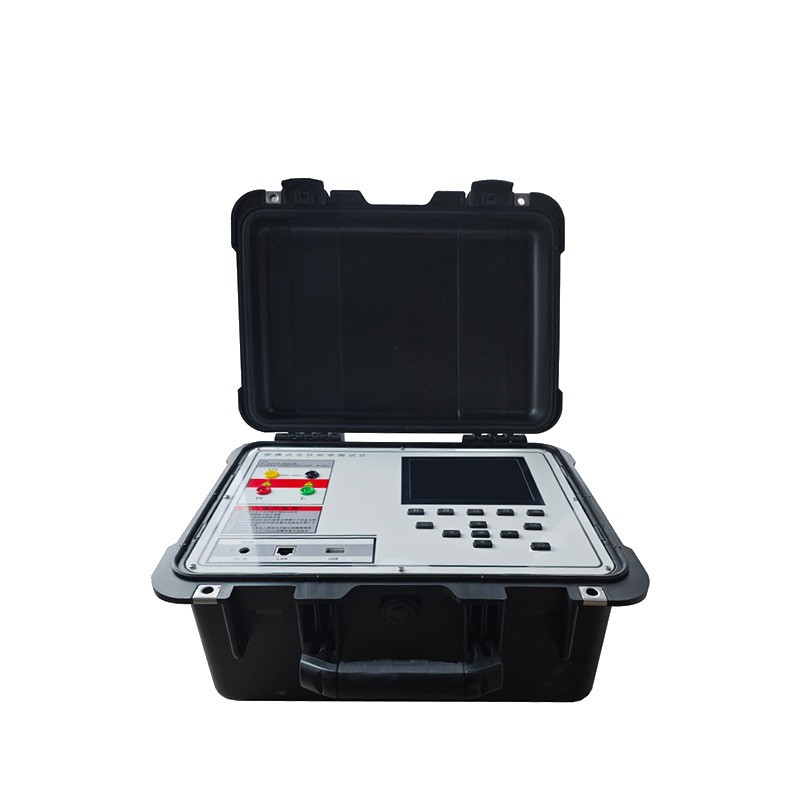
Portable solar cell testers are specifically designed for PV string I-V curve testing, featuring voltage ranges up to 1500V and current capabilities up to 20A, enabling the testing of strings up to 30kW. Equipped with high-precision irradiance and temperature sensors, the device completes a single test in just 5 seconds, making it a practical tool for power plant O&M and third-party inspections.
Portable solar cell testers are indispensable testing instruments for the construction, acceptance, and routine O&M of PV power plants. Primarily used for outdoor testing of the current-voltage (I-V) characteristics of solar modules and strings, these instruments rapidly capture key electrical parameters—such as open-circuit voltage, short-circuit current, and maximum power—under natural sunlight. Unlike traditional indoor simulated testing, portable testers utilize natural light sources for on-site inspection, yielding more realistic and reliable results.
In terms of technical specifications, current portable solar cell testers on the market offer voltage ranges up to 1500V and current ranges of 20A to 30A, covering testing requirements for PV strings up to 30kW. These devices typically feature an integrated design with a high-brightness LCD screen and a touch-sensitive interface; some models even support wireless connectivity between the main unit and the probe, with a communication range of up to 100 meters. Built-in high-precision capacitive or resistive loads, combined with professional I-V curve analysis software, allow for clear interpretation of the module's I-V characteristic curves.
Portable solar cell testers are suitable for a wide range of practical applications. During O&M inspections, personnel can use the device to quickly identify underperforming, degraded, or faulty modules, thereby minimizing power generation losses. During the project acceptance phase, the tester facilitates on-site spot checks prior to grid connection, verifying whether the actual output power of the modules meets standards. Additionally, module manufacturers can use these portable testers for outdoor sampling tests, comparing results against laboratory standard power data to ensure product quality before shipment.
Ease of operation is one of the core advantages of portable solar cell testers. Testing of a single module or string typically takes 5 to 10 seconds, and a one-touch data export function streamlines the generation of test reports. The tester is equipped with high-precision irradiance and temperature sensors, enabling the simultaneous recording of environmental parameters—such as on-site irradiance and backsheet temperature—to provide accurate data for normalization to Standard Test Conditions (STC). Featuring a portable design and a built-in, replaceable lithium battery, the unit operates independently of the 220V grid, making it ideal for field operations.
This portable solar module tester complies with international standards such as IEC 61215 and IEC 61853; select models hold CE and RoHS certifications and serve as a basis for third-party metrological verification. Thanks to its precision, efficiency, and portability, the device has become a standard tool for third-party testing agencies and photovoltaic (PV) plant operations and maintenance (O&M) teams.
This paper addresses:https://www.fengtuweather.com/industry/977.html
Related products

Related article
-
Fengtu's Weather Monitoring Equipment: Versatile, Customizable and Network-Ready
2025-08-05 -
Dust Detector: Enabling Real-Time Monitoring, Automatic Alarming and Linked Dust Suppression
2025-09-05 -
Agrometeorological Station, Intelligent Platform Integrating Internet of Things (IoT) Technology
2024-02-02 -
Tunnel Geological Prediction and Ground Penetrating Radar
2025-03-07 -
Dust Monitoring Equipment with Spray Linkage: Intelligent System for Construction Site Dust Control
2025-07-07 -
Power Quality Analyzers Precise Detection of Various Power Quality Issues in the Grid
2026-09-09 -
Dust Monitoring Equipment: Guarding the Environment and Public Health against Construction Dust
2024-11-20 -
What are the must-have equipment for a small weather station on campus?
2024-06-28