

Product
-
Weather station
-
Road Weather Station
-
Photovoltaic Inspection
-
Atmospheric monitoring
-
Operating condition monitoring
Recommended article
- Electrical Power Analyzer enables multi-channel power grid parameter acquisition and the detection of harmonics and unbalance
- Shandong Fengtu, a manufacturer of meteorological stations, offers high-precision weather observation equipment designed for field use
- Series power supply for EL-Based Internal Defect Detection in Photovoltaic Modules
- Shandong Fengtu, a manufacturer of meteorological monitoring instruments, produces advanced weather observation equipment
- Odor gas detector On-site Monitoring of Odorous Pollutants in Compliance with the GB14554 Standard
- Integrated Four-Parameter Weather Station for Field Meteorological Data Collection (Temperature, Humidity, Wind Speed, and Wind Direction)
Contact us
Shandong Fengtu IOT Technology Co., Ltd
Sales Manager:Ms. Emily Wang
Cel,Whatsapp,Wechat:+86 15898932201
Email:info@fengtutec.com
Add:No. 155 Optoelectronic Industry Accelerator, Gaoxin District, Weifang, Shandong, China
What are the must-have equipment for a small weather station on campus?
Article source:Weather station time:2024-06-28 08:44:35 viewed:548times
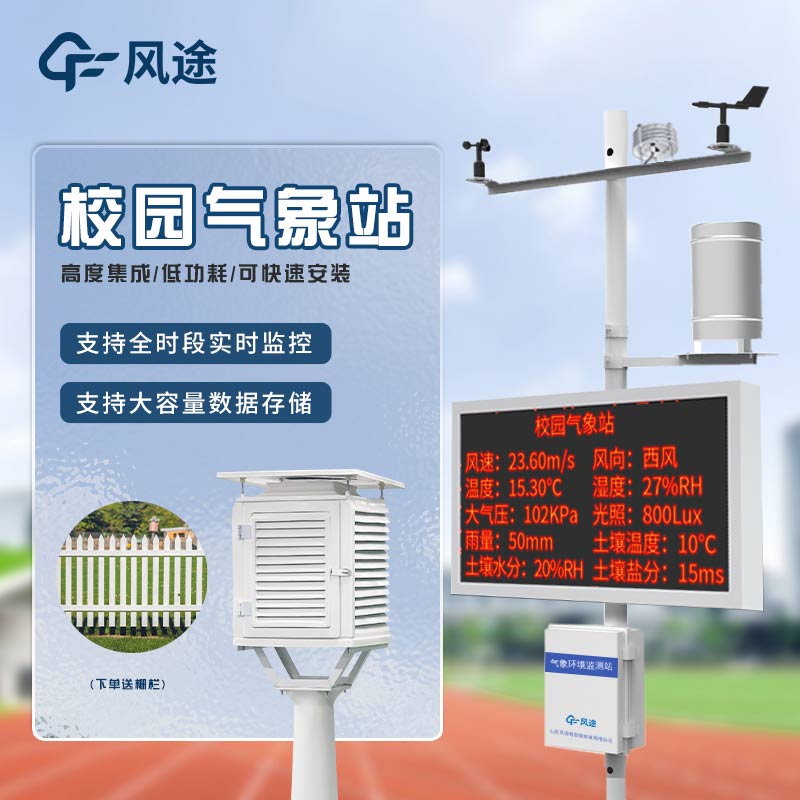
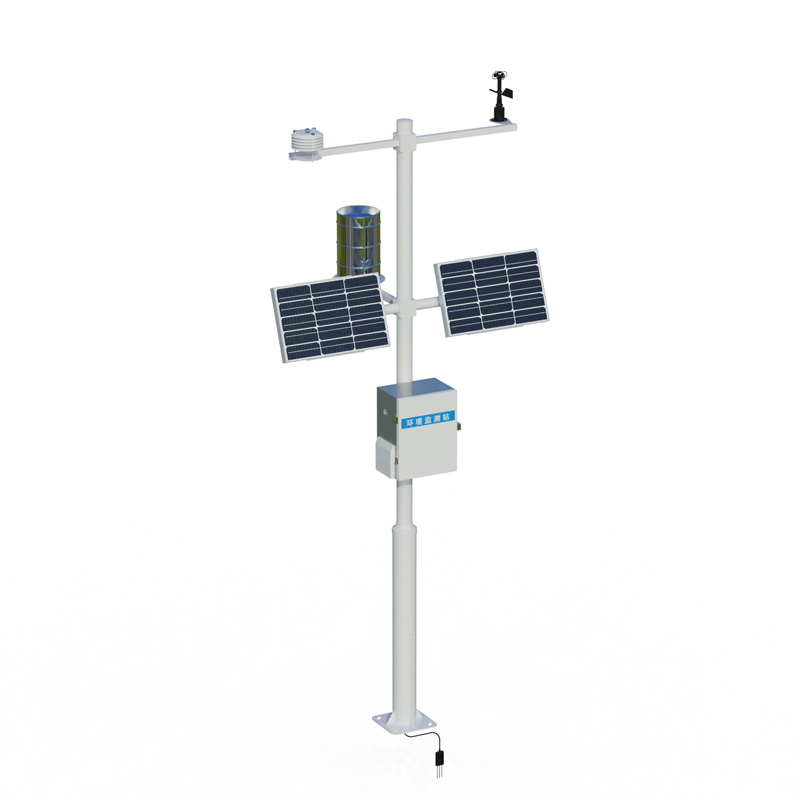
The Campus Mini Weather Station is a simple weather monitoring point in the school, which is used to observe and record the weather, so that students and teachers can learn meteorology and understand the weather changes. To put it bluntly, the weather monitoring function is secondary to the most important function of meteorological science. And to build a small weather station on campus, some basic observation tools are needed, and these devices help students learn meteorological knowledge directly and observe the real-time changes in the weather. So what are the specific equipment? Today I will give you a detailed count.
1. Thermometer
A thermometer is an instrument used to measure the current temperature, either an old-fashioned mercury thermometer or a modern digital thermometer. It helps pupils to observe how temperature changes over time and in the environment and to understand how temperature affects weather and life.
2. Hygrometer
A hygrometer measures the amount of water vapour in the air, also known as relative humidity. Knowing about humidity helps to understand weather and climate because it affects our comfort and many processes in nature, such as plant growth and cloud formation.
3. Anemometers
Anemometers measure the speed of the wind and provide students with an understanding of the role of wind in the weather and the environment, such as how wind drives cloud movement and the dispersion of air pollutants.
4. wind vane
A wind vane shows which direction the wind is blowing from, which is useful for predicting weather and studying climate patterns. It lets us know where the wind is coming from so we can better understand weather changes.
5. Precipitation gauges
Rain barrels and automatic rainfall recorders are used to measure rainfall, and they help students recognise the importance of precipitation to the environment and water supply.
6. Heliometers
An insolation meter is an instrument used to measure solar radiation. It helps students to record the duration and intensity of the sun's rays so that they can understand the role of solar energy and its impact on the earth's climate and ecosystems.
7. Data recording and processing equipment
This may cover computers, meteorological data logging applications or other high-tech tools that are used to collect, store and process meteorological information. These tools enable students to carry out accurate data research, which in turn allows them to analyse the results and draw scientific conclusions.
8. Barometers
Barometers measure the pressure of air and help students observe changes in air pressure to learn to predict the weather.
9. Other Auxiliary Equipment
In addition to the basic meteorological equipment, aids such as evaporation dishes, dew-point meters and ultraviolet meters can be added to enable students to understand and learn about meteorological phenomena in a more comprehensive way.
The equipment listed above is necessary to form a basic campus mini weather station. The selection and installation of such equipment should be properly considered in the light of the school's budget, meteorological observation needs and geographical location. The installation of a campus weather station may also consider integrating the observation data with the school's science curriculum, so that students can increase their knowledge of and interest in meteorological science through practical observation and analysis.
This paper addresses:https://www.fengtuweather.com/industry/419.html
Related products
Related article
-
Comparative Analysis of Ultrasonic and Automatic Weather Stations in Meteorological Monitoring
2025-01-13 -
Fengtu Agricultural Meteorological Stations,Climate-Smart Farming
2024-08-19 -
The FT series of meteorological observation equipment covers various types, including portable, explosion-proof, ultrasonic, and hydrological models
2026-06-18 -
Enhancing Visitor Experience and Safety: The Role of Park Weather Stations in Geological Parks
2024-09-11 -
The price of small integrated meteorological instruments ranges from 3900 to 39800 yuan
2026-06-15 -
Intelligent Road Weather Information Systems for Traffic Safety
2025-10-28 -
Cellular Weather Station FT-SQ5: Embrace Precise Meteorological Monitoring
2024-09-29 -
Police radar gun Achieves Vehicle-Mounted Dynamic Speed Measurement and Data Management Based on the Doppler Effect
2026-06-24