

Product
-
Weather station
-
Road Weather Station
-
Photovoltaic Inspection
-
Atmospheric monitoring
-
Operating condition monitoring
Recommended article
- How Micro-Weather Stations Achieve Integrated Monitoring of Twelve Meteorological Parameters
- photovoltaic testers – On-site I-V Characteristic Testing for PV Modules and Strings
- Field weather stations provide stable collection and transmission of various atmospheric and environmental monitoring parameters
- Portable I-V Power Tester for Photovoltaic Power Plants: On-Site I-V Characteristic Testing of PV Strings
- Weather Instruments Supports High-Precision Meteorological Data Collection in Field Environments
- Electrical Power Analyzer enables multi-channel power grid parameter acquisition and the detection of harmonics and unbalance
Contact us
Shandong Fengtu IOT Technology Co., Ltd
Sales Manager:Ms. Emily Wang
Cel,Whatsapp,Wechat:+86 15898932201
Email:info@fengtutec.com
Add:No. 155 Optoelectronic Industry Accelerator, Gaoxin District, Weifang, Shandong, China
How Micro-Weather Stations Achieve Integrated Monitoring of Twelve Meteorological Parameters
Article source:Weather station time:2026-11-02 09:35:08 viewed:3times
A micro-weather station is a highly integrated, low-power, and rapidly deployable automated meteorological observation device, primarily designed for field monitoring. These units eliminate the need for on-site calibration or complex setup, allowing for quick deployment in target areas. They are widely used across sectors such as meteorology, agriculture, forestry, environmental protection, and at airports and seaports. Unlike earlier ultrasonic weather stations—which often required high-precision timers to synchronize measurements—modern integrated designs eliminate measurement errors caused by sensor startup delays or circuit latency. Furthermore, by minimizing mechanical moving parts, these systems reduce the risk of failure due to wear and tear or environmental fluctuations.
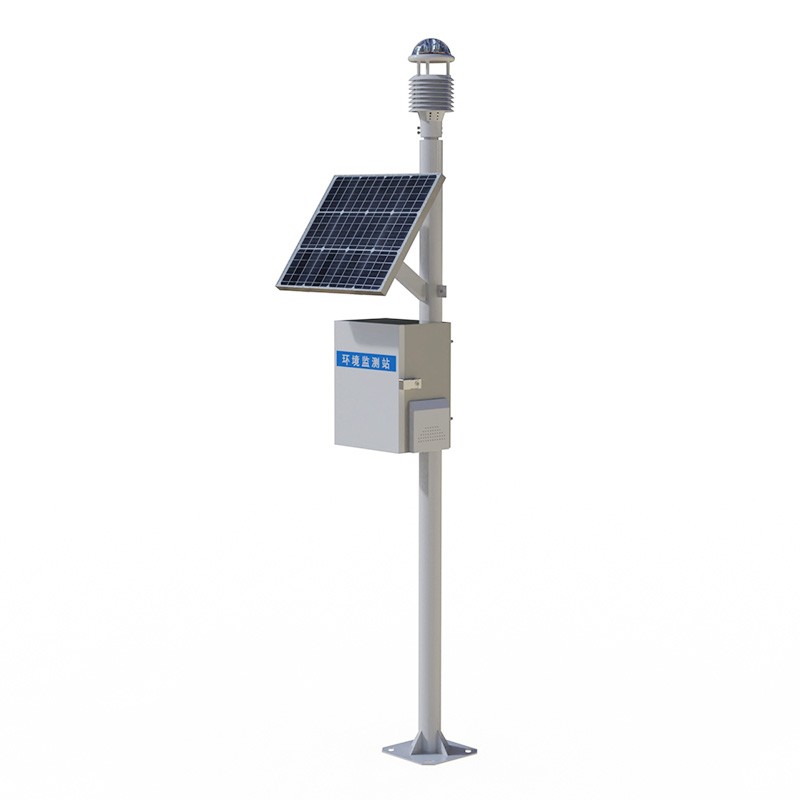
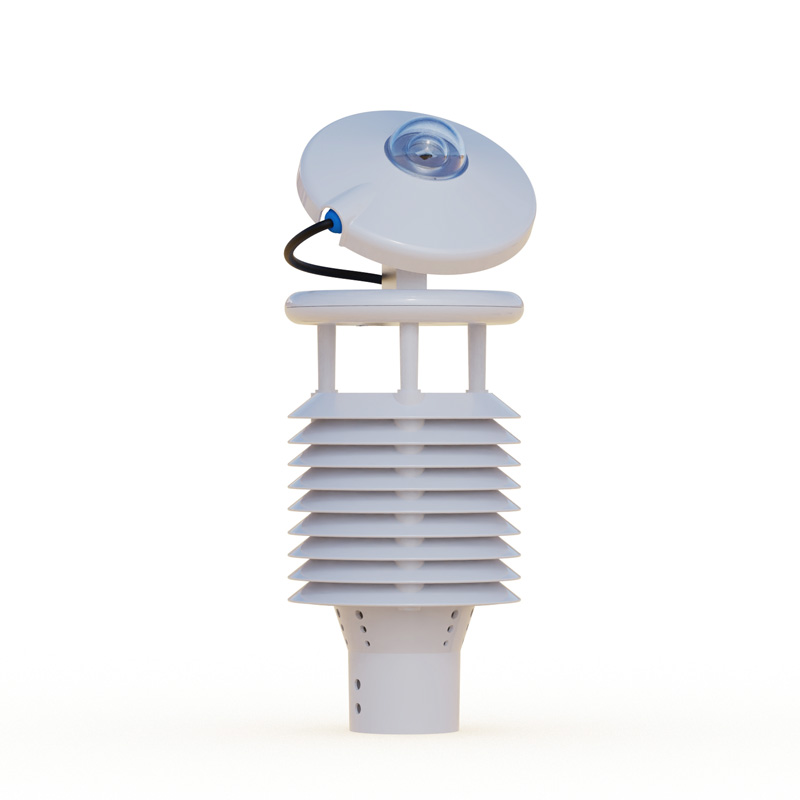
The core innovation of a micro-weather station lies in its sensor integration. Traditional weather stations typically require the installation of separate probes for wind speed, wind direction, temperature, and humidity, resulting in complex wiring and a large physical footprint. In contrast, an integrated "twelve-parameter" sensor consolidates wind speed, wind direction, temperature, humidity, atmospheric pressure, optical rainfall, and air quality metrics—including PM2.5, PM10, carbon monoxide (CO), nitrogen dioxide (NO₂), sulfur dioxide (SO₂), and ozone (O₃)—into a single, unified probe structure. This design enables 24/7 continuous outdoor operation, with all data transmitted via a digital communication interface, thereby streamlining the subsequent data acquisition process.
Regarding power supply and communication, micro-weather stations utilize low-power data loggers—with static current kept at the microampere level—paired with solar panels and rechargeable batteries, allowing for long-term operation in areas without access to the electrical grid. For data transmission, they typically come equipped with GPRS connectivity, with options for RJ45 Ethernet, LoRa, or 4G transmission depending on site-specific requirements. The sensor housings are generally constructed from ASA or ABS materials and feature an IP65 (or higher) ingress protection rating, ensuring durability against salt spray, precipitation, and dust. The design incorporates concealed probes beneath a top cover, which prevents the accumulation of rain or snow from interfering with measurement accuracy and avoids reading distortions caused by the obstruction of natural airflow.
In terms of practical deployment, the primary value of a micro-weather station lies in lowering the threshold for establishing meteorological observation sites. In the past, setting up a multi-parameter weather station required civil engineering work and extensive cabling. In contrast, a micro weather station can be easily mounted on utility poles, rooftops, or in fields using a two-meter carbon-steel stand or mounting clamps. Designed for "plug-and-play" operation, these units allow even non-specialists to handle basic installation—ideal for campus science education, temporary scientific research, or microclimate monitoring in agricultural zones. Data from the devices can be fed directly into an Internet of Things (IoT) platform, enabling users to view real-time trends and historical records via their terminals—valuable insights for agricultural decision-making, environmental inspections, or educational demonstrations.
As sensor technology has matured, integrated micro weather stations—capable of measuring twelve distinct parameters—have become significantly more compact than modular, multi-component systems, all while maintaining high measurement accuracy. This streamlined design not only minimizes the risk of components coming loose during transport or installation but also allows the equipment to be mounted in confined spaces or on mobile platforms. For emergency monitoring scenarios that demand rapid response, the time from unboxing to data availability is reduced to a matter of minutes—a level of deployment efficiency that traditional weather stations simply cannot match.
This paper addresses:https://www.fengtuweather.com/technical/1040.html
Related products

Related article
-
Smart Tourism Anion Monitoring System
2024-08-26 -
Flexible Solutions: Mobile Weather Stations for Modern Meteorology
2025-05-06 -
Portable Ground Penetrating Radar: Detecting Hidden Pipelines and Curbing Illegal Discharges in Urban Settings
2025-02-27 -
How Miniature Sensors Aid in Accurate Fertilization for Tea Gardens
2024-10-18 -
Odor Online Monitoring System Enables 24-Hour Continuous Monitoring of Odor Concentration (OU), Ammonia, and Hydrogen Sulfide
2026-04-14 -
Enhancing Convalescent Care Through Negative Oxygen Ion Concentration Monitoring
2025-05-21 -
Speed enforcement system Enables Precise Speed Measurement and Violation Evidence Capture Across Multiple Scenarios
2026-09-20 -
Portable Weather Station "Highlights"
2024-01-31