

Product
-
Weather station
-
Road Weather Station
-
Photovoltaic Inspection
-
Atmospheric monitoring
-
Operating condition monitoring
Recommended article
- Electrical Power Analyzer enables multi-channel power grid parameter acquisition and the detection of harmonics and unbalance
- Shandong Fengtu, a manufacturer of meteorological stations, offers high-precision weather observation equipment designed for field use
- Series power supply for EL-Based Internal Defect Detection in Photovoltaic Modules
- Shandong Fengtu, a manufacturer of meteorological monitoring instruments, produces advanced weather observation equipment
- Odor gas detector On-site Monitoring of Odorous Pollutants in Compliance with the GB14554 Standard
- Integrated Four-Parameter Weather Station for Field Meteorological Data Collection (Temperature, Humidity, Wind Speed, and Wind Direction)
Contact us
Shandong Fengtu IOT Technology Co., Ltd
Sales Manager:Ms. Emily Wang
Cel,Whatsapp,Wechat:+86 15898932201
Email:info@fengtutec.com
Add:No. 155 Optoelectronic Industry Accelerator, Gaoxin District, Weifang, Shandong, China
Ultrasonic Snow Depth Detector utilizes ultrasonic principles to achieve millimeter-level dynamic monitoring of snow thickness
Article source:Weather station time:2025-12-23 09:52:32 viewed:553times
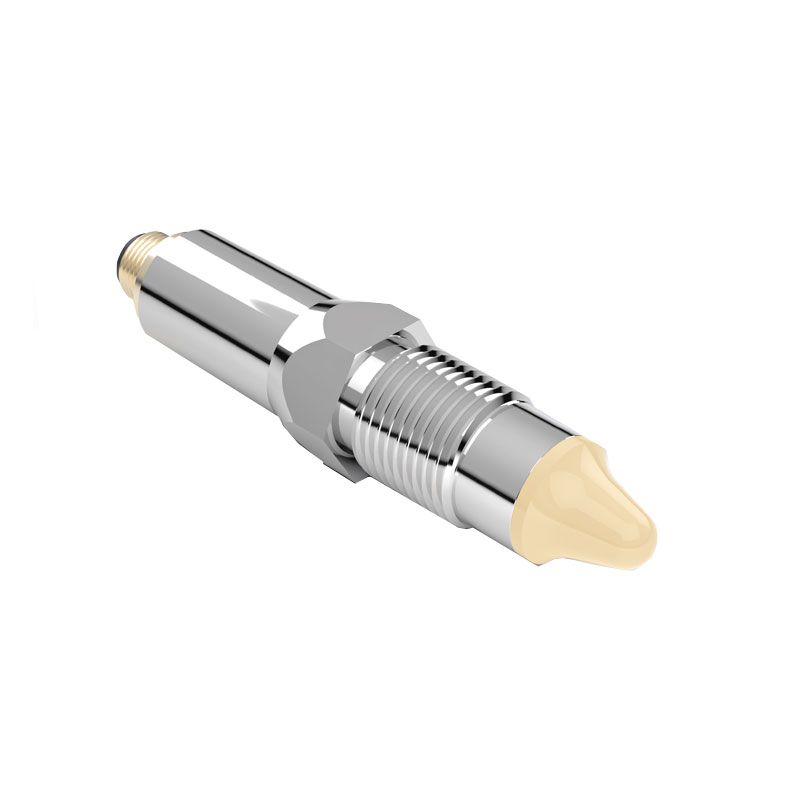
Ultrasonic Snow Depth Detector is a specialized device that uses ultrasonic ranging principles to identify and measure snow thickness. By monitoring changes in the distance from the sensor to the snow surface, it accurately measures snowfall depth and snowfall per unit time in real time, overcoming the shortcomings of other sensors in snow identification and enabling high-precision continuous monitoring in extreme environments.
Ultrasonic Snow Depth Detector is a professional meteorological and hydrological observation device developed based on ultrasonic ranging technology, specifically designed for the automatic, continuous, and accurate measurement of changes in natural snow depth. Its core working principle is that an ultrasonic probe at the top of the device emits ultrasonic pulses vertically downwards. After the sound waves reach the snow surface, they are reflected back to the probe, and the system accurately measures the time difference between the emission and reception of the sound waves. Since the speed of ultrasonic waves in air is known, the real-time distance from the probe to the current snow surface can be calculated. The initial distance from the probe to a fixed reference surface (usually the ground) is pre-determined during installation. Subtracting the real-time measured distance to the snow surface from this initial distance yields the accurate snow thickness value.
The core advantages of this technology lie in its non-contact measurement and high precision. The sensor does not directly contact the snow, completely avoiding measurement errors or equipment damage caused by the sensor being buried, frozen, or deformed under load. It achieves millimeter-level resolution, responding sensitively to even minute changes in snow cover, with data accuracy far exceeding traditional manual measurements or contact sensors. This characteristic makes it particularly suitable for monitoring snowfall per unit time; by continuously recording snow depth data and calculating its rate of change, snowfall intensity can be accurately analyzed.
The design of the Ultrasonic Snow Depth Detector fully considers the application needs of extreme field environments. It typically features a rain and snow resistant, low-temperature resistant, and strong wind resistant structure, with internal circuitry having temperature compensation functions to ensure stable operation under harsh conditions such as severe cold and blizzards. Data is transmitted to the monitoring center in real time via a wireless transmission module.
This equipment is mainly used in several key areas. In meteorological observation, it provides continuous snow cover data for weather forecasting, climate research, and snow disaster early warning. In hydrological and water resource management, accurately measuring snow depth and snowmelt equivalent in mountainous areas is crucial for predicting spring snowmelt runoff and assessing watershed water resources. In the fields of highway and railway traffic safety, deployment on key road sections enables real-time monitoring of snow depth, providing direct data for snow removal operation decisions and ensuring transportation safety. It is also an important monitoring tool in research on frost damage in the snow and ice industry, such as ski resorts, and in agriculture.
In summary, with its high precision, high reliability, and strong environmental adaptability, Ultrasonic Snow Depth Detector has become an indispensable technical equipment in modern snow monitoring systems, transforming traditional intermittent, manual snow observation into an automated, intelligent, and continuous monitoring process.
This paper addresses:https://www.fengtuweather.com/company/859.html
Related products
Related article
-
Fengtu Dust Detector: Comprehensive Environmental Monitoring for Industrial and Urban Settings
2025-10-31 -
Power Quality Measurement Monitoring Multiple Electrical Parameters
2026-03-11 -
Fengtu's Photovoltaic Module Dust Monitoring System: Ensuring Solar Efficiency through Precision Technology
2024-10-28 -
Weather Data at Your Fingertips, Even on the Move: The Vehicle - Mount Weather Station Advantage
2025-02-14 -
FT-GQX8 Road Weather Information System: Comprehensive Meteorological Monitoring for Traffic Safety
2025-10-22 -
Forestry Weather Station: A Comprehensive Solution for Forest Fire Control
2025-02-07 -
The Role of Dust Detector in Construction Site Dust Monitoring and Early Pollution Control
2025-08-26 -
Introduction to the Features of the Small Automatic Weather Station
2024-09-09