

Product
-
Weather station
-
Road Weather Station
-
Photovoltaic Inspection
-
Atmospheric monitoring
-
Operating condition monitoring
Recommended article
- photovoltaic testers is designed for high-precision testing at large-scale photovoltaic (PV) power plants
- Meteorological observation station Field High-Precision Monitoring: Applications and Performance Advantages
- Power Quality Analyzers Precise Detection of Various Power Quality Issues in the Grid
- Mobile Monitoring Applications and Performance Advantages of Vehicle-Mounted Five-Parameter Meteorological Equipment
- Power Quality Monitoring Equipment Enables Precise Real-Time Monitoring of Multi-Dimensional Power Grid Parameters
- Six-Element Automatic Weather Station is Adaptable to High-Precision Meteorological Monitoring Applications Across Multiple Scenarios
Contact us
Shandong Fengtu IOT Technology Co., Ltd
Sales Manager:Ms. Emily Wang
Cel,Whatsapp,Wechat:+86 15898932201
Email:info@fengtutec.com
Add:No. 155 Optoelectronic Industry Accelerator, Gaoxin District, Weifang, Shandong, China
PV Module Power Tester Enables Precise Testing of 1500V High-Voltage Modules
Article source:Weather station time:2026-03-18 11:16:13 viewed:332times
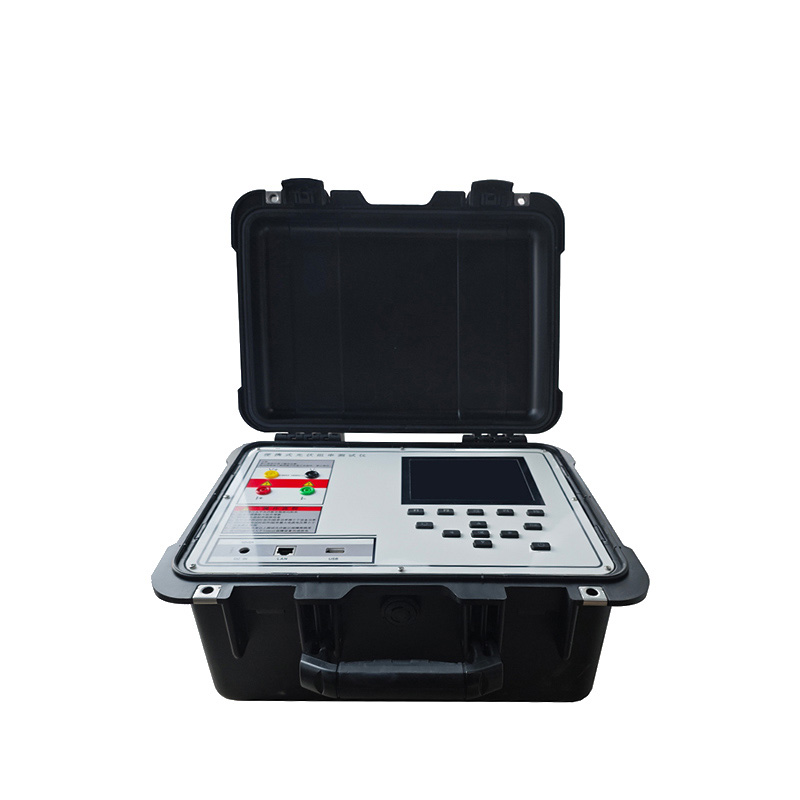
PV Module Power Tester features a voltage testing range extending up to 1500V and a current testing range reaching 30A, enabling the testing of photovoltaic (PV) modules with power ratings up to 30kW. It is designed to accurately measure key parameters—such as I-V curves, open-circuit voltage, short-circuit current, maximum power, irradiance, and temperature—for PV arrays and modules under actual field conditions. This device serves as a professional tool for evaluating the power generation performance of PV modules, assisting users in verifying PV system performance and rapidly generating test reports.
PV Module Power Tester is specialized professional equipment dedicated to assessing the power generation performance of PV modules. Its primary function is to accurately measure various electrical performance parameters of solar cell modules and arrays under field conditions. This type of device measures critical metrics—including open-circuit voltage, short-circuit current, maximum power, maximum power point voltage, maximum power point current, and fill factor—while simultaneously recording environmental parameters such as irradiance and temperature, thereby providing the data support necessary for a comprehensive evaluation of PV module performance.
In terms of measurement principles, PV Module Power Tester typically employs a four-wire connection method, which effectively eliminates the influence of test cable resistance on measurement results. Internally, the device utilizes capacitive or resistive electronic loads to execute a sweep process ranging from open-circuit to short-circuit conditions, thereby capturing the complete I-V characteristic curve. The testing duration is generally controlled within a range of 0.5 to 10 seconds; this ensures high measurement accuracy while preventing fluctuations in solar irradiance from affecting the test results. Upon completion of the test, the device automatically converts the measurement data—originally obtained under non-standard field conditions—into corresponding parameters under Standard Test Conditions (STC), facilitating easy performance comparisons for the user.
Regarding data management and software support, PV Module Power Tester features a built-in database containing a comprehensive collection of correction models for solar cell modules. This database covers product models from the majority of mainstream module manufacturers, serving as a reliable reference for converting and comparing test results. The accompanying professional analysis software supports various functions, including reading test data, displaying I-V curves, editing module information, and generating inspection reports. Furthermore, some software versions offer advanced capabilities such as PV module fault analysis and the simultaneous overlay display of multiple data sets, thereby facilitating comparative studies. Data storage capacity typically accommodates thousands of records—comprising both I-V curve data points and test condition information—and supports data export via interfaces such as USB or RS232. The PV Module Power Tester has been meticulously designed and engineered to fully address the demands of field testing. Featuring a portable structural design, the device is equipped with a built-in high-capacity lithium battery capable of supporting over eight hours of continuous field testing operations. Its user interface typically employs a combination of a touchscreen and a physical keypad, while its high-brightness LCD screen ensures clear visibility even under direct sunlight. Furthermore, the device is outfitted with high-precision radiometers and temperature sensors that enable the simultaneous recording of environmental parameters, thereby providing comprehensive background data to contextualize the test results. These functional features establish the PV Module Power Tester as an indispensable professional tool for the commissioning and acceptance, routine operation and maintenance, and quality inspection of photovoltaic power plants.
This paper addresses:https://www.fengtuweather.com/company/895.html
Related products
Related article
-
Discovering the Small Automatic Weather Station
2024-12-11 -
Small Automatic Weather Station: The Future of Distributed Meteorological Monitoring
2025-10-11 -
FT-WQX8 Outdoor Weather Sensors: A Multi-Parameter Monitoring Solution for Smart Cities and Environmental Protection
2025-07-09 -
Grassland Ecological Monitoring Station - Empowering Sustainable Grazing
2024-12-13 -
The 'Doctor' of Roads: Portable Ground Penetrating Radar for Detecting Underground Cavities
2025-02-25 -
Portable Ground Penetrating Radar: Detecting Hidden Pipelines and Curbing Illegal Discharges in Urban Settings
2025-02-27 -
Fengtu Vehicle-Mount Weather Station: Mobile Meteorological Monitoring with High Integration and Rugged Design
2025-05-16 -
How many parameters can a park anion monitoring system measure?
2024-07-24