

Product
-
Weather station
-
Road Weather Station
-
Photovoltaic Inspection
-
Atmospheric monitoring
-
Operating condition monitoring
Recommended article
- Electrical Power Analyzer enables multi-channel power grid parameter acquisition and the detection of harmonics and unbalance
- Shandong Fengtu, a manufacturer of meteorological stations, offers high-precision weather observation equipment designed for field use
- Series power supply for EL-Based Internal Defect Detection in Photovoltaic Modules
- Shandong Fengtu, a manufacturer of meteorological monitoring instruments, produces advanced weather observation equipment
- Odor gas detector On-site Monitoring of Odorous Pollutants in Compliance with the GB14554 Standard
- Integrated Four-Parameter Weather Station for Field Meteorological Data Collection (Temperature, Humidity, Wind Speed, and Wind Direction)
Contact us
Shandong Fengtu IOT Technology Co., Ltd
Sales Manager:Ms. Emily Wang
Cel,Whatsapp,Wechat:+86 15898932201
Email:info@fengtutec.com
Add:No. 155 Optoelectronic Industry Accelerator, Gaoxin District, Weifang, Shandong, China
Introduction to the Integrated Forest and Grassland Fire Risk Factor Monitoring Station
Article source:Weather station time:2024-02-06 10:21:35 viewed:594times
Forests are the "lungs of the earth", consuming carbon dioxide and releasing oxygen. Autumns and winters are dry and prone to fires, which are difficult to control. Fires destroy forests, harm animals, pollute the environment and upset the ecological balance. Therefore, it is crucial to prevent forest fires and we need to take measures to protect forest resources.
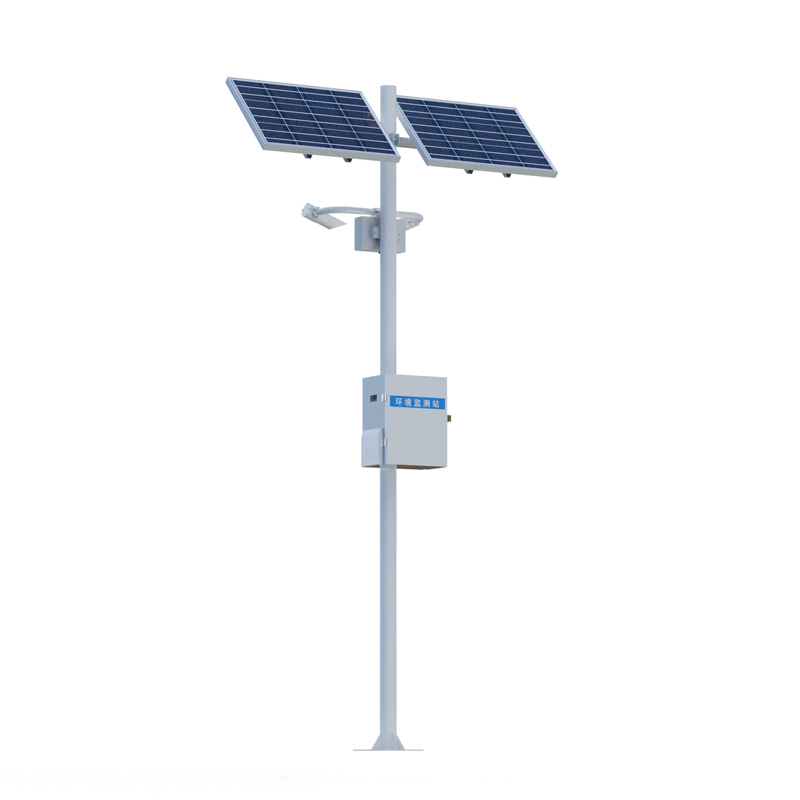
Setting up fire risk factor monitoring stations in forests enables real-time monitoring of changes in key factors such as the meteorological environment, temperature environment and soil moisture content. Once abnormalities are detected, these monitoring stations are equipped with sound and light alarms that will immediately sound an alarm, alerting people to the fire danger in a timely manner. This early warning mechanism is of great significance in preventing forest fires and protecting forest resources. Through these monitoring stations, we can better understand the changes in the forest environment and take timely measures to cope with potential fire risks, thus effectively reducing the possibility of fire.
The Integrated Forest and Grassland Fire Risk Factor Monitoring Station enables the Forest Fire Prevention Command Centre to observe the conditions of the forest area in real time, so as to detect the source of fire and take effective measures to prevent fire in time. Once a fire breaks out, the system can immediately transmit images of the scene back to the command centre, providing strong support for remote dispatch and command and helping to minimise fire losses. In addition, the system can also record the occurrence, development and end of the whole process of the fire, for the prevention and management of fire to provide real and complete historical information, for the subsequent fire prevention work to provide an important reference basis. Forests are the "lungs of the earth", consuming carbon dioxide and releasing oxygen. Autumn and winter are dry and prone to fires, which are difficult to control. Fires destroy forests, harm animals, pollute the environment and upset the ecological balance. Therefore, it is crucial to prevent forest fires and we need to take measures to protect forest resources.
Setting up fire risk factor monitoring stations in forests enables real-time monitoring of changes in key factors such as the meteorological environment, temperature environment and soil moisture content. Once abnormalities are detected, these monitoring stations are equipped with sound and light alarms that will immediately sound an alarm, alerting people to the fire danger in a timely manner. This early warning mechanism is of great significance in preventing forest fires and protecting forest resources. Through these monitoring stations, we can better understand the changes in the forest environment and take timely measures to cope with potential fire risks, thus effectively reducing the possibility of fire.
The Integrated Forest and Grassland Fire Risk Factor Monitoring Station enables the Forest Fire Prevention Command Centre to observe the conditions of the forest area in real time, so as to detect the source of fire and take effective measures to prevent fire in time. Once a fire breaks out, the system can immediately transmit images of the scene back to the command centre, providing strong support for remote dispatch and command and helping to minimise fire losses. In addition, the system is able to record the whole process of fire occurrence, development and ending, providing real and complete historical information for fire prevention and management, and providing important reference basis for subsequent fire prevention work.

This paper addresses:https://www.fengtuweather.com/company/129.html
Related products

Related article
-
Evaluating Photovoltaic Module Quality with Portable EL Detectors
2025-08-04 -
How to select sensors for four-element automatic weather stations?
2024-07-08 -
Filter Quality Control: The Role of Online Dust Particle Counters
2025-06-16 -
Weather Observation Stations in Tea Gardens, Combining Agriculture and Technology
2024-07-23 -
Automatic Farmland Weather Station
2024-08-20 -
Introduction to forest security monitoring systems
2024-04-12 -
Multifunctional meteorological monitoring equipment for ten-element weather stations
2024-07-02 -
Ultrasonic Snow Depth Detector Achieving Millimeter-Level Automatic Snow Depth Measurement Using Ultrasonic Ranging Principles
2026-03-19