

Product
-
Weather station
-
Road Weather Station
-
Photovoltaic Inspection
-
Atmospheric monitoring
-
Operating condition monitoring
Recommended article
- Integrated Four-Parameter Weather Station for Field Meteorological Data Collection (Temperature, Humidity, Wind Speed, and Wind Direction)
- Odor gas detector Enabling Precision, Round-the-Clock Monitoring of Fugitive Emissions in Industrial Facilities
- Compact Weather Stations: High-Precision Field Monitoring for Diverse Scenarios
- Shandong Fengtu, a renowned manufacturer of environmental monitoring instruments, supplies a wide range of field and online monitoring equipment
- Weather Monitoring Equipment enables high-precision, automated environmental parameter monitoring in field settings
- Introduction to the Principles, Applications, and Technical Specifications of Speed enforcement system
Contact us
Shandong Fengtu IOT Technology Co., Ltd
Sales Manager:Ms. Emily Wang
Cel,Whatsapp,Wechat:+86 15898932201
Email:info@fengtutec.com
Add:No. 155 Optoelectronic Industry Accelerator, Gaoxin District, Weifang, Shandong, China
EL series of DC power supply Completes EL Inspection of Internal Defects in Photovoltaic Power Plant Modules
Article source:Weather station time:2026-08-31 10:37:18 viewed:45times
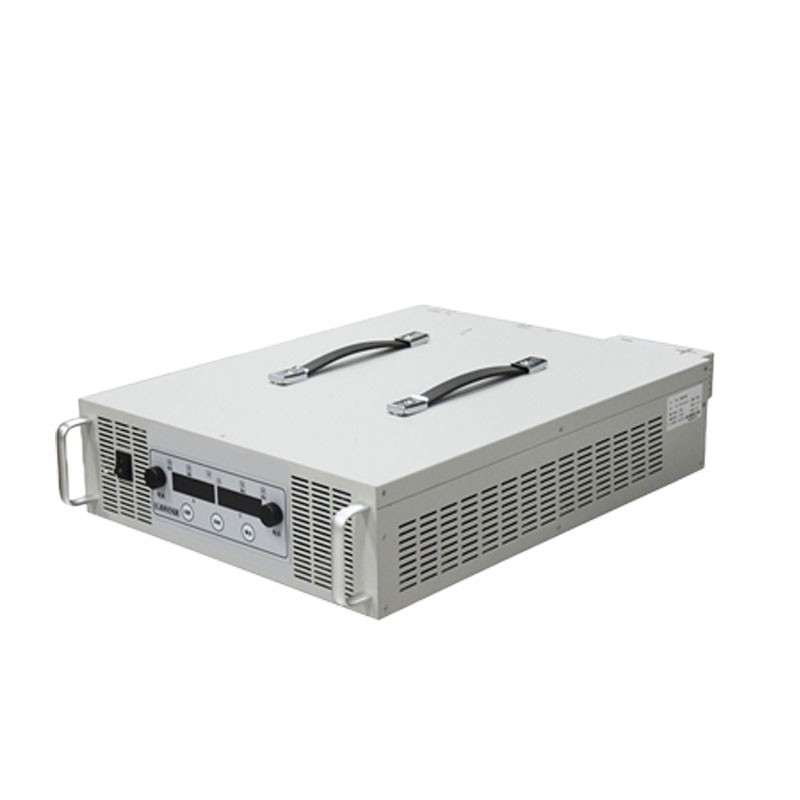
EL series of DC power supply150030 is a dedicated programmable power supply device for photovoltaic power plants. It converts AC to DC to excite the electroluminescence of photovoltaic panels, powering single modules or entire strings of modules with high-precision output, ensuring safe EL inspection of internal defects in photovoltaic modules.
EL series of DC power supply is a dedicated programmable power supply device developed specifically for the reverse power-up characteristics of photovoltaic power plant strings. The device works by converting 220V AC to controllable DC, inputting it to the photovoltaic panels to excite electroluminescence, thereby completing the EL inspection of internal defects such as microcracks, poor soldering, and broken grids in photovoltaic modules. It is widely used in photovoltaic power plant acceptance inspections, maintenance troubleshooting, and laboratory module quality inspection scenarios.
The newly launched 150030 model is a research-developed programmable linear domestic power supply. Relying on a supporting software system, it achieves intelligent control of power supply voltage and current parameters. It also incorporates multiple electrical performance protection measures to reduce the risk of reverse impact damage during photovoltaic module inspection from the power output source. This equipment also offers a Pro version, featuring upgraded high-quality software and using higher-quality imported electronic components paired with an open-programmable host. This ensures better string detection stability and equipment operational safety under prolonged, uninterrupted outdoor testing conditions, making it suitable for high-frequency, large-scale photovoltaic power plant on-site testing projects.
Regarding power output parameters, the EL series of DC power supply voltage output range is 0-1500V, current output range is 0-3A, and the maximum output power can reach 4.5KW. The equipment boasts a voltage accuracy of 1V, a current accuracy of 0.1A, and power accuracy of ±0.1A and ±1V, respectively. Power stability and output accuracy are both ±0.1%, with an output efficiency greater than 80%. It also features a built-in 12V compensation voltage. These precise power output parameters ensure a stable forward bias current for the photovoltaic modules, resulting in clear and reliable electroluminescence imaging results and reducing image distortion caused by power output fluctuations.
The EL series of DC power supply power supply uses a standard 220V AC input voltage, supports 50/60Hz grid frequencies, and has an input power factor greater than 0.75, making it suitable for the power supply conditions of most photovoltaic power plants in China. The EL series of DC power supply can perform power-on testing on individual photovoltaic modules or directly test the power supply of an entire photovoltaic string. This eliminates the need for repeated disassembly of photovoltaic module junction boxes, reducing safety hazards associated with high-altitude installation and removal, and effectively improving the overall efficiency of EL defect detection at the power plant site. During actual use, operators must strictly follow the equipment operating procedures to complete the wiring and take appropriate safety precautions to ensure the safe and orderly conduct of EL testing operations at the photovoltaic power plant.
This paper addresses:https://www.fengtuweather.com/technical/999.html
Related products
Related article
-
10 metre manual common lightning rod is convenient and easy to use
2024-04-25 -
Forest Fire Monitoring System Enables Early Warning of Fire Risk Through Meteorological Data
2026-04-29 -
Meteorological observation station Observes Localized Meteorological Data
2026-03-09 -
I-V Curve Tracer enables highly efficient and precise electrical performance testing of photovoltaic (PV) modules
2026-09-17 -
Dust monitoring system installation specification
2024-06-11 -
PV Panel Status Monitoring Equipment For Status Monitoring and Cleaning Alerts of PV Panels in Solar Power Plants
2026-04-01 -
Enhancing Convalescent Care Through Negative Oxygen Ion Concentration Monitoring
2025-05-21 -
Breaking Barriers: How Ultrasonic Smart Weather Station Simplifies Meteorological Observation
2025-01-03