

Product
-
Weather station
-
Road Weather Station
-
Photovoltaic Inspection
-
Atmospheric monitoring
-
Operating condition monitoring
Recommended article
- Introduction to the Principles, Applications, and Technical Specifications of Speed enforcement system
- Forest Weather Station Facilitates Precise Monitoring and Scientific Prevention of Forest Fires
- Radar speed gun Leverages the Doppler Effect for Precise Speed Measurement Across Multiple Scenarios
- Ultrasonic Snow Depth Monitoring Station Enables High-Precision, Automated Snow Depth Measurement
- Speed enforcement system Enables Precise Speed Measurement and Violation Evidence Capture Across Multiple Scenarios
- Shandong Fengtu: A Provider of Diverse Meteorological Monitoring Equipment
Contact us
Shandong Fengtu IOT Technology Co., Ltd
Sales Manager:Ms. Emily Wang
Cel,Whatsapp,Wechat:+86 15898932201
Email:info@fengtutec.com
Add:No. 155 Optoelectronic Industry Accelerator, Gaoxin District, Weifang, Shandong, China
Introduction to the Principles, Applications, and Technical Specifications of Speed enforcement system
Article source:Weather station time:2026-09-29 09:43:42 viewed:1times
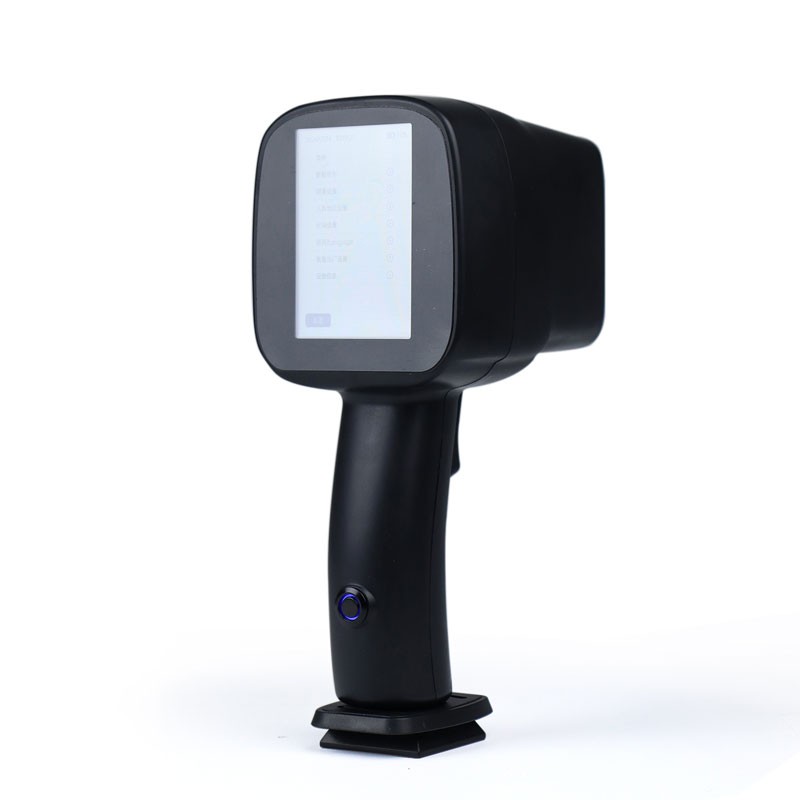
Speed enforcement system is a non-contact speed measurement device developed based on the Doppler effect. Featuring a lightweight, integrated design and flexible operational capabilities, it is widely used in scenarios such as road traffic management and industrial safety monitoring. It supports both static, fixed-point speed measurement and dynamic, vehicle-mounted measurement, overcoming the limitations of traditional fixed speed cameras—namely their rigid deployment and lack of mobility—and serving as a core tool for mobile and temporary speed enforcement operations.
The device operates on the principle of the Doppler effect, emitting radio waves toward moving targets. When these waves strike targets such as vehicles or mobile industrial equipment, a portion of the energy reflects back to the radar antenna. By analyzing the frequency shift of the returned signal, the system accurately calculates the target's speed. The process requires no physical contact with the object being measured and eliminates the need for auxiliary accessories like sensors or markers on the target surface, making it suitable for a wide range of non-contact speed measurement scenarios. Operating at a frequency of 24 GHz, the device offers strong anti-interference capabilities, ensuring stable performance in challenging weather conditions—such as rain or fog—and maintaining the continuity and accuracy of speed data.
Speed enforcement system is suitable for diverse fields, including traffic law enforcement, road safety inspections, and industrial production management. In the realm of road traffic, it enables the rapid setup of temporary speed checkpoints on urban roads, rural curves, school zones, and accident-prone areas to screen vehicle speeds. It is also ideal for routine speed monitoring patrols on remote suburban or mountainous roads, helping to effectively curb speeding violations and enhance overall road safety. In industrial settings, the device monitors the speed of mobile equipment such as forklifts and hoists, ensuring operational speeds remain within safe limits to prevent hazards associated with excessive speed while maintaining production efficiency. Furthermore, its non-contact measurement capability meets the needs of scenarios where installing external sensors is prohibited or impractical, offering broad applicability. The Speed enforcement system features a comprehensive set of functions designed to meet diverse requirements for precision speed measurement and data management. It supports customizable speed-limit thresholds and offers both automatic and manual sampling modes to suit various operational scenarios. During measurement, the device displays the real-time "overspeed ratio"—intuitively illustrating the extent of the violation by showing the proportion of the difference between actual and limit speeds—while automatically recording the peak overspeed value to accurately capture extreme violations. It stores the three most recent overspeed records, clearly displaying key data such as the time and magnitude of the violation, enabling staff to quickly verify infraction details. The unit supports bilingual (Chinese/English) operation to accommodate different users and allows for the querying and exporting of historical data, facilitating subsequent statistical analysis, archiving, and traceability.
In terms of technical performance, the Speed enforcement system excels with high precision, a wide measurement range, and low error rates. It covers a speed range of 1–240 km/h with a resolution of 0.1 km/h and maintains an overall measurement error within ±1 km/h, ensuring stable and reliable accuracy. With a transmission power of ≤20 dBm (standard 10 mW) and a beam angle of 22° x 8°, the device provides effective signal coverage with no blind spots. Its integrated, lightweight, and compact design ensures high mobility and ease of setup, storage, and transport. It supports multiple usage configurations—including handheld, tripod-mounted, and vehicle-mounted setups—and features a streamlined workflow that eliminates the need for complex calibration, making it highly practical and adaptable for mobile speed monitoring in outdoor environments and industrial facilities.
This paper addresses:https://www.fengtuweather.com/technical/1023.html
Related products
Related article
-
Introduction to the Features of the Small Automatic Weather Station
2024-09-09 -
Dust monitoring system installation specification
2024-06-11 -
Smart Tourism Anion Monitoring System
2024-08-26 -
Tracking Dust Pollution with High Tech
2024-04-23 -
Geological Disaster Monitoring Systems by Fengtu Technology
2025-09-08 -
Forestry Weather Station: A Powerful Tool for Forest and Grassland Fire Prevention and Control
2025-07-08 -
Sensor Array Technology and Application Scenarios of Odor gas detector
2026-06-29 -
How to protect the fully automatic weather station from lightning?
2024-03-08