

Product
-
Weather station
-
Road Weather Station
-
Photovoltaic Inspection
-
Atmospheric monitoring
-
Operating condition monitoring
Recommended article
- How Environmental Monitors Achieve Integrated Monitoring of Twelve Parameters
- How Small-Scale Weather Stations Enable Unattended Field Monitoring
- How Meteorological Monitoring Stations for Photovoltaic (PV) Sites Achieve Simultaneous Output of Eight Parameters Without a "Starting Wind Speed" Threshold
- How Micro-Weather Stations Achieve Integrated Monitoring of Twelve Meteorological Parameters
- photovoltaic testers – On-site I-V Characteristic Testing for PV Modules and Strings
- Field weather stations provide stable collection and transmission of various atmospheric and environmental monitoring parameters
Contact us
Shandong Fengtu IOT Technology Co., Ltd
Sales Manager:Ms. Emily Wang
Cel,Whatsapp,Wechat:+86 15898932201
Email:info@fengtutec.com
Add:No. 155 Optoelectronic Industry Accelerator, Gaoxin District, Weifang, Shandong, China
How Environmental Monitors Achieve Integrated Monitoring of Twelve Parameters
Article source:Weather station time:2026-11-09 09:20:23 viewed:2times
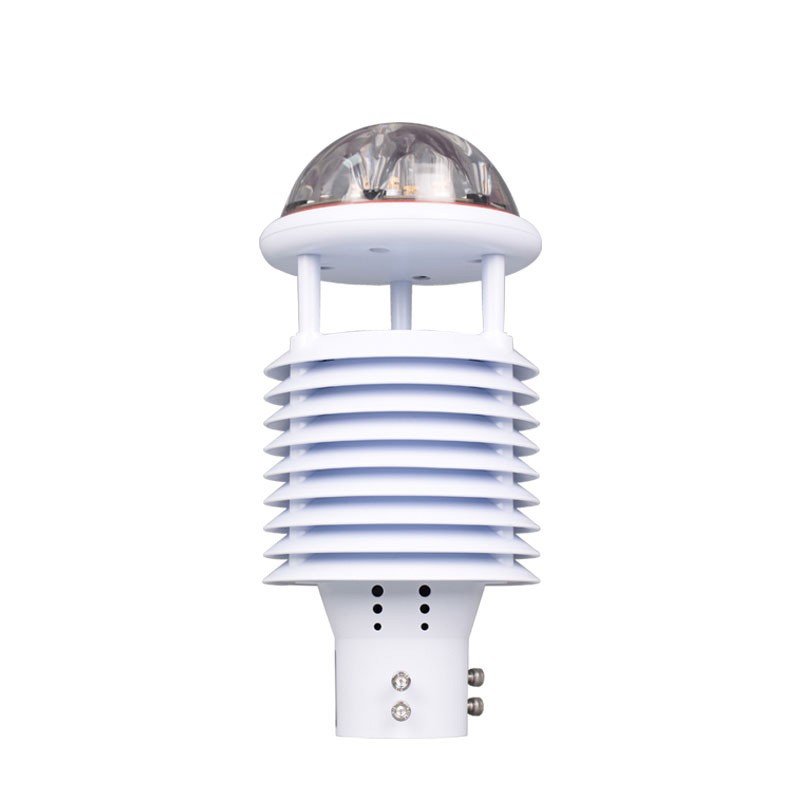
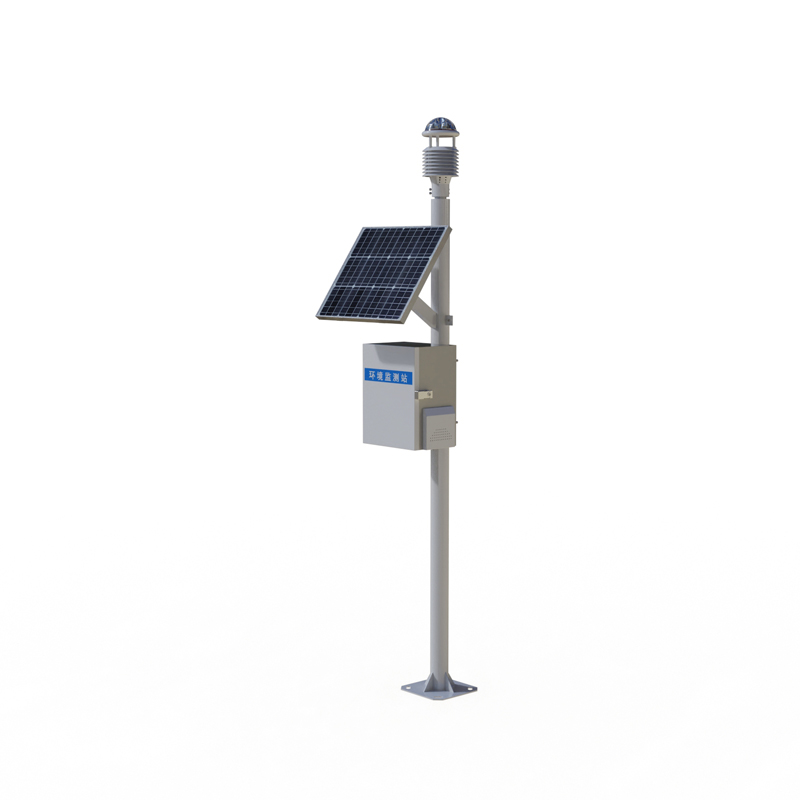
Environmental monitors are designed to provide integrated monitoring for twelve parameters—six pollutants (PM2.5, PM10, CO, SO2, NO2, and O3) and six meteorological/environmental factors (temperature, humidity, wind speed, wind direction, atmospheric pressure, and optical rainfall)—offering continuous, real-time data for environmental protection agencies.
Modern environmental regulation demands greater continuity and broader coverage of air quality data. Relying on single-parameter devices often necessitates multi-point deployment and individual maintenance, which increases the complexity of site construction and ongoing operations. The integrated monitoring approach consolidates standard pollutants and meteorological parameters into a single unit, streamlining on-site installation and helping to control costs when deploying dense, grid-based monitoring networks. Industry data indicates that this twelve-parameter integrated configuration has become the standard for urban grid-based "micro-stations," with many manufacturers offering devices that cover this specific set of parameters for various applications.
For wind measurement, the device utilizes ultrasonic technology. The sensors are housed beneath a top cover—a design choice intended to prevent the accumulation of rain or snow from obstructing the measurement paths. By analyzing the relative phase shift of continuous, variable-frequency ultrasonic signals, the device calculates wind speed and direction. Because this method eliminates mechanical moving parts, there is no "starting threshold" (minimum wind speed required for operation), allowing the device to provide data even in low-wind conditions. Compared to traditional cup anemometers or wind vanes, the absence of moving parts results in less wear and tear over time, thereby reducing the frequency required for on-site calibration.
Integrating twelve parameters into a single enclosure necessitates robust resistance to cross-interference between sensors. The device is equipped with a "watchdog" circuit and an automatic reset function; should the software crash or voltage fluctuations cause an error, the system can recover autonomously, ensuring continuous data collection. This feature is particularly valuable for unattended outdoor sites, as it minimizes the need for manual, on-site intervention in response to occasional malfunctions.
Typical applications include urban grid-based monitoring, integration with "smart" streetlights, environmental monitoring in scenic areas, dust tracking at construction sites, and air quality surveillance along roads and in public spaces. Optional sensors—such as those for hydrogen sulfide, volatile organic compounds (VOCs), solar radiation, and noise—can be added based on the specific regulatory requirements of each site. In construction site settings, particulate matter data can be integrated with dust-suppression sprinkler systems; in scenic areas or along urban roads, the simultaneous output of meteorological parameters and pollutant data helps in assessing conditions for pollutant dispersion.
From a practical deployment perspective, the value of such integrated instruments lies in reducing the variety of equipment and the complexity of wiring required for individual monitoring points, making high-density sensor networks more economically viable. Instead of receiving limited data points from isolated locations, environmental authorities gain access to synchronized pollutant and meteorological data from multiple points across a given area—providing more meaningful insights for analyzing the relative contributions of regional transport versus local accumulation.
This paper addresses:https://www.fengtuweather.com/technical/1044.html
Related products

Related article
-
Five-in-One Weather Station for 24-Hour Continuous Monitoring of Outdoor Meteorological Parameters
2026-03-05 -
photovoltaic testers Ideal for Photovoltaic System Testing and Cell Performance Assessment
2026-03-20 -
The 'Doctor' of Roads: Portable Ground Penetrating Radar for Detecting Underground Cavities
2025-02-25 -
How Negative Ion Monitoring Enhances Air Quality and Boosts Tourism in Forest Areas
2024-12-31 -
Ultrasonic Vehicle Weather Stations: Extending Meteorological Monitoring Capabilities Beyond Fixed Networks
2025-10-09 -
Power Quality Analyzers is a portable electrical power detection device
2026-03-13 -
Functions, Advantages and Applications of Visibility Monitoring Station in Traffic Safety Guarantee
2025-08-21 -
The Role of Dust Detector in Construction Site Dust Monitoring and Early Pollution Control
2025-08-26