

Product
-
Weather station
-
Road Weather Station
-
Photovoltaic Inspection
-
Atmospheric monitoring
-
Operating condition monitoring
Recommended article
- Electrical Power Analyzer enables multi-channel power grid parameter acquisition and the detection of harmonics and unbalance
- Shandong Fengtu, a manufacturer of meteorological stations, offers high-precision weather observation equipment designed for field use
- Series power supply for EL-Based Internal Defect Detection in Photovoltaic Modules
- Shandong Fengtu, a manufacturer of meteorological monitoring instruments, produces advanced weather observation equipment
- Odor gas detector On-site Monitoring of Odorous Pollutants in Compliance with the GB14554 Standard
- Integrated Four-Parameter Weather Station for Field Meteorological Data Collection (Temperature, Humidity, Wind Speed, and Wind Direction)
Contact us
Shandong Fengtu IOT Technology Co., Ltd
Sales Manager:Ms. Emily Wang
Cel,Whatsapp,Wechat:+86 15898932201
Email:info@fengtutec.com
Add:No. 155 Optoelectronic Industry Accelerator, Gaoxin District, Weifang, Shandong, China
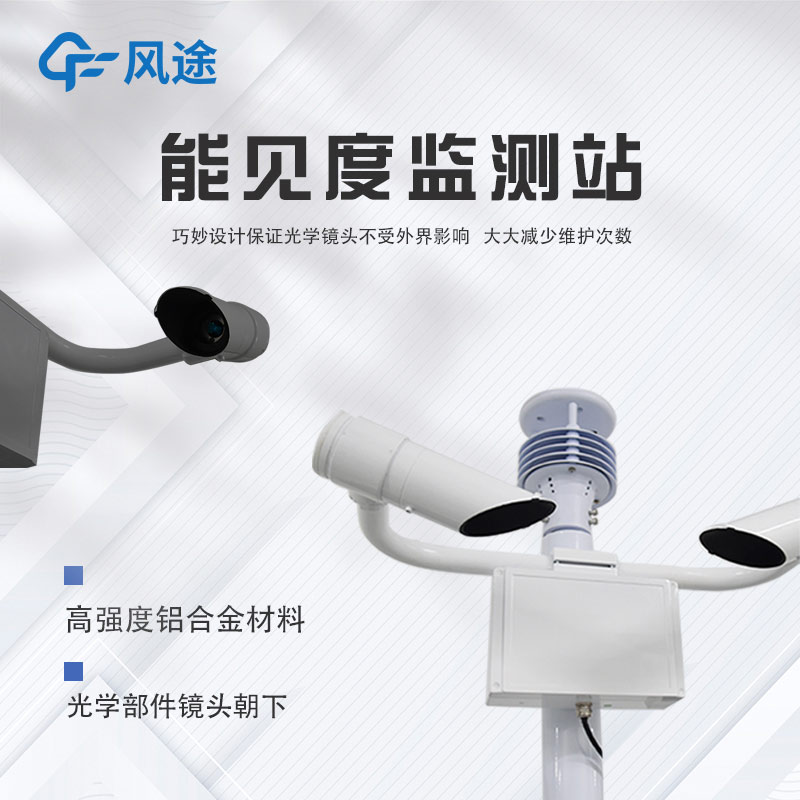
Functions, Advantages and Applications of Visibility Monitoring Station in Traffic Safety Guarantee
Article source:Weather station time:2025-08-21 09:13:29 viewed:557times
Rain and snow make road surfaces slippery, while low temperatures cause ground icing—both pose severe threats to driving safety. Timely and accurate traffic meteorological monitoring services have thus become a key guarantee for the safety of public travel. Currently, professional traffic meteorological observation stations in China are unevenly distributed, and their monitoring of high-impact weather such as heavy fog, patchy fog, and road icing fails to meet actual needs. It is therefore urgent to increase the number and density of stations. Against this backdrop, the Visibility Monitoring Station has emerged as an important application form of integrated traffic meteorological monitors.
1. Working Principle
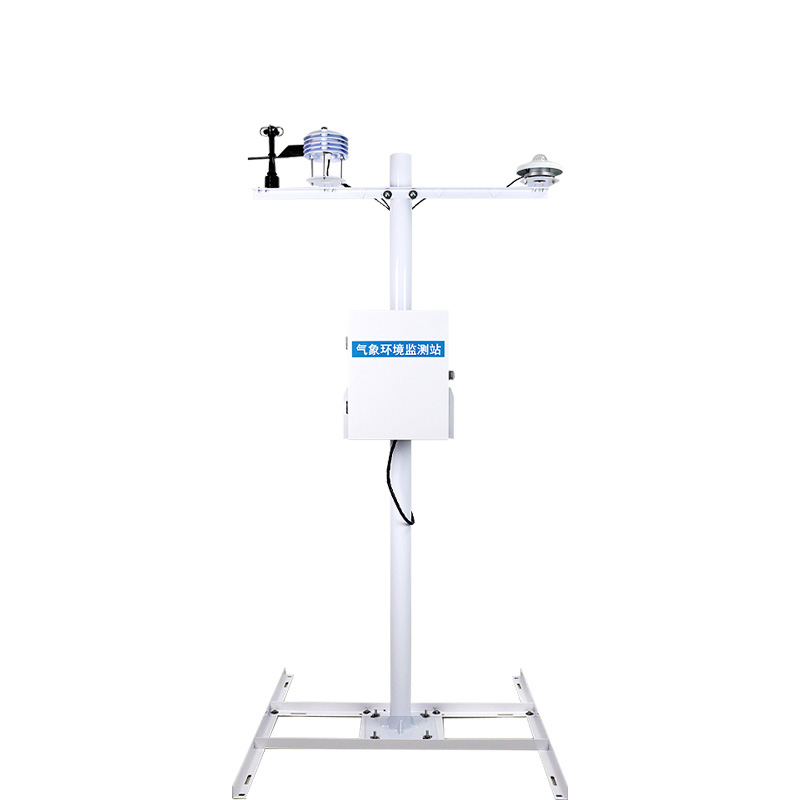
The Visibility Monitoring Station leverages embedded technology, optical technology, digital electronic technology, and other technologies to integrate multiple sensors in terms of structure and system composition. One of its core functions is to accurately monitor visibility; it can also simultaneously track multiple meteorological and road elements, including air temperature, relative humidity, wind speed, wind direction, rainfall, road surface conditions (dry, damp, wet, snowy, icy, ice-water mixture, etc.), and road surface temperature. Equipped with a microcontroller unit (MCU), the device integrates multiple sensors and communication methods on the underlying circuit board, making it a new-generation traffic meteorological monitoring device specifically designed for highway traffic scenarios.
2. Monitoring Capabilities
The Visibility Monitoring Station is equipped with various high-precision sensors that enable 24/7 continuous monitoring. In addition to core visibility monitoring, it can track:
Atmospheric visibility
Road surface temperature
Road surface conditions (dry, damp, wet, waterlogged, icy, snowy)
Waterlogging depth, icing depth, snow depth, and slipperiness
It also supports flexible addition or removal of monitoring items (e.g., solar radiation, PM2.5, PM10, noise) and customization based on specific needs.
3. Supporting Platform & Operation Modes
Cloud-based Environmental Monitoring Platform: It offers functions such as data viewing, over-limit early warning, and data storage/export, providing important reference for highway traffic management, construction operations, and disaster prevention.
Power Supply: Supports municipal power supply and solar power supply, enabling "plug-and-play" operation.
Data Transmission: Supports wired and wireless transmission, allowing real-time and stored measurement results to be sent to data terminals via a data bus.
4. Installation & Cost Advantages
The wind direction measurement function automatically calibrates to north, unaffected by installation orientation. Moreover, it does not require the construction of dedicated foundation poles—instead, it can be installed on existing facilities along highways, such as lamp posts, monitoring poles, and gantries. This minimizes additional costs in transportation, installation, and maintenance of highway traffic meteorological stations, helping traffic authorities better supervise road environments and build a digital defense line for urban traffic safety.
This paper addresses:https://www.fengtuweather.com/industry/776.html
Related products
Related article
-
photovoltaic testers is designed for high-precision testing at large-scale photovoltaic (PV) power plants
2026-09-11 -
Discovering the Small Automatic Weather Station
2024-12-11 -
Forest Weather Station Real-time Monitoring of Forest Area Weather and Fire Risk Levels
2026-02-12 -
From Parks to Multiple Fields: Fengtu's Environmental Monitoring Stations at Work
2024-10-17 -
Geological Disaster Monitoring Systems by Fengtu Technology
2025-09-08 -
Principle of field mini weather station
2024-04-09 -
Forestry Weather Station: Your All-in-One Fire Risk Sentinel in the Woods
2024-12-09 -
Application of Forest Weather Station in Forestry Protection
2025-11-24