

Product
-
Weather station
-
Road Weather Station
-
Photovoltaic Inspection
-
Atmospheric monitoring
-
Operating condition monitoring
Recommended article
- Application Characteristics of PV Module I-V Power Testers in On-Site Power Plant Inspections
- Application of Compact Meteorological Monitoring Equipment in Dairy Barn Environments
- How Environmental Monitors Achieve Integrated Monitoring of Twelve Parameters
- How Small-Scale Weather Stations Enable Unattended Field Monitoring
- How Meteorological Monitoring Stations for Photovoltaic (PV) Sites Achieve Simultaneous Output of Eight Parameters Without a "Starting Wind Speed" Threshold
- How Micro-Weather Stations Achieve Integrated Monitoring of Twelve Meteorological Parameters
Contact us
Shandong Fengtu IOT Technology Co., Ltd
Sales Manager:Ms. Emily Wang
Cel,Whatsapp,Wechat:+86 15898932201
Email:info@fengtutec.com
Add:No. 155 Optoelectronic Industry Accelerator, Gaoxin District, Weifang, Shandong, China
Application Characteristics of PV Module I-V Power Testers in On-Site Power Plant Inspections
Article source:Weather station time:2026-11-11 09:53:42 viewed:4times
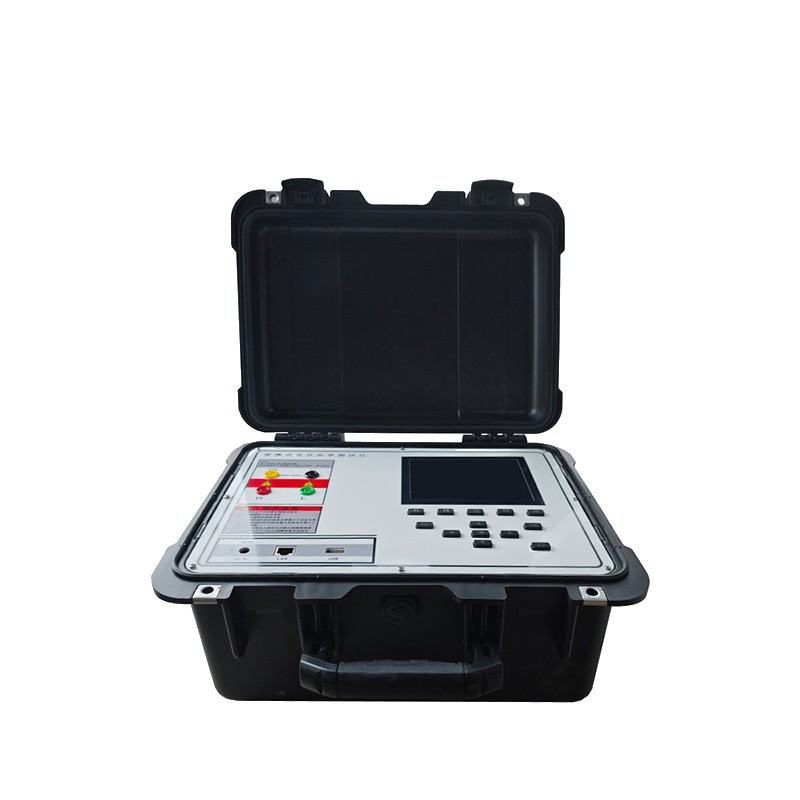
A PV module I-V power tester is a portable device designed to assess the electrical performance of photovoltaic (PV) strings and modules by measuring key parameters such as open-circuit voltage, short-circuit current, and maximum power. With a voltage measurement capability of up to 1500V and a current range of 20A, the instrument supports on-site testing of PV strings with a maximum capacity of 30kW. When paired with high-precision irradiance and back-sheet temperature sensors, it provides accurate current-voltage (I-V) characteristic data for power plant operations and maintenance (O&M) as well as third-party inspection services.
In the field, the actual operating state of a PV string is significantly influenced by solar irradiance and module temperature. Relying solely on a multimeter to measure open-circuit voltage or short-circuit current is insufficient to fully characterize a string's true power output capability. An I-V power tester employs a capacitive load to rapidly scan the PV string, capturing the complete I-V characteristic curve, from which the maximum power point (MPP) and fill factor (FF) can be derived. Because this process must be conducted under natural sunlight, the irradiance sensors and temperature probes included with the device are not merely auxiliary features, but essential components for data correction. The irradiance and back-sheet temperature values measured on-site are used to normalize test results to Standard Test Conditions (STC), ensuring that power data collected at different times and locations remain comparable.
From an operational perspective, PV module I-V power testers feature an integrated, compact design that is lightweight enough for a single person to carry, facilitating movement between PV arrays. Testing speed is a critical factor for on-site efficiency; the scanning process for an individual module or string can be completed in just a few seconds. Data can be exported with a single click, minimizing the potential for human error associated with manual recording. The device’s built-in, high-precision capacitive load rapidly shifts the operating point of the PV string during the scan, allowing the full I-V curve to be captured in a very short timeframe. For third-party inspection agencies, this rapid testing capability enables a larger sample size of PV strings to be assessed within a limited project schedule. For power plant O&M personnel, it facilitates the timely identification of strings exhibiting abnormal power output or excessive degradation during routine inspections. In practical application, photovoltaic (PV) module I-V power testers are used for both individual PV modules and strings of modules connected in series. They are employed in scenarios such as power plant commissioning, routine operation and maintenance (O&M) inspections, and troubleshooting. If an I-V curve for a given string exhibits an abnormal inflection point, or if its maximum power output is significantly lower than that of other strings facing the same direction, O&M personnel can analyze the data—factoring in irradiance levels and temperature-corrected results—to determine whether the issue stems from module degradation, localized shading, or connection faults. It is important to note that field testing should ideally be conducted during periods of high, stable irradiance to avoid data fluctuations caused by rapidly changing cloud cover. The device’s user interface is clearly organized, allowing personnel to perform parameter setup and data acquisition after only brief training, thereby reducing the need for highly specialized expertise during on-site operations.
This paper addresses:https://www.fengtuweather.com/industry/1046.html
Related products


Related article
-
Scenic Weather Station: Empowering Tourism with Meteorological Resources
2024-09-26 -
Digital weather stations in schools to foster scientific literacy among schoolchildren
2024-07-22 -
How Scenic Weather Stations Enhance the 'Natural Oxygen Bar' Tourism Experience
2025-02-11 -
Integrated Forest and Grassland Fire Risk Factor Monitoring Station Architecture
2024-08-02 -
Vehicle-Mount Weather Stations: Mobile Solutions for Environmental Monitoring and Air Quality Analysis
2025-05-26 -
Sensors, the sensing equipment of a weather station system
2024-06-14 -
Road Weather Station monitors weather changes to support smart transportation
2025-11-18 -
Automated systems for meteorological stations
2024-04-18