

Product
-
Weather station
-
Road Weather Station
-
Photovoltaic Inspection
-
Atmospheric monitoring
-
Operating condition monitoring
Recommended article
- Electrical Power Analyzer enables multi-channel power grid parameter acquisition and the detection of harmonics and unbalance
- Shandong Fengtu, a manufacturer of meteorological stations, offers high-precision weather observation equipment designed for field use
- Series power supply for EL-Based Internal Defect Detection in Photovoltaic Modules
- Shandong Fengtu, a manufacturer of meteorological monitoring instruments, produces advanced weather observation equipment
- Odor gas detector On-site Monitoring of Odorous Pollutants in Compliance with the GB14554 Standard
- Integrated Four-Parameter Weather Station for Field Meteorological Data Collection (Temperature, Humidity, Wind Speed, and Wind Direction)
Contact us
Shandong Fengtu IOT Technology Co., Ltd
Sales Manager:Ms. Emily Wang
Cel,Whatsapp,Wechat:+86 15898932201
Email:info@fengtutec.com
Add:No. 155 Optoelectronic Industry Accelerator, Gaoxin District, Weifang, Shandong, China
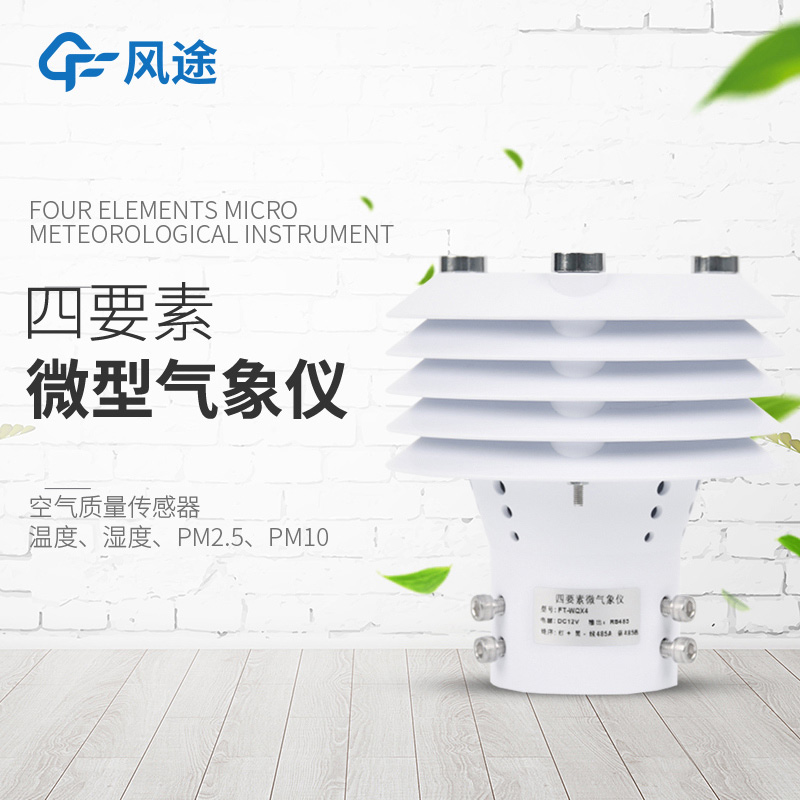
Sensors, the sensing equipment of a weather station system
Article source:Weather station time:2024-06-14 08:50:29 viewed:539times
The sensing devices of a weather station system are sensors of various types. They are usually integrated into automatic weather stations and are capable of collecting data 24/7 and transmitting them to a central database, either wired or wirelessly. Meteorologists and researchers use these data for weather analysis, forecasting, climate research, and other applications in related fields.
Sensors are devices that are capable of converting physical quantities in the environment such as temperature, humidity, etc., into electrical signals; they consist of a sensitive element, a conversion element, and a conversion circuit.
In agriculture, sensors are increasingly being used to give crops and agricultural products their "senses" by monitoring and transmitting key information such as soil moisture, air temperature, light intensity, CO2 concentration, etc. in real time. This raw data is critical to understanding crop growing conditions.
With the development of big data technology, sensors have become the basis for building a precision agriculture data monitoring platform. By deploying various types of sensors, various dynamic data in the agricultural production process can be comprehensively recorded, such as crop growth conditions, the occurrence of pests and diseases, and soil conditions.
Using these data, combined with data analysis and artificial intelligence technology, agricultural producers can make more scientific decisions on crop planting, irrigation, fertilisation and pest control, improve agricultural production efficiency, reduce resource waste and enhance agricultural sustainability.
It can be seen that in the context of the big data era, the sensor has become a bridge connecting agriculture and modern information technology, promoting the development of intelligent agriculture.
Nowadays, there is an increasing need for small and portable sensors in the agricultural field. In the future, the development of more accurate and easy-to-carry sensors will be very crucial to enhance agricultural technology and help agriculture become smarter and more efficient.
This paper addresses:https://www.fengtuweather.com/industry/408.html
Related products
Related article
-
Principles and Applications of Online dust particle counter
2025-11-21 -
Meteorological Monitoring for Drone Takeoff and Landing: Application of Vehicle Weather Station
2025-05-20 -
Intelligent agro-meteorological monitoring stations
2024-07-04 -
Principle of Light Scattering Dust Detector
2024-05-27 -
How Tunnel COVI Detectors Protect Driving Safety in Real Time
2026-05-21 -
Odor gas detector utilizes a multi-sensor array to perform on-site monitoring of odor factors according to national standards
2026-08-25 -
Functions, Advantages and Applications of Visibility Monitoring Station in Traffic Safety Guarantee
2025-08-21 -
Detecting Deep - Buried Non - Metallic Pipelines with Ground Penetrating Radar
2025-03-05