

Product
-
Weather station
-
Road Weather Station
-
Photovoltaic Inspection
-
Atmospheric monitoring
-
Operating condition monitoring
Recommended article
- Application of Compact Meteorological Monitoring Equipment in Dairy Barn Environments
- How Environmental Monitors Achieve Integrated Monitoring of Twelve Parameters
- How Small-Scale Weather Stations Enable Unattended Field Monitoring
- How Meteorological Monitoring Stations for Photovoltaic (PV) Sites Achieve Simultaneous Output of Eight Parameters Without a "Starting Wind Speed" Threshold
- How Micro-Weather Stations Achieve Integrated Monitoring of Twelve Meteorological Parameters
- photovoltaic testers – On-site I-V Characteristic Testing for PV Modules and Strings
Contact us
Shandong Fengtu IOT Technology Co., Ltd
Sales Manager:Ms. Emily Wang
Cel,Whatsapp,Wechat:+86 15898932201
Email:info@fengtutec.com
Add:No. 155 Optoelectronic Industry Accelerator, Gaoxin District, Weifang, Shandong, China
Application of Compact Meteorological Monitoring Equipment in Dairy Barn Environments
Article source:Weather station time:2026-11-10 09:31:05 viewed:5times
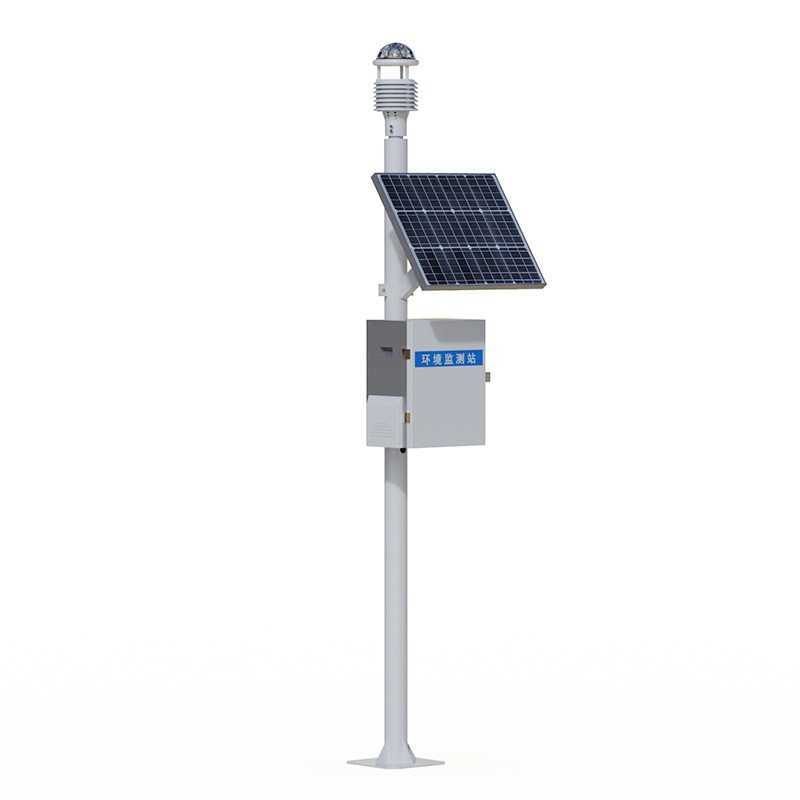
The microclimate within a dairy barn directly influences a cow’s feed intake and milk production. High temperatures and humidity in the summer, as well as extreme cold and strong winds in the winter, can lead to heat or cold stress. Compact, easy-to-deploy meteorological monitoring systems—which require no complex configuration—can continuously collect data on wind speed, temperature, humidity, and atmospheric pressure in and around barns and exercise yards, all without disrupting daily farm operations. These systems often feature an integrated, multi-parameter sensor design. By avoiding the measurement inaccuracies—such as those caused by timer precision issues or circuit delays—often found in traditional ultrasonic weather stations, they provide reliable, unified digital data output. This makes them ideal for agricultural settings that require long-term, unattended operation. For small-to-medium-sized farms or research-oriented dairy facilities, the focus is not on broad-scale weather forecasting, but rather on capturing subtle fluctuations in the local microclimate. This data serves as a practical basis for managing cooling systems (such as sprinklers), ventilation, and bedding conditions.
In a real-world farm environment, the effectiveness of the data depends on the placement of the monitoring equipment and its durability. Dairy barns often have high humidity and elevated ammonia levels, while outdoor exercise yards are exposed to dust, rain, and snow; therefore, the sensor housing must offer a high degree of protection. Most integrated weather stations now utilize ASA-material housings with an IP65 (or higher) ingress protection rating. A concealed probe design under the top cover helps prevent the accumulation of rain or snow, which could otherwise obstruct wind speed measurements. Installation is straightforward: the sensor can be mounted onto a two-meter carbon steel stand without the need for flanges or complex calibration, allowing one or two people to complete the setup quickly. For power, a combination of solar panels and rechargeable batteries ensures continuous operation, even during prolonged periods of overcast or rainy weather. Data is transmitted via a 4G network to a cloud platform, enabling farm managers to monitor real-time temperature and humidity levels—as well as long-term trends—directly from their mobile devices.
From a farm management perspective, among the nine parameters typically monitored, the most frequently utilized data points are temperature, humidity, wind speed, and optical rainfall measurement. When the temperature-humidity index (THI) exceeds a certain threshold, the likelihood of heat stress in cattle increases significantly. In such cases, wind speed data helps determine whether existing ventilation or misting/sprinkling systems are effectively covering the cattle bedding areas. Optical rainfall sensors are used for managing exercise yards; since ground slipperiness—before and after rainfall—is linked to the incidence of hoof diseases, timely information on precipitation allows for better scheduling of grazing or manure-clearing operations. While parameters like total solar radiation, PM2.5, and PM10 are considered auxiliary in a farm setting, they provide valuable additional insights when evaluating the thermal insulation of barn roofs or the impact of ambient dust on respiratory health. All data parameters are output through a single interface, eliminating the wiring complexity and maintenance costs associated with integrating multiple separate sensors.
Compact meteorological monitoring equipment does not prioritize laboratory-grade absolute precision; instead, it emphasizes long-term operational stability and data continuity in outdoor environments. Traditional ultrasonic weather stations rely on high-precision timers, which are susceptible to drift in wind speed and direction readings caused by temperature fluctuations or circuit delays. In contrast, a system utilizing continuous frequency-modulated ultrasonic signals combined with relative phase detection bypasses this limitation. For farm operators, this means the equipment does not require frequent factory recalibration or on-site fine-tuning, even when subjected to significant diurnal temperature variations or seasonal shifts. Furthermore, 24-hour continuous monitoring ensures that nighttime and early-morning periods—critical windows for calf rearing and winter cold-protection management—are no longer "blind spots" in the data.
The core value of using compact meteorological monitoring equipment on a farm lies in transforming environmental data into actionable, day-to-day decision-making insights. Without the need for complex data models or expert systems, farm staff can use temperature-humidity trends and real-time wind speed data to decide when to activate fans, adjust the duration of misting/sprinkling, or bring the herd back into the barn. The compact, low-power design of these devices allows for flexible deployment at key locations—such as calf hutches, the holding area of a milking parlor, or isolation barns—rather than relying on a single, generalized average for the entire farm. This type of granular data collection, focused on localized settings, is more relevant to the day-to-day challenges faced by a ranch than large-scale weather forecasts.
This paper addresses:https://www.fengtuweather.com/company/1045.html
Related products
Related article
-
Road surface temperature monitoring station application range
2024-06-25 -
Introduction to forest security monitoring systems
2024-04-12 -
Negative oxygen ion monitoring system to create a scenic image
2024-04-02 -
Atmospheric electric field meters provide early warnings of thunderstorm activity by monitoring changes in the ground electric field
2026-06-02 -
Small Automatic Weather Stations: Enabling Precise Meteorological Monitoring Everywhere
2025-03-20 -
Beyond Gas and Particles: The Versatile Air Quality Monitoring Station
2025-08-07 -
How Scenic Weather Stations Enhance the 'Natural Oxygen Bar' Tourism Experience
2025-02-11 -
Road Weather Station: Monitoring for Safe Highways
2024-09-25