

Product
-
Weather station
-
Road Weather Station
-
Photovoltaic Inspection
-
Atmospheric monitoring
-
Operating condition monitoring
Recommended article
- Odor gas detector Enabling Precision, Round-the-Clock Monitoring of Fugitive Emissions in Industrial Facilities
- Compact Weather Stations: High-Precision Field Monitoring for Diverse Scenarios
- Shandong Fengtu, a renowned manufacturer of environmental monitoring instruments, supplies a wide range of field and online monitoring equipment
- Weather Monitoring Equipment enables high-precision, automated environmental parameter monitoring in field settings
- Introduction to the Principles, Applications, and Technical Specifications of Speed enforcement system
- Forest Weather Station Facilitates Precise Monitoring and Scientific Prevention of Forest Fires
Contact us
Shandong Fengtu IOT Technology Co., Ltd
Sales Manager:Ms. Emily Wang
Cel,Whatsapp,Wechat:+86 15898932201
Email:info@fengtutec.com
Add:No. 155 Optoelectronic Industry Accelerator, Gaoxin District, Weifang, Shandong, China
PV Panel Status Monitoring Equipment For Status Monitoring and Cleaning Alerts of PV Panels in Solar Power Plants
Article source:Weather station time:2026-04-01 10:00:01 viewed:329times
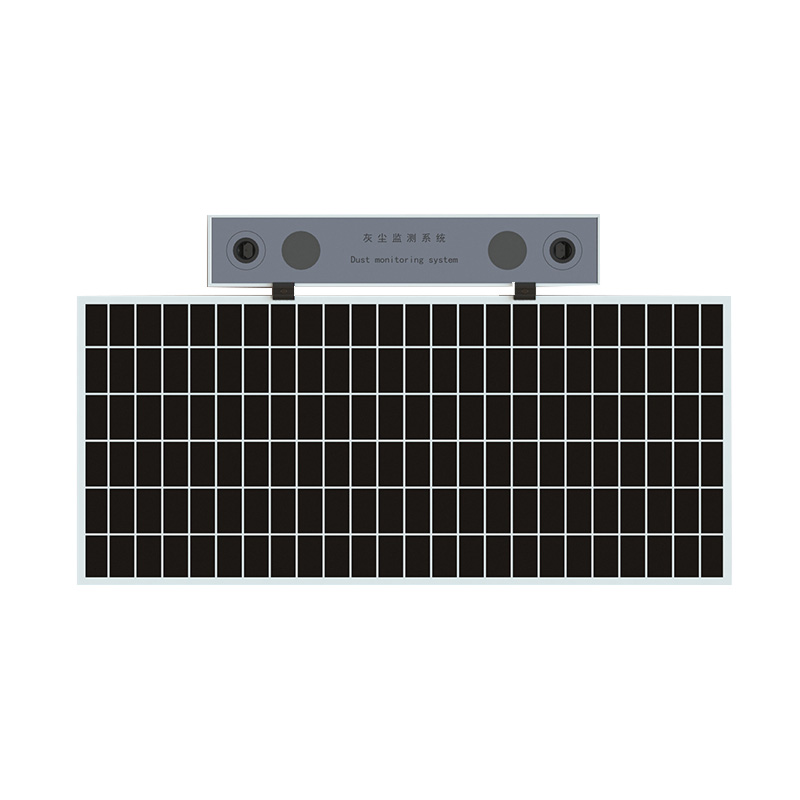
PV Panel Status Monitoring Equipment is mounted on the frame of a PV panel; utilizing closed-loop blue-light contamination measurement technology, it continuously detects transmission losses caused by contaminants. It calculates the contamination ratio in real-time, converts this figure into a corresponding loss in power generation, and issues a cleaning alert when cleanliness levels fall below a sufficient threshold. This device is particularly well-suited for use in dry, windy, and dusty regions.
PV Panel Status Monitoring Equipment is a specialized monitoring terminal developed specifically to address dust contamination issues in solar power plants. Installed directly onto the frames of PV panels, the device continuously measures the transmission losses resulting from contaminants on the glass surface. It calculates the reduction in sunlight reaching the solar module and translates this figure into a real-time estimate of lost power generation. Employing advanced closed-loop blue-light contamination measurement technology, the device effectively monitors the cleanliness of PV panels, ensuring that the solar power generation system maintains optimal operational efficiency. It is particularly applicable to solar power plants situated in arid, windy, and dusty environments.
The core function of PV Panel Status Monitoring Equipment lies in measuring the proportion of contaminants—an indicator defined as the "contamination ratio"—which directly reflects the extent of dust accumulation on the PV panel's surface. By establishing a coupled model linking the contamination ratio to the loss in power generation efficiency, the device can quantitatively assess the impact of the current dust accumulation status on overall power output. When the contamination ratio reaches a pre-set threshold, the system automatically prompts the user to perform timely cleaning, thereby preventing excessive dust buildup from causing a sustained decline in PV generation efficiency. Compared to traditional scheduled cleaning regimens, this precision cleaning approach—driven by real-time monitoring—significantly reduces cleaning costs while minimizing the waste of water resources and human labor often associated with indiscriminate cleaning practices.
In terms of technical implementation, PV Panel Status Monitoring Equipment employs optical sensing methods to directly measure changes in light transmittance. Once data is collected, it is transmitted wirelessly to a centralized monitoring platform, enabling remote, real-time surveillance of the status of each individual PV panel. Operations and maintenance personnel can thus ascertain the cleanliness status of every panel without needing to visit the site in person; by integrating this data with meteorological information and power generation efficiency trends, they can formulate scientifically optimized cleaning schedules. Certain advanced configurations of the system also incorporate analytical models that balance cleaning costs against power generation revenues, automatically determining the optimal cleaning cycle with the objective of minimizing the combined total of annual accumulated power generation losses and cleaning maintenance expenses. Real-world application data indicates that photovoltaic (PV) power stations utilizing such monitoring equipment—in conjunction with precise cleaning strategies—can reduce cleaning frequency by over 40%, while boosting power generation efficiency by 8% to 15%. Across more than 200 PV power stations in Shaoxing, Zhejiang, the adoption of a data-driven cleaning strategy resulted in a 5.05% relative increase in power generation efficiency for users, translating to an additional revenue of 4.9288 million RMB. Similarly, at a 100 MW PV project in Northwest China, cleaning frequency was reduced by 40%, leading to an 11.3% increase in average daily power generation. By integrating dust contamination—a critical factor impacting generation efficiency—into a framework of quantitative management, this approach provides PV power stations with the technical foundation to transition from reactive cleaning to proactive maintenance. This shift helps lower operation and maintenance costs, boost generation revenue, and ensure the stable operation of PV systems across a wide range of environmental conditions.
This paper addresses:https://www.fengtuweather.com/technical/903.html
Related products
Related article
-
Series power supply Enabling Precise Detection of Internal Defects in PV Modules via Reverse-Bias Electroluminescence
2026-04-16 -
Dust: A Major Contributor to PM and the Solution of Detection
2024-12-20 -
Ultrasonic Vehicle Weather Stations: Extending Meteorological Monitoring Capabilities Beyond Fixed Networks
2025-10-09 -
Automated systems for meteorological stations
2024-04-18 -
From Risk Mitigation to Cost Reduction: The Role of Photovoltaic Weather Stations in Solar Energy Management
2025-07-21 -
Laser snow depth monitor is applicable to snow depth observation in meteorology, traffic and disaster warning
2025-12-15 -
Digital weather stations in schools to foster scientific literacy among schoolchildren
2024-07-22 -
What is Weather Station, and what are its functions?
2025-11-28