

Product
-
Weather station
-
Road Weather Station
-
Photovoltaic Inspection
-
Atmospheric monitoring
-
Operating condition monitoring
Recommended article
- Compact Weather Stations: High-Precision Field Monitoring for Diverse Scenarios
- Shandong Fengtu, a renowned manufacturer of environmental monitoring instruments, supplies a wide range of field and online monitoring equipment
- Weather Monitoring Equipment enables high-precision, automated environmental parameter monitoring in field settings
- Introduction to the Principles, Applications, and Technical Specifications of Speed enforcement system
- Forest Weather Station Facilitates Precise Monitoring and Scientific Prevention of Forest Fires
- Radar speed gun Leverages the Doppler Effect for Precise Speed Measurement Across Multiple Scenarios
Contact us
Shandong Fengtu IOT Technology Co., Ltd
Sales Manager:Ms. Emily Wang
Cel,Whatsapp,Wechat:+86 15898932201
Email:info@fengtutec.com
Add:No. 155 Optoelectronic Industry Accelerator, Gaoxin District, Weifang, Shandong, China
Odor gas detector Enables 24-Hour Continuous Monitoring of Odor Pollution in Industrial Plants
Article source:Weather station time:2026-08-27 09:36:33 viewed:45times
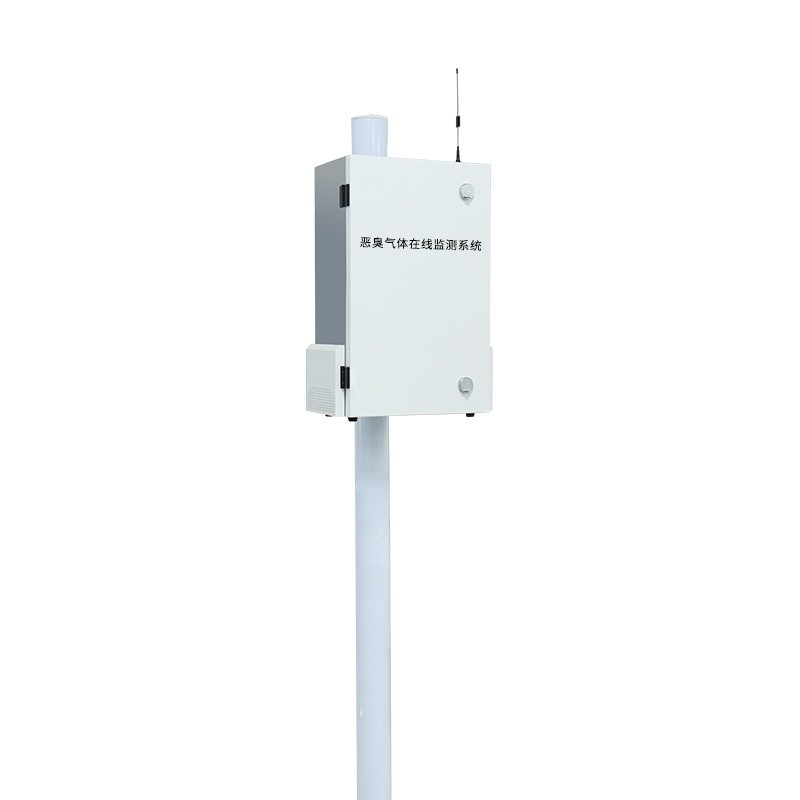
Odor gas detector employs a multi-sensor array to monitor odor concentration (OU), ammonia, and hydrogen sulfide according to GB14554 standards. The sensors support individual plug-and-play calibration, enabling 24-hour continuous monitoring of odor pollution in industrial parks, pharmaceutical plants, and other similar areas.
Odor gas detector, also commonly referred to as an electronic nose, can conduct environmental odor monitoring in polluted areas intermittently or continuously (24/7), providing reliable data support for environmental management in industrial parks, pharmaceutical plants, and various production enterprises, safeguarding regional environmental quality and the health of surrounding public areas.
Odor gas detector strictly adheres to relevant GB14554 standards in its testing operations, simultaneously monitoring pollutant indicators such as odor concentration (OU), ammonia, and hydrogen sulfide. The core of the equipment consists of a hybrid array of sensors based on various principles, including metal oxide sensors, PID photoionization detectors, electrochemical sensors, and ETO sensors. This rich sensor configuration covers the detection needs of different types of odor gases. The entire system adopts a modular design, with each sensor supporting individual plug-and-play operation. Staff can calibrate and replace sensors independently. The equipment includes on-site calibration capabilities, eliminating the need to transport the instrument back to the laboratory for calibration, significantly reducing subsequent maintenance costs and minimizing equipment downtime.
When deploying a multi-sensor array, the accompanying algorithm establishes an analysis curve matching human olfactory identification methods. This simulates the human olfactory system, converting collected air sample data into corresponding odor concentration values and various malodorous gas concentration data. This reduces data bias caused by single-gas detection, making the monitoring results more closely resemble actual human olfactory perception. During actual monitoring, the equipment collects malodorous gas information in the air in real time, and the monitored data can be output externally in real time, allowing managers to monitor the dynamic changes in odor pollution in the factory area and surrounding areas at any time.
Currently, complaints about odor pollution are increasing year by year, and sudden, intermittent odor problems have always been a challenge for enterprise environmental management. Traditional manual olfactory identification methods have shortcomings such as high labor costs, inability to provide 24/7 monitoring, and delayed evidence collection. Once deployed, Odor gas detector can be permanently stationed at factory boundaries, industrial park boundaries, and near production pollution sources to continuously record odor emissions. If odor levels exceed standards, management personnel can promptly identify the problem, quickly trace the source of the odor, and take preventative control measures. This reduces environmental disputes caused by odor pollution, helps companies establish a routine and scientific odor environmental management mechanism, and promotes the stable implementation of waste gas treatment in the factory area.
This paper addresses:https://www.fengtuweather.com/company/997.html
Related products
Related article
-
Introduction to forest security monitoring systems
2024-04-12 -
EL series of DC power supply Completes EL Inspection of Internal Defects in Photovoltaic Power Plant Modules
2026-08-31 -
Flexible Solutions: Mobile Weather Stations for Modern Meteorology
2025-05-06 -
Atmospheric electric field meters provide early warnings of thunderstorm activity by monitoring changes in the ground electric field
2026-06-02 -
What kind of instrument is a miniature weather station device?
2024-06-13 -
compact weather station Multi-Element Monitoring and Multi-Domain Applications
2026-01-26 -
Power Quality Measurement Monitoring Multiple Electrical Parameters
2026-03-11 -
How Portable Solar Cell Testers Rapidly Perform PV String I-V Curve Testing
2026-07-27