

Product
-
Weather station
-
Road Weather Station
-
Photovoltaic Inspection
-
Atmospheric monitoring
-
Operating condition monitoring
Recommended article
- Portable I-V Power Tester for Photovoltaic Power Plants: On-Site I-V Characteristic Testing of PV Strings
- Weather Instruments Supports High-Precision Meteorological Data Collection in Field Environments
- Electrical Power Analyzer enables multi-channel power grid parameter acquisition and the detection of harmonics and unbalance
- Shandong Fengtu, a manufacturer of meteorological stations, offers high-precision weather observation equipment designed for field use
- Series power supply for EL-Based Internal Defect Detection in Photovoltaic Modules
- Shandong Fengtu, a manufacturer of meteorological monitoring instruments, produces advanced weather observation equipment
Contact us
Shandong Fengtu IOT Technology Co., Ltd
Sales Manager:Ms. Emily Wang
Cel,Whatsapp,Wechat:+86 15898932201
Email:info@fengtutec.com
Add:No. 155 Optoelectronic Industry Accelerator, Gaoxin District, Weifang, Shandong, China
compact weather station Multi-Element Monitoring and Multi-Domain Applications
Article source:Weather station time:2026-01-26 09:43:02 viewed:520times
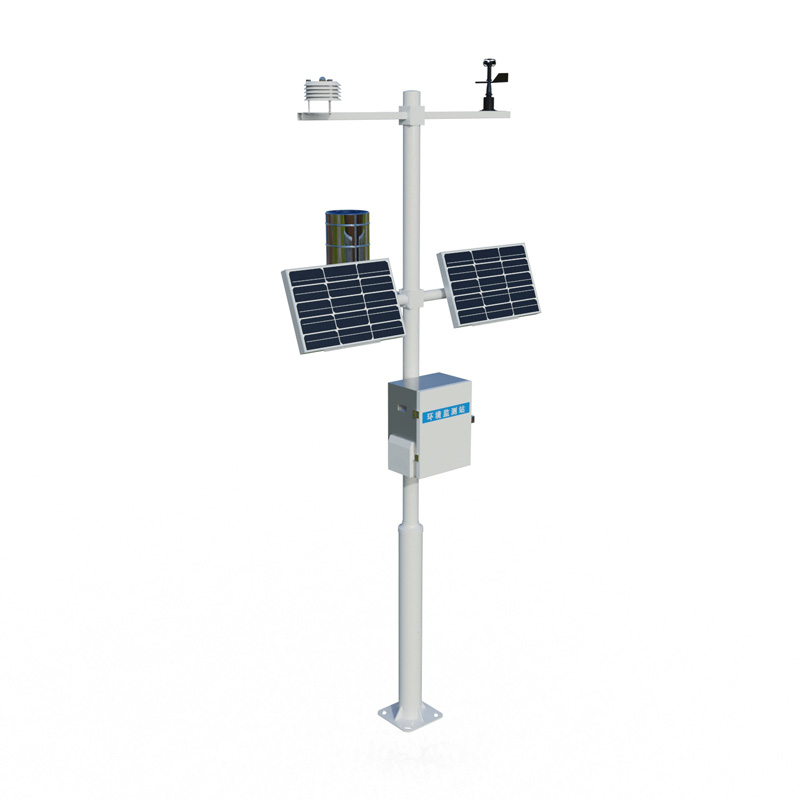
compact weather station is a highly integrated, low-power meteorological monitoring device that can accurately measure wind speed and direction, temperature and humidity, atmospheric pressure, radiation, rainfall, and soil temperature and humidity simultaneously. It is suitable for on-site monitoring in various fields such as meteorology, environmental protection, agriculture and forestry, airports, and scientific research.
compact weather station is an important tool in modern environmental monitoring. Its core function lies in the continuous and accurate on-site measurement of multiple meteorological elements. These devices utilize an integrated design, combining multiple meteorological sensors into a single unit, achieving miniaturization and low-power operation, making them easy to deploy and operate long-term in various outdoor environments.
In terms of monitoring capabilities, the typical configuration of compact weather station allows for simultaneous observation of multiple key meteorological parameters. The aerodynamic section usually includes wind speed and direction sensors to record airflow movement. Temperature and humidity sensors collect air temperature and relative humidity data, while a pressure sensor monitors atmospheric pressure changes. For radiation observation, the device can be equipped with a total solar radiation sensor to measure the solar radiation energy reaching the ground. Precipitation data is recorded by a rain gauge, providing information on precipitation intensity and cumulative amount. Furthermore, for applications in specific fields such as agriculture and forestry, some models also integrate soil temperature and soil moisture sensors to obtain soil moisture data at different depths. The simultaneous monitoring of these elements provides a relatively complete picture of the micro-meteorological environment at the monitoring point.
In terms of technical features, compact weather station emphasizes high precision and reliability. The sensors use mature detection principles and are calibrated to ensure the accuracy of the collected data. The data logger has automatic processing and storage functions, capable of recording real-time values, averages, and extreme values of each element at set time intervals. The power supply system typically uses a solar panel combined with a battery to meet the power consumption requirements for long-term unattended operation in the field. Data transmission supports various communication methods, including wired (such as RS485) and wireless (such as 4G, LoRa), facilitating remote data transmission to a central server or cloud platform for real-time monitoring and historical analysis.
Due to its portability, comprehensive functionality, and flexible deployment characteristics, compact weather station is widely used in many fields that require meteorological data support. In the meteorological industry, it can serve as a supplement to large station networks for denser observations or climate research in specific areas. Environmental protection departments use it to monitor meteorological conditions around monitoring stations, aiding in the analysis of pollutant dispersion patterns. In agricultural production and forestry management, the localized temperature, light, water, and soil data provided by weather stations are directly valuable for guiding irrigation, pest and disease control, and disaster early warning. Airports can use it to monitor wind fields and visibility around runways. Furthermore, small weather stations play a crucial role in providing key environmental data in various scenarios, including scientific research, hydrological monitoring, campus science education, and on-site management of engineering projects.
In summary, compact weather station, through its integrated and automated design, achieves accurate on-site measurement of various meteorological elements, providing a stable and convenient data source for decision-making, management, and research in different industries. With the continuous advancement of sensor and communication technologies, its application scope will further expand.
This paper addresses:https://www.fengtuweather.com/company/869.html
Related products
Related article
-
Weather monitor Enables Rapid Field Deployment Through High Integration and Low Power Consumption Design
2026-05-28 -
Ultrasonic Snow Depth Monitoring Station Enables High-Precision, Automated Snow Depth Measurement
2026-09-21 -
Application Introduction of Weather Monitoring Equipment High-Precision Environmental Monitoring Equipment in the Field
2026-08-21 -
The Role of Dust Detector in Construction Site Dust Monitoring and Early Pollution Control
2025-08-26 -
Fengtou Farming Weather Station Provides Weather Services for Sheep Farming
2024-07-29 -
Introduction to the Integrated Forest Fire Risk Monitoring Station
2024-04-22 -
PV Module Power Testers Enable Rapid On-Site IV Curve Testing
2026-04-22 -
Dust Monitoring Equipment and PM2.5 Surveillance
2025-09-19