

Product
-
Weather station
-
Road Weather Station
-
Photovoltaic Inspection
-
Atmospheric monitoring
-
Operating condition monitoring
Recommended article
- Electrical Power Analyzer enables multi-channel power grid parameter acquisition and the detection of harmonics and unbalance
- Shandong Fengtu, a manufacturer of meteorological stations, offers high-precision weather observation equipment designed for field use
- Series power supply for EL-Based Internal Defect Detection in Photovoltaic Modules
- Shandong Fengtu, a manufacturer of meteorological monitoring instruments, produces advanced weather observation equipment
- Odor gas detector On-site Monitoring of Odorous Pollutants in Compliance with the GB14554 Standard
- Integrated Four-Parameter Weather Station for Field Meteorological Data Collection (Temperature, Humidity, Wind Speed, and Wind Direction)
Contact us
Shandong Fengtu IOT Technology Co., Ltd
Sales Manager:Ms. Emily Wang
Cel,Whatsapp,Wechat:+86 15898932201
Email:info@fengtutec.com
Add:No. 155 Optoelectronic Industry Accelerator, Gaoxin District, Weifang, Shandong, China
Miniature weather station Integrated Meteorological and Air Quality Monitoring System is suitable for field deployment
Article source:Weather station time:2026-02-02 10:32:19 viewed:510times
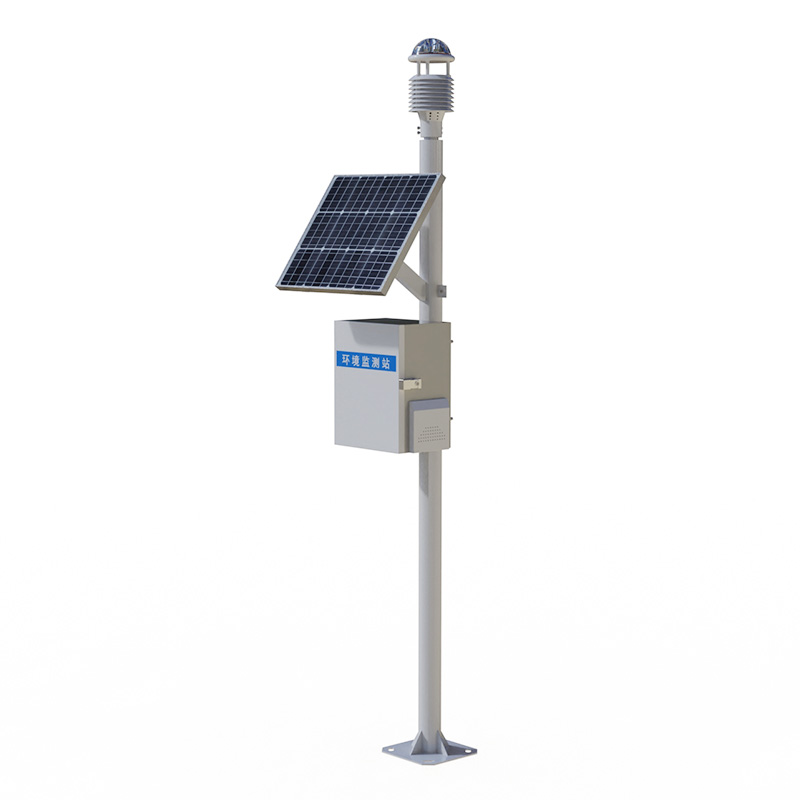
Miniature weather station is a miniaturized automatic weather observation device that integrates multiple sensors. It can monitor wind speed, wind direction, temperature, humidity, atmospheric pressure, optical rainfall, PM2.5, PM10, and various gas concentrations in real time. The device features low power consumption, high accuracy, and easy and rapid installation, making it suitable for environmental monitoring in field environments.
Miniature weather station is a miniaturized, integrated, high-precision observation device that combines multiple environmental monitoring functions. It integrates traditional meteorological observation with air quality monitoring, achieving simultaneous and continuous measurement of various environmental elements within a compact body. Its core design goal is to meet the deployment needs of field, remote, or temporary sites, providing a reliable environmental data acquisition solution.
The standard monitoring functions of the Miniature weather station mainly include two categories. The first category is basic meteorological parameters, which typically include wind speed, wind direction, air temperature, relative humidity, atmospheric pressure, and precipitation measured using optical principles (optical rainfall). This data provides a basic description of the on-site weather conditions. The second category is ambient air quality parameters, mainly monitoring the concentration of particulate matter and specific gases in the air. Common items include fine particulate matter PM2.5, inhalable particulate matter PM10, and gases such as carbon monoxide (CO), nitrogen dioxide (NO2), sulfur dioxide (SO2), and ozone (O3). This multi-element integrated design allows users to obtain comprehensive environmental profile information without deploying multiple independent devices.
To achieve long-term stable operation in the field, the Miniature weather station has significant structural design features. The device adopts a highly integrated design, making it compact and easy to transport and carry. Its power supply system is deeply optimized for low power consumption, enabling energy self-sufficiency in locations without mains power supply through a combination of solar panels and batteries, supporting long-term uninterrupted operation. The installation process is designed to be simple and fast, typically using modular assembly and mounting brackets, allowing a single person to complete the deployment in a short time, greatly reducing the difficulty of site construction and maintenance.
All monitoring data collected by the device is processed and calibrated in real time by the internal processor. Data can be transmitted via wired or wireless methods. Wireless transmission typically relies on long-range communication technologies such as GPRS, 4G networks, or LoRa, sending data in real time to a cloud-based data platform or a user-specified monitoring center. Users can remotely access the data via computers or mobile devices for real-time viewing, historical data retrieval, curve analysis, and report generation. The system usually supports data anomaly alarm functions; when any monitoring parameter exceeds a preset threshold, an alarm notification is automatically triggered.
In practical applications, Miniature weather station has a wide range of uses. In environmental protection, it can be used for grid-based environmental air quality monitoring and tracing pollution sources. In meteorological observation, it can supplement existing weather station networks for denser observations or observations in specific terrains. In scientific research, it provides customized environmental data support for various field scientific experiments. In transportation, forestry, agriculture, tourist attractions, and construction sites, it can provide timely environmental information for management and decision-making. Due to its flexible deployment and comprehensive functions, this device has become an important tool for refined environmental management, effectively compensating for the limited coverage of fixed large-scale monitoring stations and enabling a broader and deeper understanding of the environment.
This paper addresses:https://www.fengtuweather.com/company/872.html
Related products
Related article
-
The Mobile Edge in Meteorology: Vehicle - Mount Weather Stations
2025-04-07 -
There are two types of handheld meteorological instruments
2024-01-29 -
Scenic Negative Oxygen Ion Environmental Monitoring Station
2024-08-01 -
Dust Detector and Mobile Monitoring in Air Quality Protection
2025-01-06 -
Quantifying Ecological Benefits with Data, Negative (Oxygen) Ion Monitoring System for Parks
2024-07-30 -
Comparative Analysis of Ultrasonic and Automatic Weather Stations in Meteorological Monitoring
2025-01-13 -
Laser snow depth monitor is applicable to snow depth observation in meteorology, traffic and disaster warning
2025-12-15 -
Local Air Quality Soars as Dust detector Drives Effective Pollution Control
2024-12-06