

Product
-
Weather station
-
Road Weather Station
-
Photovoltaic Inspection
-
Atmospheric monitoring
-
Operating condition monitoring
Recommended article
- Electrical Power Analyzer enables multi-channel power grid parameter acquisition and the detection of harmonics and unbalance
- Shandong Fengtu, a manufacturer of meteorological stations, offers high-precision weather observation equipment designed for field use
- Series power supply for EL-Based Internal Defect Detection in Photovoltaic Modules
- Shandong Fengtu, a manufacturer of meteorological monitoring instruments, produces advanced weather observation equipment
- Odor gas detector On-site Monitoring of Odorous Pollutants in Compliance with the GB14554 Standard
- Integrated Four-Parameter Weather Station for Field Meteorological Data Collection (Temperature, Humidity, Wind Speed, and Wind Direction)
Contact us
Shandong Fengtu IOT Technology Co., Ltd
Sales Manager:Ms. Emily Wang
Cel,Whatsapp,Wechat:+86 15898932201
Email:info@fengtutec.com
Add:No. 155 Optoelectronic Industry Accelerator, Gaoxin District, Weifang, Shandong, China
PV Module Power Testers Enable Rapid On-Site IV Curve Testing
Article source:Weather station time:2026-04-22 10:28:03 viewed:327times
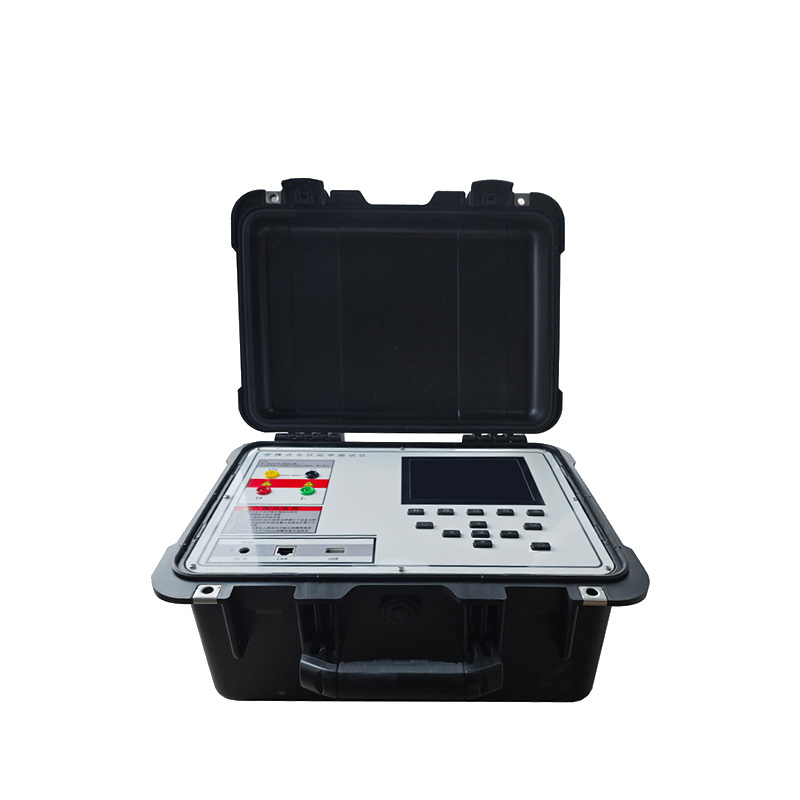
The PV module power tester is a specialized device designed to evaluate the power generation performance of photovoltaic modules. Capable of testing voltages up to 1500V and currents up to 30A, it can effectively test PV modules with a maximum power output of up to 30kW. This instrument allows for the on-site acquisition of key parameters—such as open-circuit voltage, short-circuit current, and maximum power—and rapidly generates IV curves.
The PV module power tester serves as an indispensable diagnostic tool in the construction, operation, and maintenance of photovoltaic power plants; its primary function is to assess the power generation performance of individual solar modules and arrays. The device measures critical electrical parameters—including open-circuit voltage, short-circuit current, and maximum power—and generates IV characteristic curves rapidly on-site, thereby providing essential data support for power plant design, acceptance testing, and maintenance activities.
In terms of technical specifications, the PV module power tester features a voltage measurement range extending up to 1500V and a current measurement range up to 30A, thereby meeting the testing requirements for PV modules with a maximum power output of up to 30kW. Most portable models utilize a 4-wire connection method, offering a voltage test range between 15V and 1500V, a current test range between 0.5A and 30A, and a nominal maximum power test range covering 50W to 30kW. The device is typically equipped with an irradiance meter and temperature sensors, featuring an irradiance measurement range of 0 to 1400 W/m², which enables the simultaneous monitoring of ambient environmental conditions.
The PV module power tester employs an integrated packaging design with an intuitive user interface, allowing for the rapid testing of a single module or string—typically completed within 10 seconds. The device features a built-in, high-capacity, replaceable lithium-ion battery to support continuous field operations. Select models also incorporate an automatic range-switching function, along with comprehensive over-voltage, over-current, and thermal protection mechanisms to ensure testing safety. Furthermore, the internal high-voltage isolation power supply design provides users with a robust layer of safety assurance. The complete unit is equipped with a high-precision capacitive-resistive load and dedicated IV curve analysis software, enabling high-resolution analysis of IV curves and supporting continuous, uninterrupted scanning.
In practical applications, the PV module power tester supports IV characteristic testing under low-irradiance outdoor conditions and provides data correction capabilities to normalize results to standard test conditions (STC). The device features a built-in database containing a comprehensive collection of correction models for solar modules, covering products from the majority of module manufacturers to serve as a reference for converting and comparing test results. Test waveform data can be stored in the device's internal memory or exported to external storage devices via a USB interface. Suitable for testing individual modules as well as for the batch testing of strings and arrays, this device assists O&M personnel in rapidly identifying modules exhibiting performance degradation and assessing the operational status of PV systems; it serves as an essential testing tool for power plant construction entities, quality inspection departments, manufacturers, and research institutions.
This paper addresses:https://www.fengtuweather.com/technical/927.html
Related products
Related article
-
Monitor de polvo Breaks Through the Limitations of Traditional Fixed Monitoring Points
2025-11-17 -
Principle of field mini weather station
2024-04-09 -
How Miniature Sensors Aid in Accurate Fertilization for Tea Gardens
2024-10-18 -
Intelligent agro-meteorological monitoring stations
2024-07-04 -
Selection of Meteorological Monitoring Equipment for Highways and Its Functions
2024-11-13 -
Portable Weather Station: Your Pocket-Sized Environmental Companion
2024-11-07 -
3-Meter Laser Snow Depth Monitoring Station Achieves Millimeter-Level Measurement Accuracy Using Phase-Shift Laser Ranging
2026-04-23 -
Vehicle-Mount Weather Station: Mobile Meteorological Monitoring for Vehicle Environmental Testing
2025-07-14