

Product
-
Weather station
-
Road Weather Station
-
Photovoltaic Inspection
-
Atmospheric monitoring
-
Operating condition monitoring
Recommended article
- Odor gas detector Enabling Precision, Round-the-Clock Monitoring of Fugitive Emissions in Industrial Facilities
- Compact Weather Stations: High-Precision Field Monitoring for Diverse Scenarios
- Shandong Fengtu, a renowned manufacturer of environmental monitoring instruments, supplies a wide range of field and online monitoring equipment
- Weather Monitoring Equipment enables high-precision, automated environmental parameter monitoring in field settings
- Introduction to the Principles, Applications, and Technical Specifications of Speed enforcement system
- Forest Weather Station Facilitates Precise Monitoring and Scientific Prevention of Forest Fires
Contact us
Shandong Fengtu IOT Technology Co., Ltd
Sales Manager:Ms. Emily Wang
Cel,Whatsapp,Wechat:+86 15898932201
Email:info@fengtutec.com
Add:No. 155 Optoelectronic Industry Accelerator, Gaoxin District, Weifang, Shandong, China
Weather monitor Enables Rapid Field Deployment Through High Integration and Low Power Consumption Design
Article source:Weather station time:2026-05-28 09:43:53 viewed:225times
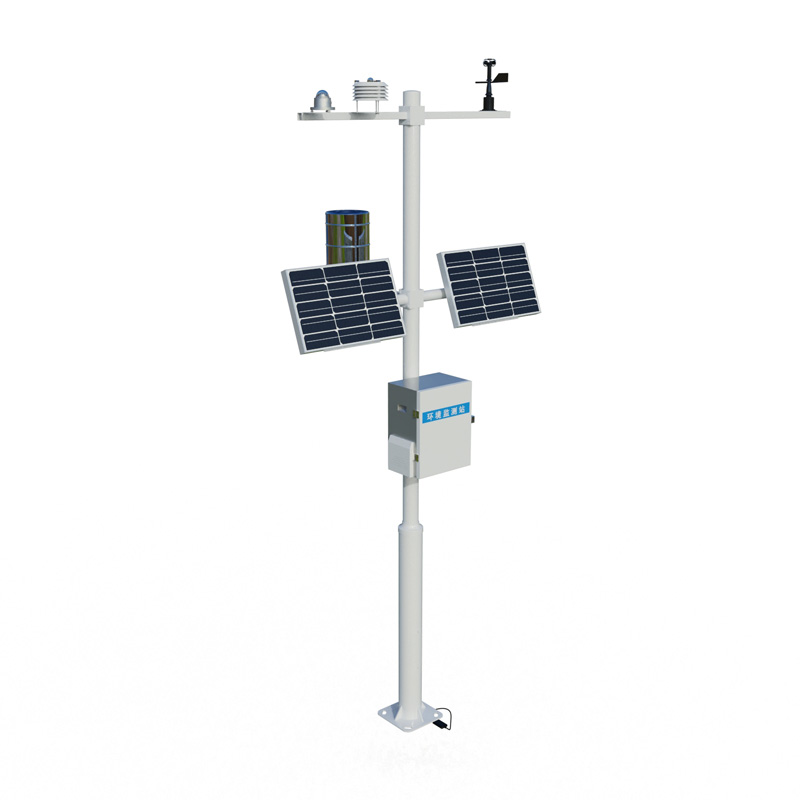
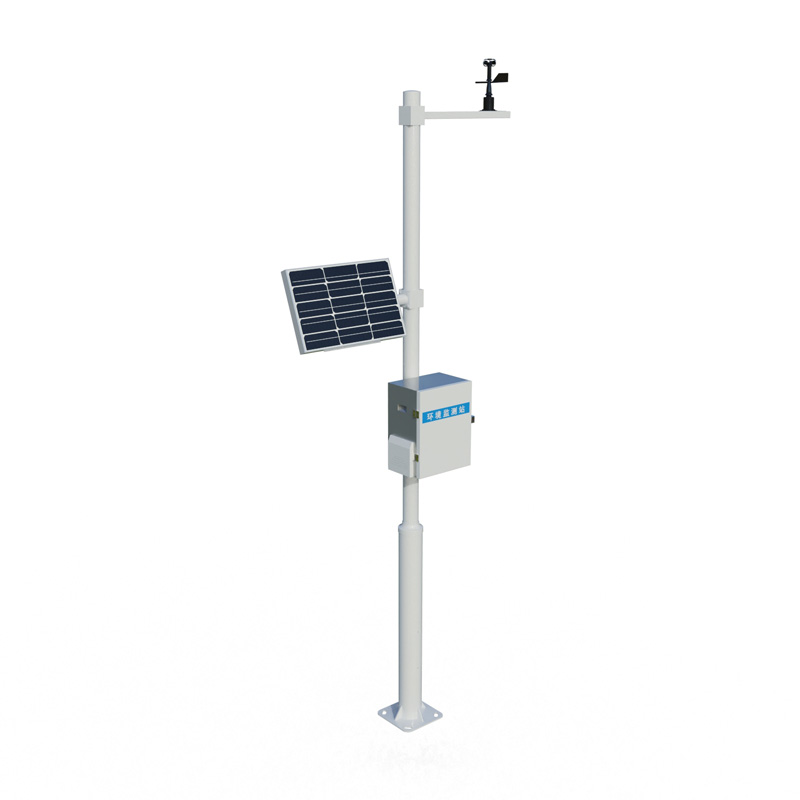
Weather monitor are professional instruments for weather forecasting and monitoring, featuring highly integrated sensors and data acquisition units. Employing a low-power design and integrated structure, they can be quickly installed in field environments, suitable for agriculture, scientific research, transportation, and urban environmental monitoring.
Weather monitor are professional equipment used in meteorological services such as weather forecasting and monitoring, mainly divided into two categories: ground-based meteorological observation instruments and upper-air meteorological sounding instruments. Ground-based meteorological observation equipment includes automatic weather stations, anemometers, temperature and humidity recorders, Stevenson screens, and various sensors, used to measure common meteorological elements such as temperature, humidity, air pressure, wind speed, wind direction, and rainfall in the near-surface atmosphere, providing basic data support for weather forecasting, climate research, and emergency early warning.
Modern Weather monitor generally adopts an integrated structural design, integrating multiple sensors into a single device. Taking the integrated ultrasonic weather station as an example, the equipment integrates an ultrasonic wind measurement module with sensors for temperature, humidity, air pressure, and rainfall, achieving simultaneous monitoring of multiple elements. This design eliminates traditional mechanical rotating parts, significantly improving the equipment's reliability and corrosion resistance, and avoiding the problem of decreased measurement accuracy due to mechanical wear. The equipment is equipped with an intelligent processing chip that can automatically perform data calibration and anomaly screening, and wirelessly transmit data to a cloud platform. Users can view real-time data and historical curves via a mobile app or computer webpage.
Regarding power supply, Weather monitor generally adopts a low-power design, supporting dual power supply modes of solar energy and lithium batteries. In sunny weather, solar charging can meet all-weather power requirements, while in cloudy weather, the lithium battery provides backup power, eliminating the need for frequent power supply replacements. Some handheld devices can operate for extended periods with only three AA batteries, maintaining stable operation within a temperature range of -20℃ to 50℃. This power supply solution makes the equipment suitable for deployment in remote areas without mains power.
In terms of application areas, Weather monitor is widely used in agriculture for farmland microclimate monitoring and frost early warning, helping agricultural operators to arrange agricultural activities according to weather conditions; in the transportation sector for local weather monitoring of highways, airports and ports, providing decision-making basis for operation scheduling; in scientific research institutions for conducting ecological research and collecting climate change data in the field; and also in urban management for smart street lights and environmental grid monitoring, realizing refined management of urban microclimate.
This paper addresses:https://www.fengtuweather.com/industry/950.html
Related products
Related article
-
Dust Detector Systems: Comprehensive Environmental Monitoring for Effective Pollution Control
2025-09-25 -
Tailored for Emergencies: The Complementary Advantages of Two Weather Monitoring Tools
2025-04-22 -
The price of Fengtu automatic weather stations is affected by the configuration of monitoring elements
2026-08-28 -
The miniature weather station equipment outputs twelve monitoring data points simultaneously via a digital interface
2026-06-03 -
Vehicle-Mount Weather Stations: Mobile Meteorological Monitoring for Dynamic Environments
2025-09-29 -
Dust Detector and Mobile Monitoring in Air Quality Protection
2025-01-06 -
How Ultrasonic Snow Depth Monitoring Stations Achieve Accurate Snow Depth Measurement
2026-07-16 -
Fengtu Dust Detector: Comprehensive Environmental Monitoring for Industrial and Urban Settings
2025-10-31