

Product
-
Weather station
-
Road Weather Station
-
Photovoltaic Inspection
-
Atmospheric monitoring
-
Operating condition monitoring
Recommended article
- Portable I-V Power Tester for Photovoltaic Power Plants: On-Site I-V Characteristic Testing of PV Strings
- Weather Instruments Supports High-Precision Meteorological Data Collection in Field Environments
- Electrical Power Analyzer enables multi-channel power grid parameter acquisition and the detection of harmonics and unbalance
- Shandong Fengtu, a manufacturer of meteorological stations, offers high-precision weather observation equipment designed for field use
- Series power supply for EL-Based Internal Defect Detection in Photovoltaic Modules
- Shandong Fengtu, a manufacturer of meteorological monitoring instruments, produces advanced weather observation equipment
Contact us
Shandong Fengtu IOT Technology Co., Ltd
Sales Manager:Ms. Emily Wang
Cel,Whatsapp,Wechat:+86 15898932201
Email:info@fengtutec.com
Add:No. 155 Optoelectronic Industry Accelerator, Gaoxin District, Weifang, Shandong, China
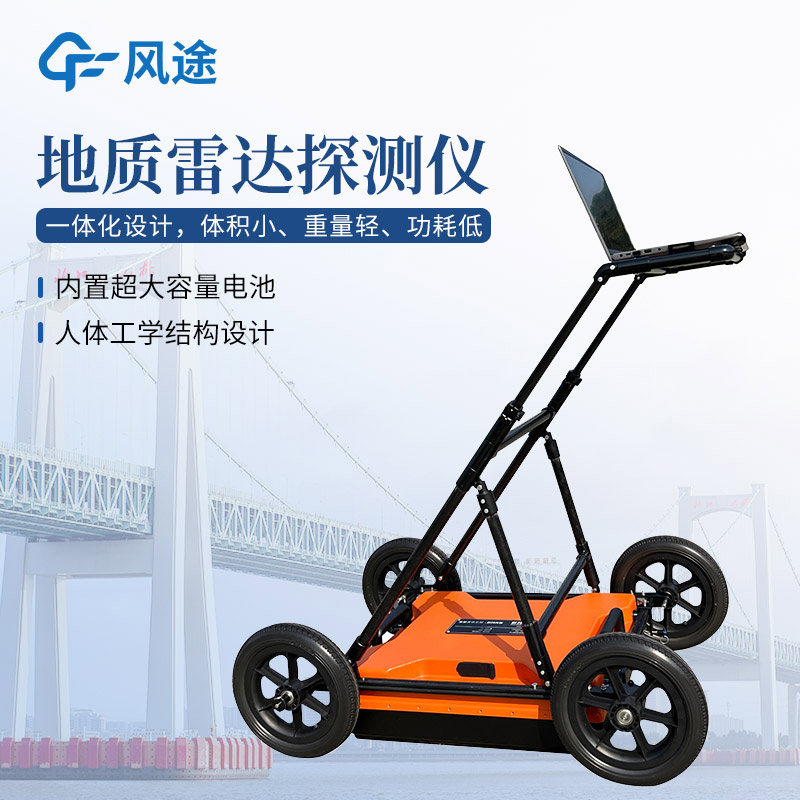
Ground Penetrating Radar: Non-Destructive Inspection for Urban Road Health Assessment
Article source:Weather station time:2025-06-30 09:38:14 viewed:504times
With the increasing busyness of urban traffic, the health condition of urban roads is directly related to the travel safety of citizens and the operational efficiency of the city. As a professional detection device, Ground Penetrating Radar can efficiently and accurately conduct "physical examinations" for urban roads, timely identifying internal hidden dangers.
The work of Ground Penetrating Radar is based on the principle of electromagnetic pulse wave propagation. The transmitting antenna of the device emits high-frequency broadband electromagnetic waves toward the road structure layer. When the electromagnetic waves encounter the interface between different media, such as the cement stabilized layer and the soil base, or the void and the dense soil, due to the difference in the dielectric constant of the media, part of the electromagnetic waves will reflect back to the ground and be captured by the receiving antenna. The instrument records information such as the two-way travel time, amplitude, and phase of the reflected waves, and after processing by professional software, forms a two-dimensional or three-dimensional image of the underground structure of the road.
During actual detection, technicians measure with the Ground Penetrating Radar along the planned route, and the antenna is close to the road surface to emit and receive electromagnetic waves. For diseases in the road structure, such as the void area, due to the low dielectric constant of air, the amplitude of the reflected wave is strong and the phase is abnormal; in the area with high water content, due to the large dielectric constant of water, the travel time of the reflected wave is shortened. Through the professional interpretation of the images, the location, scale, and distribution of diseases such as changes in the thickness of the road structure layer, cracks, voids, and looseness can be identified.
Conducting "physical examinations" on urban roads, on the one hand, although the road surface seems flat, the interior may have diseases such as voids and cracks due to long-term vehicle compaction and rainwater infiltration. These hidden dangers are difficult to detect in the early stage, and after development, they will lead to serious problems such as road surface collapse and potholes, affecting traffic safety and even causing accidents. On the other hand, the urban underground pipe network is dense, and improper construction or aging and leakage will cause the loss of soil below the road, forming voids. Through the detection of ground-penetrating radar, problems can be found before the diseases appear, providing data for road maintenance and pipe network repair, avoiding large-scale excavation, and reducing maintenance costs and the impact on traffic.
In short, because of the advantages of being non-destructive, efficient, and accurate, Ground Penetrating Radar has become an important tool for the "physical examination" of urban roads.
This paper addresses:https://www.fengtuweather.com/industry/735.html
Related products
Related article
-
Fire Risk Factor Integrated Monitoring Station Instructions
2024-07-03 -
Introduction to the Integrated Forest Fire Risk Monitoring Station
2024-04-22 -
Multifunctional weather station Enables Real-Time Online Monitoring of Oil Conditions
2026-05-19 -
Weather Instruments: Navigating Farms Through the Complexities of Climate for Bumper Crops
2025-02-18 -
photovoltaic testers is a portable photovoltaic module testing device
2025-12-01 -
How does the Handheld Weather StationFT-SQ7B perform?
2024-08-14 -
Construction Site Dust and Noise: Problems, Solutions and Monitoring
2025-04-10 -
Portable Ground Penetrating Radar: Detecting Hidden Pipelines and Curbing Illegal Discharges in Urban Settings
2025-02-27