

Product
-
Weather station
-
Road Weather Station
-
Photovoltaic Inspection
-
Atmospheric monitoring
-
Operating condition monitoring
Recommended article
- Electrical Power Analyzer enables multi-channel power grid parameter acquisition and the detection of harmonics and unbalance
- Shandong Fengtu, a manufacturer of meteorological stations, offers high-precision weather observation equipment designed for field use
- Series power supply for EL-Based Internal Defect Detection in Photovoltaic Modules
- Shandong Fengtu, a manufacturer of meteorological monitoring instruments, produces advanced weather observation equipment
- Odor gas detector On-site Monitoring of Odorous Pollutants in Compliance with the GB14554 Standard
- Integrated Four-Parameter Weather Station for Field Meteorological Data Collection (Temperature, Humidity, Wind Speed, and Wind Direction)
Contact us
Shandong Fengtu IOT Technology Co., Ltd
Sales Manager:Ms. Emily Wang
Cel,Whatsapp,Wechat:+86 15898932201
Email:info@fengtutec.com
Add:No. 155 Optoelectronic Industry Accelerator, Gaoxin District, Weifang, Shandong, China
Enhancing Air Pollution Control with Grid-Based Regulation and High-Resolution Monitoring
Article source:Weather station time:2024-10-30 09:16:21 viewed:477times
"Grid-based" regulation in air pollution control refers to the division of the regulatory area into multiple small grids, each with a clear supervisory responsible person and task, ensuring that regulatory measures can be precisely implemented at every specific location. This approach can improve regulatory efficiency, ensure that policies and measures cover every corner, address potential blind spots and dead zones in regulation, and thereby enhance the effectiveness of air pollution control. Through this refined management method, the "last mile" of air pollution control can be effectively bridged, ensuring that regulatory measures are truly implemented on the ground.
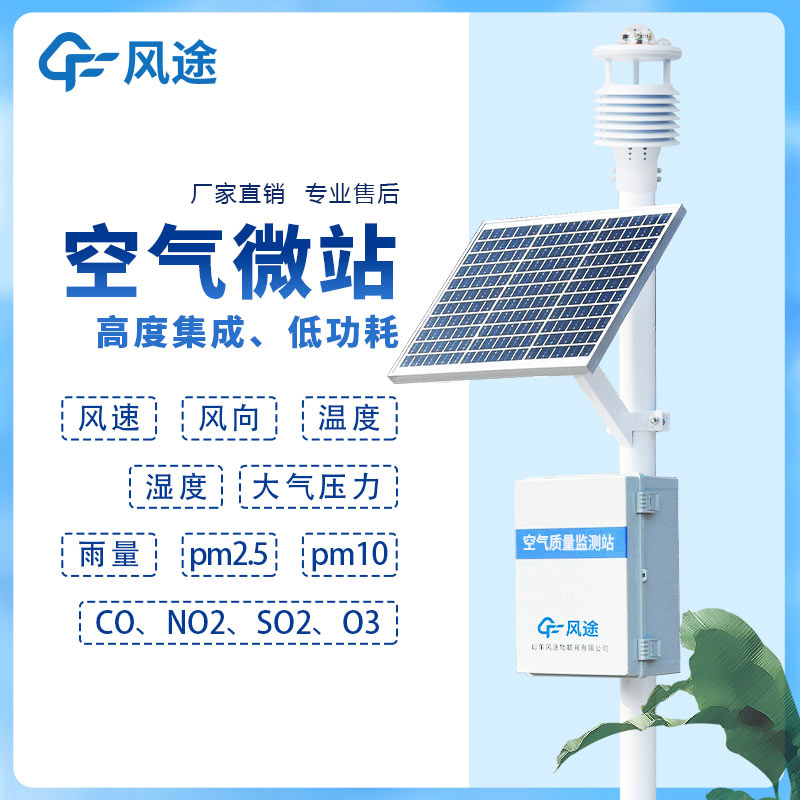
The Air Quality Monitoring Station is a device specifically designed to complement "grid-based" regulation. It provides high-resolution air quality data, monitoring the concentrations of pollutants such as PM2.5, PM10, SO₂, NO₂, O₃, and CO in real-time, accurately presenting the air quality conditions within each grid. The monitoring station can assist in quickly tracing pollution sources; when air quality in a particular grid is abnormal, it can determine the source of pollutants by combining surrounding data and meteorological factors, facilitating targeted governance. Its data-sharing function can aggregate data from various monitoring stations, allowing regulatory authorities to grasp the distribution of air quality in the region and coordinate supervision across different grids.
The monitoring station is connected to a cloud platform, enabling data visualization, analysis, and early warning, and it also has an intelligent alarm function that issues alerts promptly when monitored data exceeds preset standards. Long-term data can be used to analyze trends in air quality changes and assess the effectiveness of control measures within grids, providing support for strategy adjustments.
This paper addresses:https://www.fengtuweather.com/industry/541.html
Related products
Related article
-
I-V Curve Tracer enables highly efficient and precise electrical performance testing of photovoltaic (PV) modules
2026-09-17 -
FT - Y6 Six element sensor: All - in - One Solution for Vehicle and Ship Meteorological Monitoring
2025-04-27 -
FT-CQX5 Micro Weather Station: Meteorological Monitoring at Your Fingertips
2024-11-05 -
Vehicle-Mount Weather Station: Bridging the Gaps in Environmental Monitoring Networks
2024-12-17 -
Multifunctional weather station is a high-precision digital monitoring device for six key meteorological elements in real time
2025-12-19 -
What kind of instrument is a miniature weather station device?
2024-06-13 -
Role of grassland weather stations
2024-03-05 -
What is the best Agricultural Weather Stations company?
2024-08-22