

Product
-
Weather station
-
Road Weather Station
-
Photovoltaic Inspection
-
Atmospheric monitoring
-
Operating condition monitoring
Recommended article
- Electrical Power Analyzer enables multi-channel power grid parameter acquisition and the detection of harmonics and unbalance
- Shandong Fengtu, a manufacturer of meteorological stations, offers high-precision weather observation equipment designed for field use
- Series power supply for EL-Based Internal Defect Detection in Photovoltaic Modules
- Shandong Fengtu, a manufacturer of meteorological monitoring instruments, produces advanced weather observation equipment
- Odor gas detector On-site Monitoring of Odorous Pollutants in Compliance with the GB14554 Standard
- Integrated Four-Parameter Weather Station for Field Meteorological Data Collection (Temperature, Humidity, Wind Speed, and Wind Direction)
Contact us
Shandong Fengtu IOT Technology Co., Ltd
Sales Manager:Ms. Emily Wang
Cel,Whatsapp,Wechat:+86 15898932201
Email:info@fengtutec.com
Add:No. 155 Optoelectronic Industry Accelerator, Gaoxin District, Weifang, Shandong, China
Visibility sensor: Unlocking Precision in Atmospheric Visibility Measurement and Beyond
Article source:Weather station time:2024-11-25 09:25:41 viewed:488times
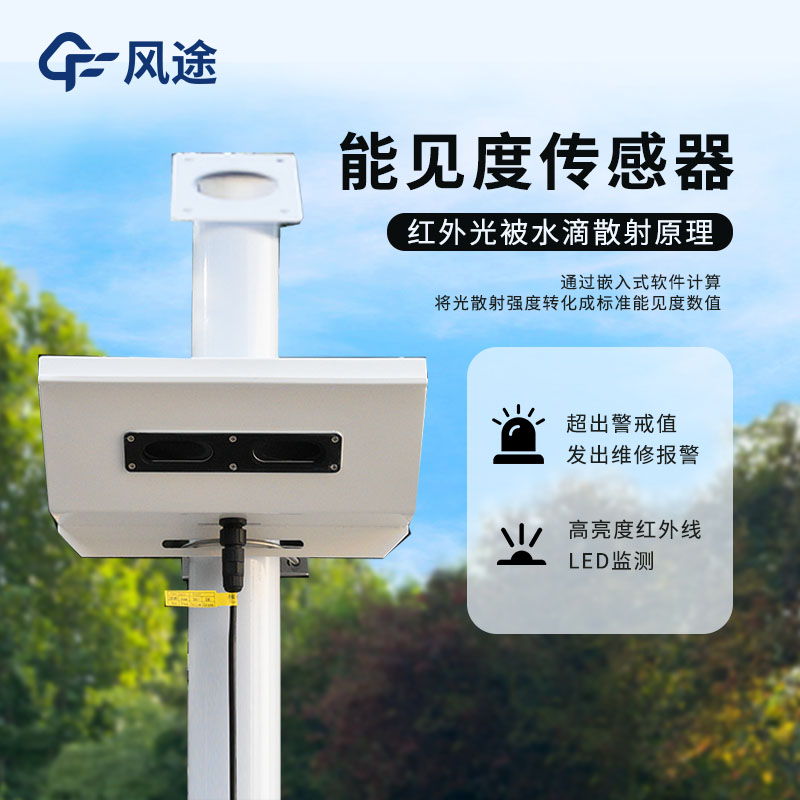
Visibility sensor is mainly used to provide information about Meteorological Optical Range (MOR) in fog and snow conditions, and is widely applied in fields such as roads, oceans, air, and wind energy.
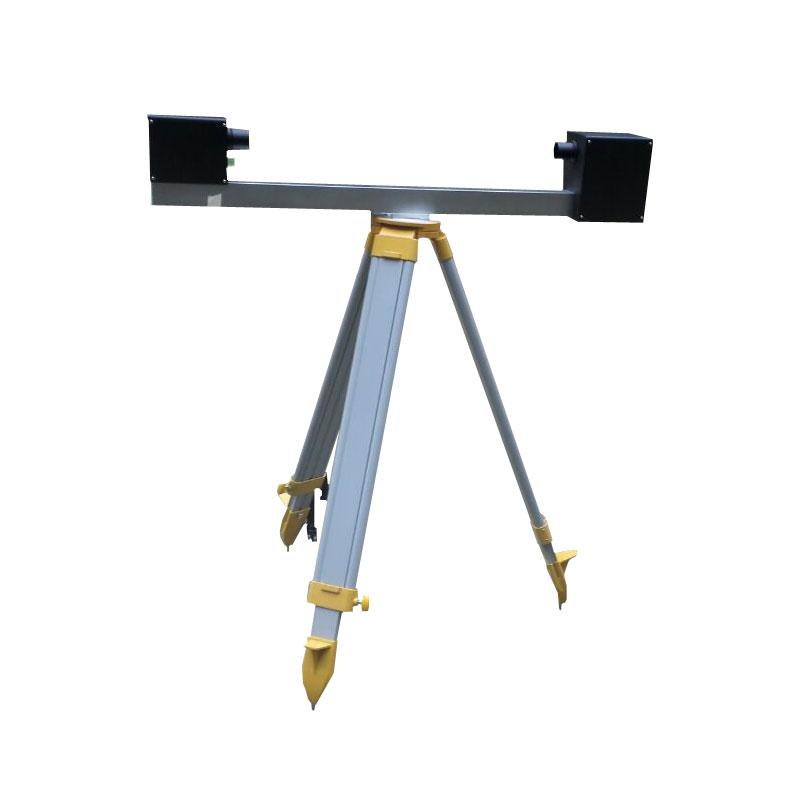
It consists of a transmitter, a receiver, and a CPU. The transmitter emits a conical light twice per second. The light scatters among particles in the air, and the receiver detects the amount of light scattering. Subsequently, the processor calculates the visibility using existing formulas and also calculates the average visibility over one minute. The Sensor Equivalent Visibility (SEV) range it detects can represent the maximum distance visible to the human eye under specific atmospheric conditions, providing a standardized determination method when visibility is reduced due to factors such as fog and snow.
The normal visibility range is between 30 meters and 16 kilometers, and the atmospheric visibility is measured by estimating the amount of light scattered by particles in the air such as dust, smoke, and fog.
In the automotive industry, it ensures the safety of vehicles and drivers, monitors the environment, detects situations such as fog and smoke, and alerts the driver. In industrial environments, it is used to monitor hazardous areas and warn workers about dangerous gases or particles. In medical environments, it monitors air quality. It is also popular in households as it can detect potential hazards such as smoke and carbon monoxide.
A series of Visibility sensors launched by the Fengtu brand each have their own characteristics. For example, the FT-BN6 portable detector, with its unique structure and optical forward scattering detection method, combined with accurate air sampling and detection channels, can detect in both mobile scenarios and narrow spaces. The 7-inch touch display screen can intuitively present data curves, and the wireless data transmission module (optional) and mobile phone APP display function further expand its application range. It has a built-in lithium battery and a heating module, adapting to a variety of environments.
The FT-NJD10 monitor operates through the coordinated work of a light transmitter, a receiver, and a microprocessor controller. It detects the scattering of infrared pulsed light by aerosol particles, and is equipped with a six-element integrated sensor for temperature, humidity, etc. Among them, the wind speed, wind direction, and piezoelectric rain gauge sensors are ingeniously designed. GPRS wireless transmission is standard, and solar and mains power supply can be optionally chosen. The FT-NJD50 is similar to the FT-NJD10 and has equally excellent performance.
The FT-N30 sensor calculates visibility by measuring the extinction coefficient using the forward scattering method. The aluminum shell is strong and durable. The downward-facing transmitting and receiving lenses reduce interference. The identification of weather phenomena is accurate. The lightning protection design, wide-voltage power supply, and low power consumption ensure stable outdoor operation.
The FT-WJN4 drone-specific detector is lightweight, compact, and has strong anti-interference ability. It performs well in high-altitude and low-temperature environments. Bluetooth output can be optionally equipped according to requirements, meeting the needs of drones and related scenarios.
This paper addresses:https://www.fengtuweather.com/industry/562.html
Related products
Related article
-
Mechanical weather station fills the "blind spots" in meteorological monitoring!
2024-09-23 -
Speed enforcement system Achieves Precise Speed Measurement and Evidence Collection Based on the Doppler Principle
2026-08-14 -
3-Meter Laser Snow Depth Monitoring Station Achieves Millimeter-Level Measurement Accuracy Using Phase-Shift Laser Ranging
2026-04-23 -
Villagers Air quality monitoring station
2024-08-15 -
Road Weather Station & Matching Environmental Monitoring Cloud Platform: Monitoring, Early Warning and Traffic Safety Guarantee
2025-08-25 -
Introduction to the Meteorological Department's Traffic Weather Visibility Monitoring Stations
2024-06-24 -
Geological Disaster Monitoring Systems by Fengtu Technology
2025-09-08 -
Advantages of Negative Oxygen Ion Monitoring Stations
2024-03-12