

Product
-
Weather station
-
Road Weather Station
-
Photovoltaic Inspection
-
Atmospheric monitoring
-
Operating condition monitoring
Recommended article
- Electrical Power Analyzer enables multi-channel power grid parameter acquisition and the detection of harmonics and unbalance
- Shandong Fengtu, a manufacturer of meteorological stations, offers high-precision weather observation equipment designed for field use
- Series power supply for EL-Based Internal Defect Detection in Photovoltaic Modules
- Shandong Fengtu, a manufacturer of meteorological monitoring instruments, produces advanced weather observation equipment
- Odor gas detector On-site Monitoring of Odorous Pollutants in Compliance with the GB14554 Standard
- Integrated Four-Parameter Weather Station for Field Meteorological Data Collection (Temperature, Humidity, Wind Speed, and Wind Direction)
Contact us
Shandong Fengtu IOT Technology Co., Ltd
Sales Manager:Ms. Emily Wang
Cel,Whatsapp,Wechat:+86 15898932201
Email:info@fengtutec.com
Add:No. 155 Optoelectronic Industry Accelerator, Gaoxin District, Weifang, Shandong, China
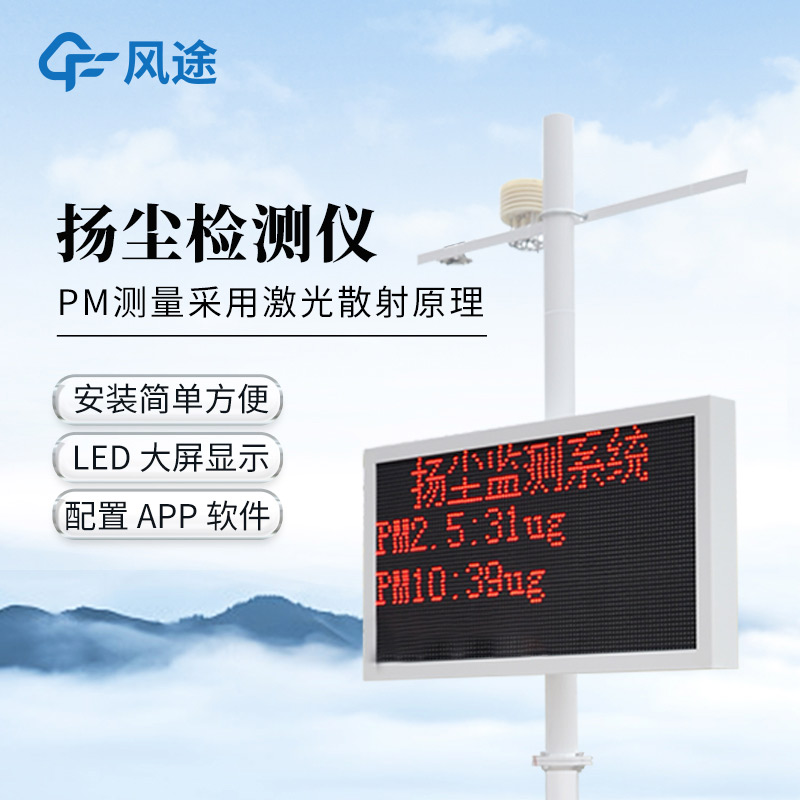
Strategies for Using Dust Detectors to Avoid Penalties under Stringent Environmental Regulations
Article source:Weather station time:2025-06-10 09:13:42 viewed:592times
With increasingly strict environmental regulations, many construction sites and enterprises are troubled by penalties for excessive dust emissions. As a crucial tool for monitoring dust data, dust detectors can help enterprises avoid penalties for exceeding standards. Therefore, rational use of these devices can effectively reduce non-compliance risks. Below are detailed methods for achieving this:
First, scientific and reasonable installation of dust detectors is fundamental. Based on the actual layout of construction sites, factory areas, and other venues, devices should be installed in key locations such as areas prone to dust generation and the downwind direction of the prevailing wind. Ensure installation height and angle comply with specifications to avoid data deviations caused by improper installation. For example, install the detector at an appropriate height above the ground, away from obstructions, to ensure smooth air circulation.
Second, regular calibration and maintenance are indispensable. Dust detectors must be calibrated at specified intervals using standard dust reference gases or by comparing with high-precision equipment to ensure the accuracy of detection data. During daily maintenance, promptly clean the instrument’s sensor probe, air inlet, and other components to prevent dust and debris accumulation from affecting detection accuracy. If a malfunction is detected, immediately contact professional technicians for repair. After repair, the instrument must be recalibrated and can only be reused after passing the calibration.
Third, real-time monitoring and data analysis are critical. Utilize the networking function of dust detectors to transmit data in real time to a monitoring platform. Assign dedicated personnel to monitor the data and immediately activate an early warning mechanism once dust data approaches or exceeds the standard value. By analyzing historical data, summarize the patterns of dust concentration changes and take targeted dust reduction measures in advance, such as increasing the frequency of water sprinkling, covering materials, and activating fog cannons.
Finally, establish a comprehensive dust detection management system. Clarify the responsibilities of personnel at all positions in dust detection work, and maintain detailed records of instrument usage, maintenance, data records, and other work logs. This allows for a clear presentation of dust control efforts during inspections by regulatory authorities, comprehensively reducing the risk of penalties for excessive dust emissions.
This paper addresses:https://www.fengtuweather.com/industry/720.html
Related products
Related article
-
The price of fully automatic mini weather stations varies from 3900 to 9800 yuan depending on the number of monitored parameters
2026-05-15 -
Meteorological equipment for disaster prevention and mitigation
2024-03-01 -
ntroduction to the Forest Fire Monitoring System
2024-05-23 -
Inhalable Dust Continuous Tester: A Portable Solution for Dust Concentration Monitoring
2025-01-08 -
Road Weather Station FT - GQX8: Empowering Traffic Decisions with Real - time Weather Data
2025-02-10 -
What is the best Agricultural Weather Stations company?
2024-08-22 -
Are field microclimate observatories useful?
2024-04-15 -
10 metre manual common lightning rod is convenient and easy to use
2024-04-25