

Product
-
Weather station
-
Road Weather Station
-
Photovoltaic Inspection
-
Atmospheric monitoring
-
Operating condition monitoring
Recommended article
- Electrical Power Analyzer enables multi-channel power grid parameter acquisition and the detection of harmonics and unbalance
- Shandong Fengtu, a manufacturer of meteorological stations, offers high-precision weather observation equipment designed for field use
- Series power supply for EL-Based Internal Defect Detection in Photovoltaic Modules
- Shandong Fengtu, a manufacturer of meteorological monitoring instruments, produces advanced weather observation equipment
- Odor gas detector On-site Monitoring of Odorous Pollutants in Compliance with the GB14554 Standard
- Integrated Four-Parameter Weather Station for Field Meteorological Data Collection (Temperature, Humidity, Wind Speed, and Wind Direction)
Contact us
Shandong Fengtu IOT Technology Co., Ltd
Sales Manager:Ms. Emily Wang
Cel,Whatsapp,Wechat:+86 15898932201
Email:info@fengtutec.com
Add:No. 155 Optoelectronic Industry Accelerator, Gaoxin District, Weifang, Shandong, China
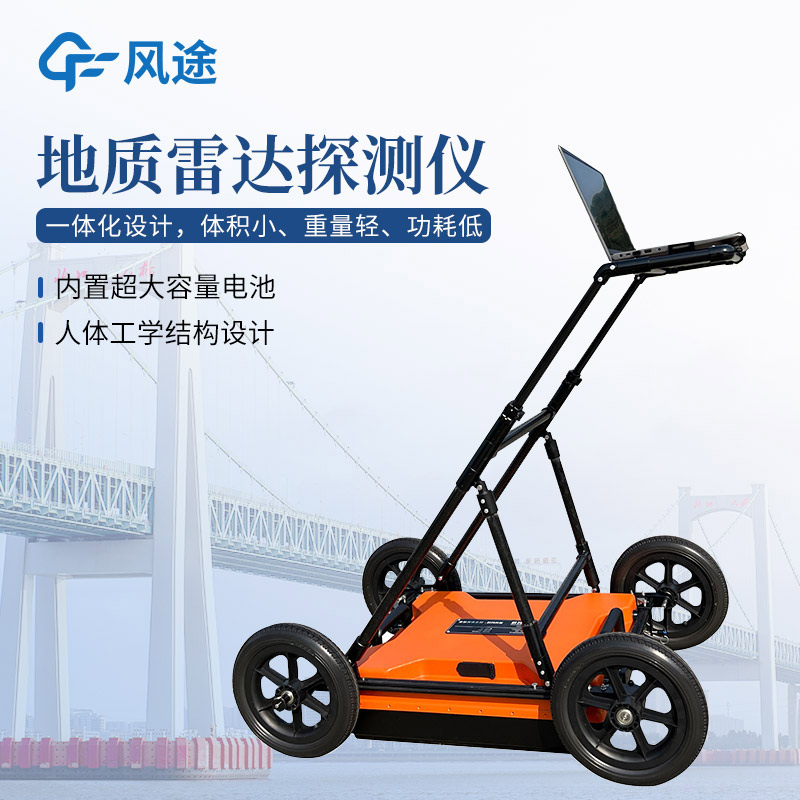
Ground Penetrating Radar: Non-Destructive Precision Detection for Voids Beneath Building Floors
Article source:Weather station time:2025-07-17 09:21:36 viewed:456times
Voids beneath building floors are common engineering hazards that may lead to ground settlement, cracking, or even collapse. Such voids are caused by factors such as changes in geological structures, leakage of underground pipelines, and construction leftovers. They are difficult to detect with the naked eye in the early stages, so precise detection technology is crucial. Ground Penetrating Radar (GPR) technology has become the mainstream method for detecting voids beneath floors due to its characteristics of high efficiency, non-destructiveness, and accuracy.
GPR detection is based on the principle of electromagnetic wave propagation. The core equipment includes transmitting antennas, receiving antennas, and data processing terminals. During detection, the transmitting antenna emits high-frequency electromagnetic waves to the area beneath the floor. Electromagnetic waves will reflect and refract at the interfaces of different media. When encountering abnormal structures such as voids, the propagation path of electromagnetic waves and the intensity of reflected signals will change. After capturing these reflected signals, the receiving antenna transmits them to the terminal for data processing.
The detection process is mainly divided into three stages. In the pre-preparation stage, it is necessary to clarify the scope of the detection area, collect design data of the floor structure, and remove surface interferences. In the detection implementation stage, the grid scanning method is adopted, and the radar equipment is moved according to the preset spacing to cover the entire detection area. For key suspect areas, it is necessary to encrypt detection points to improve data accuracy. In the data processing stage, professional software is used to filter the original signals, adjust gains, and perform image inversion, converting electromagnetic wave reflection signals into intuitive cross-sectional views to locate the position, size, and buried depth of the voids.
The advantage of GPR technology lies in its non-destructive detection feature. It can complete the detection without damaging the floor structure, greatly reducing the impact on the normal use of buildings. The detection depth can reach several meters, meeting the detection needs of most floor structures. Moreover, it has high data resolution and can identify small voids with a diameter of several tens of centimeters. The technology is easy to operate and has high detection efficiency, enabling large-area detection tasks to be completed in a short time.
However, in practical applications, attention should be paid to the impact of environmental factors on detection results. Metal components, steel meshes, etc., will generate strong reflected signals, which may interfere with void identification. Such interferences need to be eliminated through preprocessing technology before detection. A humid environment may cause increased attenuation of electromagnetic waves, so it is necessary to adjust equipment parameters to ensure signal quality. Data interpretation should be combined with geological data and engineering experience to avoid misjudging normal structures as voids.
This paper addresses:https://www.fengtuweather.com/industry/748.html
Related products
Related article
-
The Electrical Power Analyzer's four-channel synchronous measurement capability enhances the efficiency of photovoltaic grid-connected testing
2026-07-17 -
3-Meter Laser Snow Depth Monitoring Station: Non-Contact, High-Frequency Laser Measurement of Snow Thickness
2026-03-16 -
Building a Meteorological Station: Steps and Considerations
2024-10-09 -
Radar speed gun utilizes the Doppler effect to achieve multi-scenario speed measurement
2026-08-18 -
The price of small integrated meteorological instruments ranges from 3900 to 39800 yuan
2026-06-15 -
Speed enforcement system Achieves Precise Speed Measurement and Evidence Collection Based on the Doppler Principle
2026-08-14 -
Negative Oxygen Ion Monitoring System Builds Scenic Image
2024-04-16 -
Application of Low-Power Meteorological observation equipment in Unattended Field Monitoring
2026-07-29