

Product
-
Weather station
-
Road Weather Station
-
Photovoltaic Inspection
-
Atmospheric monitoring
-
Operating condition monitoring
Recommended article
- Meteorological observation station Suitable for High-Precision Meteorological Monitoring Across Diverse Field Scenarios
- photovoltaic testers is designed for high-precision testing at large-scale photovoltaic (PV) power plants
- Meteorological observation station Field High-Precision Monitoring: Applications and Performance Advantages
- Power Quality Analyzers Precise Detection of Various Power Quality Issues in the Grid
- Mobile Monitoring Applications and Performance Advantages of Vehicle-Mounted Five-Parameter Meteorological Equipment
- Power Quality Monitoring Equipment Enables Precise Real-Time Monitoring of Multi-Dimensional Power Grid Parameters
Contact us
Shandong Fengtu IOT Technology Co., Ltd
Sales Manager:Ms. Emily Wang
Cel,Whatsapp,Wechat:+86 15898932201
Email:info@fengtutec.com
Add:No. 155 Optoelectronic Industry Accelerator, Gaoxin District, Weifang, Shandong, China
Visibility Monitoring station in Modern Traffic Meteorological Systems: Functions, Data Transmission and Traffic Accident Reduction
Article source:Weather station time:2025-08-27 09:08:37 viewed:540times
In the modern IoT-based traffic meteorological monitoring system, visibility monitoring is a crucial link in ensuring highway traffic safety. The system is composed of five core modules: the data acquisition module (sensors), network transmission module, database storage module, alarm prompt module, and comprehensive display module. These modules form a complete monitoring process. Among them, the data acquisition module directly determines the overall operational stability and data accuracy, and the specialized equipment for visibility monitoring is an important component of this module responsible for detecting traffic meteorological information.
The core function of a Visibility Monitoring Station is to accurately record real-time visibility conditions on different sections of highways. It also monitors weather phenomena such as rain, snow, and hail in accordance with actual needs, as well as road conditions including whether there is water accumulation, icing, or snow cover on the road surface. Meanwhile, it synchronously measures basic meteorological parameters like temperature, humidity, wind speed, and wind direction. It identifies abnormal conditions that may cause a sudden drop in visibility—such as heavy fog, severe sandstorms, and heavy rain—in a timely manner. Especially at critical traffic nodes like expressways, mountain highways, bridges, and tunnels, it can carry out continuous and uninterrupted monitoring.
When the system detects that visibility is lower than the traffic safety standards for passage, it immediately initiates the data transmission process: the real-time monitoring data is quickly transmitted to the back-end processing center via the network transmission module. After the database storage module completes data backup and analysis, on one hand, the comprehensive display module clearly presents the real-time visibility value, affected range, and change trend; on the other hand, the alarm prompt module is automatically triggered to send early warning signals to relevant departments in the form of sound and light, pop-ups, or text messages.
These real-time and scientific data can provide accurate on-road meteorological conditions for meteorological service departments, assisting them in issuing more targeted meteorological early warnings. They also provide decision-making support for traffic management departments, helping them quickly implement control measures such as temporary traffic restrictions, adjusting vehicle speed limits, arranging on-site personnel to guide traffic, or diverting vehicles to alternative routes. Through timely intervention, the incidence of traffic accidents such as rear-end collisions and crashes caused by poor visibility is effectively reduced.
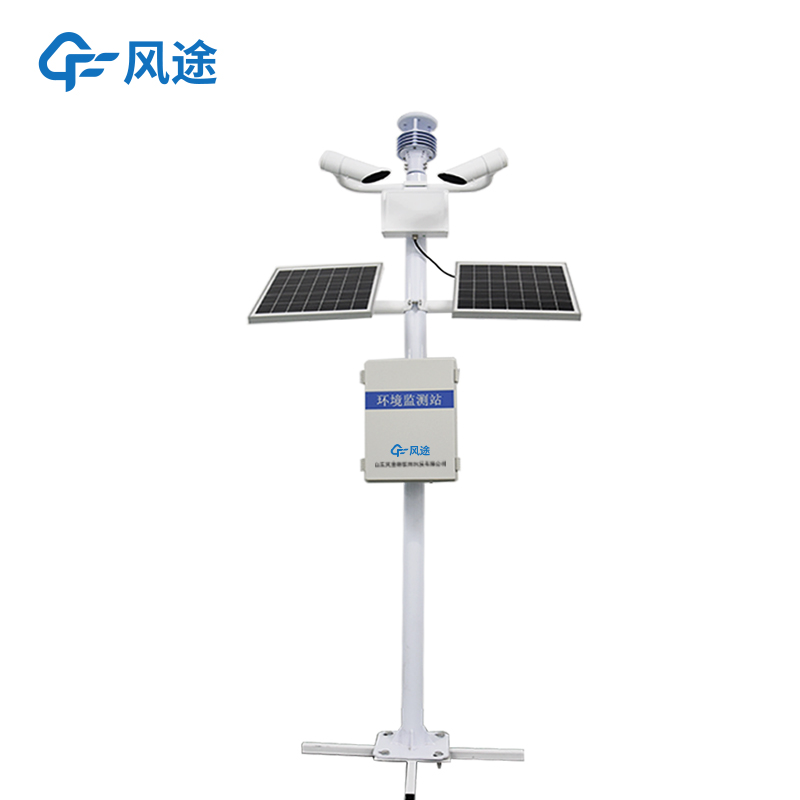
This paper addresses:https://www.fengtuweather.com/industry/780.html
Related products

Related article
-
Integrated Road Weather Station: Simplifying Installation, Optimizing Monitoring
2025-04-02 -
Road Weather Station: Precision Monitoring, Intelligent Modeling, and Timely Warnings for Highway Safety
2025-02-26 -
Radar speed gun utilizes the Doppler effect to achieve multi-scenario speed measurement
2026-08-18 -
How much does a small weather station cost?
2026-02-04 -
Dust Monitoring Equipment: Building a Solid Defense for Environmental Protection
2024-11-26 -
I-V Curve Tracer can measure up to 400V and 20A of current
2026-06-12 -
Fengtu Technology Dust Monitoring Equipment: Comprehensive Solutions for Air Quality Management
2025-10-17 -
Substation micrometeorological environment monitoring
2024-06-18