

Product
-
Weather station
-
Road Weather Station
-
Photovoltaic Inspection
-
Atmospheric monitoring
-
Operating condition monitoring
Recommended article
- Electrical Power Analyzer enables multi-channel power grid parameter acquisition and the detection of harmonics and unbalance
- Shandong Fengtu, a manufacturer of meteorological stations, offers high-precision weather observation equipment designed for field use
- Series power supply for EL-Based Internal Defect Detection in Photovoltaic Modules
- Shandong Fengtu, a manufacturer of meteorological monitoring instruments, produces advanced weather observation equipment
- Odor gas detector On-site Monitoring of Odorous Pollutants in Compliance with the GB14554 Standard
- Integrated Four-Parameter Weather Station for Field Meteorological Data Collection (Temperature, Humidity, Wind Speed, and Wind Direction)
Contact us
Shandong Fengtu IOT Technology Co., Ltd
Sales Manager:Ms. Emily Wang
Cel,Whatsapp,Wechat:+86 15898932201
Email:info@fengtutec.com
Add:No. 155 Optoelectronic Industry Accelerator, Gaoxin District, Weifang, Shandong, China
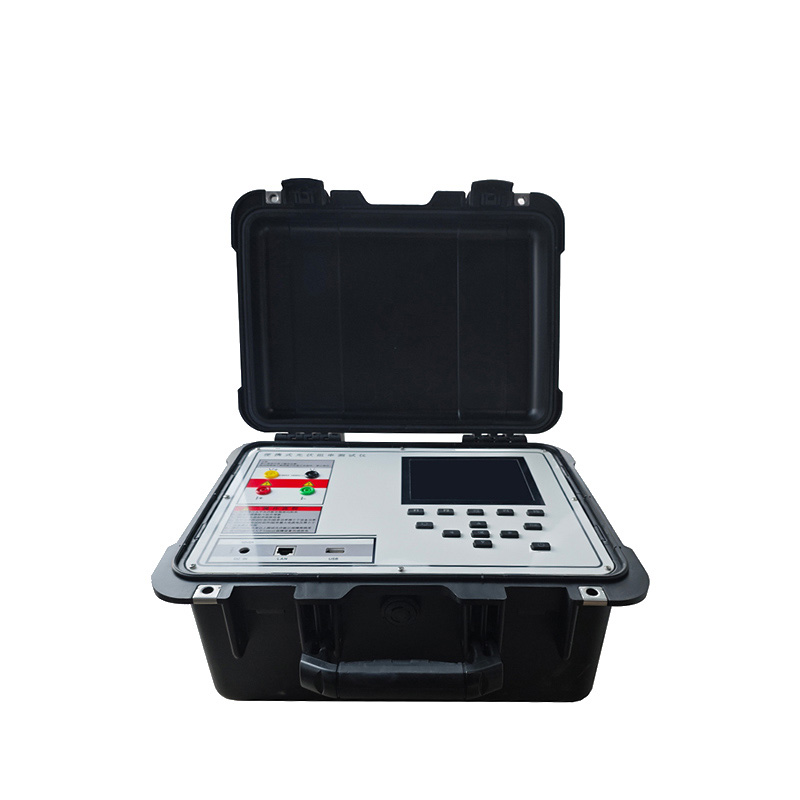
Photovoltaic module efficiency testing equipment Provides High-Voltage, High-Power Performance Testing Solutions
Article source:Weather station time:2026-01-04 10:17:11 viewed:597times
Photovoltaic module efficiency testing equipment supports testing up to 1500V voltage and 30A current, capable of evaluating 30kW high-power components. It accurately measures key parameters such as open-circuit voltage, short-circuit current, and maximum power, meeting the testing needs of the entire process from production to power plant acceptance.
Photovoltaic module efficiency testing equipment is a critical tool for verifying the performance and quality of photovoltaic products. Its core function lies in accurately measuring the electrical output characteristics of the components, providing a data foundation for production quality control, power plant investment evaluation, and long-term operation and maintenance. A device capable of testing 30kW power levels, voltages up to 1500V, and currents up to 30A is equipped to meet the current demands of testing large-scale, high-power components.
This equipment performs testing through a professional electrical load and measurement system. During the testing process, the device applies simulated operating conditions to the tested photovoltaic component or array and simultaneously collects its output voltage and current values at high speed. Through a complete I-V characteristic curve scan, multiple decisive parameters can be directly obtained and calculated. These parameters mainly include open-circuit voltage, which is the terminal voltage of the component under no-load conditions; short-circuit current, which is the current when the output terminal is short-circuited; and the maximum power point, which is the operating point where the product of voltage and current is maximized on the curve. This data is the fundamental basis for quantifying component conversion efficiency and evaluating whether it meets the rated power specifications.
The application of such high-performance testing equipment spans several key links in the photovoltaic industry chain. In manufacturing, it is an indispensable process control and final inspection reference in the production process of solar cells and modules, ensuring the performance consistency of products leaving the factory. At the project level, its application scenarios are extensive. This includes sampling inspection after component arrival to verify the product status after transportation; system debugging testing after installation to confirm correct connections and expected power generation capacity; and overall completion acceptance testing of photovoltaic power plants, providing technical certification for project delivery.
Furthermore, in third-party technical due diligence conducted in power plant asset transactions or financing scenarios, the objective test data provided by this equipment is central to evaluating the actual power generation asset quality of the power plant. It is also applicable to independent verification of the performance of the photovoltaic power generation side in supporting energy storage systems. The high-voltage testing capability of the equipment allows it to match the current technological trend of increasing numbers of series-connected components and higher system voltages, ensuring the safety and feasibility of on-site testing of large-scale arrays. Therefore, choosing a Photovoltaic module efficiency testing equipment with sufficient range and reliable accuracy is not only about obtaining a set of parameters, but also about establishing a foundation for a comprehensive quality control and technical evaluation system across the entire chain, from individual components to the power plant system. The test results provide crucial data support for judging product performance, evaluating system energy efficiency, and mitigating technical risks.
This paper addresses:https://www.fengtuweather.com/technical/866.html
Related products

Related article
-
Weather Station Monitoring System: Components & Capabilities
2025-03-12 -
Road Weather Information System: Enhancing Road Safety and Efficiency
2024-09-27 -
Dust monitoring system for in-depth environmental protection
2024-02-20 -
Fengtu Automated Weather Monitoring for the Modern Farm
2024-08-13 -
Combatting Dust Pollution: The Pivotal Role of Cruise Monitoring System
2025-01-22 -
Inhalable Dust Continuous Tester: A Portable Solution for Dust Concentration Monitoring
2025-01-08 -
Miniature Weather Stations Enable Precise Multi-Parameter Integrated Environmental Meteorological Monitoring
2026-08-13 -
All-in-one vehicle-mounted weather station
2024-04-10