

Product
-
Weather station
-
Road Weather Station
-
Photovoltaic Inspection
-
Atmospheric monitoring
-
Operating condition monitoring
Recommended article
- Electrical Power Analyzer enables multi-channel power grid parameter acquisition and the detection of harmonics and unbalance
- Shandong Fengtu, a manufacturer of meteorological stations, offers high-precision weather observation equipment designed for field use
- Series power supply for EL-Based Internal Defect Detection in Photovoltaic Modules
- Shandong Fengtu, a manufacturer of meteorological monitoring instruments, produces advanced weather observation equipment
- Odor gas detector On-site Monitoring of Odorous Pollutants in Compliance with the GB14554 Standard
- Integrated Four-Parameter Weather Station for Field Meteorological Data Collection (Temperature, Humidity, Wind Speed, and Wind Direction)
Contact us
Shandong Fengtu IOT Technology Co., Ltd
Sales Manager:Ms. Emily Wang
Cel,Whatsapp,Wechat:+86 15898932201
Email:info@fengtutec.com
Add:No. 155 Optoelectronic Industry Accelerator, Gaoxin District, Weifang, Shandong, China
Meteorological observation station Simultaneously Monitors Six Meteorological Parameters
Article source:Weather station time:2026-04-15 10:11:52 viewed:294times
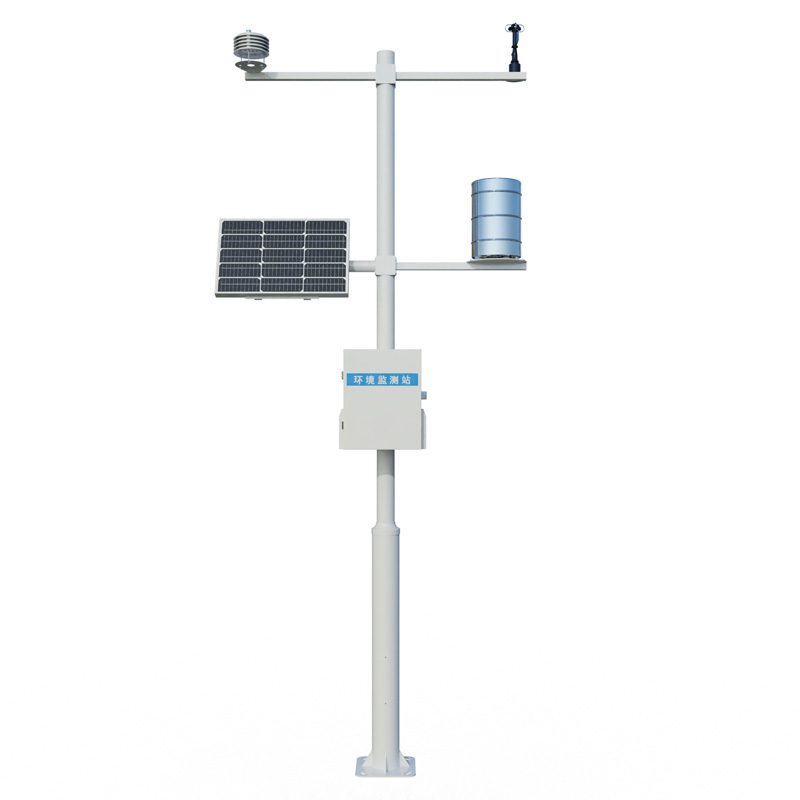
Meteorological observation station is an automated ground-based observation device capable of simultaneously monitoring six meteorological parameters: temperature, atmospheric pressure, humidity, wind direction, wind speed, and rainfall. It is suitable for applications in fields such as meteorological monitoring, agriculture and forestry, environmental protection, and marine science.
Also known as an Automated Weather Station, Meteorological observation station is a stationary, automated ground-based observation system. The device consists of five main components: meteorological sensors, a data logger, a solar power supply system, a mounting pole assembly, and a cloud platform. Together, these components enable the simultaneous monitoring of the six aforementioned meteorological parameters.
In terms of sensor configuration, Meteorological observation station employs high-precision measurement technologies. The wind speed and direction sensors utilize either ultrasonic or mechanical rotation principles; they feature a wind speed measurement range of 0 to 60 m/s with an error margin of ±0.3 m/s, and a wind direction measurement range of 0 to 360° with an error margin of ±3°. The atmospheric pressure sensor adopts a piezoresistive design, enabling stable monitoring of atmospheric pressure across various altitudes. The rainfall sensor primarily utilizes a tipping-bucket mechanism, offering a resolution of up to 0.2 mm. These sensors work in concert to ensure the comprehensiveness and accuracy of the collected meteorological data.
The data logger serves as the weather station's core processing unit. It features an industrial-grade chipset characterized by low power consumption and high reliability, with a static power consumption of less than 1 mA. The logger processes the signals output by the sensors—performing linearization and quantization—to convert raw engineering signals into specific meteorological parameter values. It then filters this data to derive the final readings for each meteorological parameter. The device supports a high data acquisition frequency, capable of collecting and storing one complete set of observation data every minute.
Meteorological observation station supports multiple data transmission methods; it comes standard with GPRS networking capabilities, with optional support for Bluetooth, wired connections, and 4G cellular communication. Users can configure data upload intervals to transmit meteorological data to a cloud platform or a central monitoring station, enabling remote viewing and analysis of the data. Additionally, the device features built-in high-capacity storage, allowing for the continuous recording of meteorological data over extended periods. Meteorological observation station is widely applied in fields such as meteorological monitoring, agriculture and forestry, environmental protection and marine science, airports and ports, scientific expeditions, and campus education; it can also be utilized for urban flood control as well as meteorological disaster forecasting and early warning services.
This paper addresses:https://www.fengtuweather.com/company/922.html
Related products
Related article
-
Fengtu Vehicle-Mounted Weather Station Monitoring System: Empowering Mobile Meteorological Data Acquisition
2025-07-18 -
Road Weather Station FT - GQX8: Empowering Traffic Decisions with Real - time Weather Data
2025-02-10 -
Shandong Fengtu, a manufacturer of meteorological observation equipment, supplies high-precision integrated field monitoring equipment
2026-08-26 -
Three Portable Weather Stations, Only Better
2024-03-18 -
Ultrasonic Snow Depth Monitoring Station Enables High-Precision, Automated Snow Depth Measurement
2026-09-21 -
Photovoltaic weather stations optimize power generation efficiency
2024-08-09 -
Principle of field mini weather station
2024-04-09 -
Photovoltaic Meteorological Monitoring Station for Distributed PV
2025-03-11