

Product
-
Weather station
-
Road Weather Station
-
Photovoltaic Inspection
-
Atmospheric monitoring
-
Operating condition monitoring
Recommended article
- Odor gas detector Enabling Precision, Round-the-Clock Monitoring of Fugitive Emissions in Industrial Facilities
- Compact Weather Stations: High-Precision Field Monitoring for Diverse Scenarios
- Shandong Fengtu, a renowned manufacturer of environmental monitoring instruments, supplies a wide range of field and online monitoring equipment
- Weather Monitoring Equipment enables high-precision, automated environmental parameter monitoring in field settings
- Introduction to the Principles, Applications, and Technical Specifications of Speed enforcement system
- Forest Weather Station Facilitates Precise Monitoring and Scientific Prevention of Forest Fires
Contact us
Shandong Fengtu IOT Technology Co., Ltd
Sales Manager:Ms. Emily Wang
Cel,Whatsapp,Wechat:+86 15898932201
Email:info@fengtutec.com
Add:No. 155 Optoelectronic Industry Accelerator, Gaoxin District, Weifang, Shandong, China
Automated Weather Station Installation Costs Range from ¥3,900 to ¥9,800
Article source:Weather station time:2026-05-06 11:04:33 viewed:300times
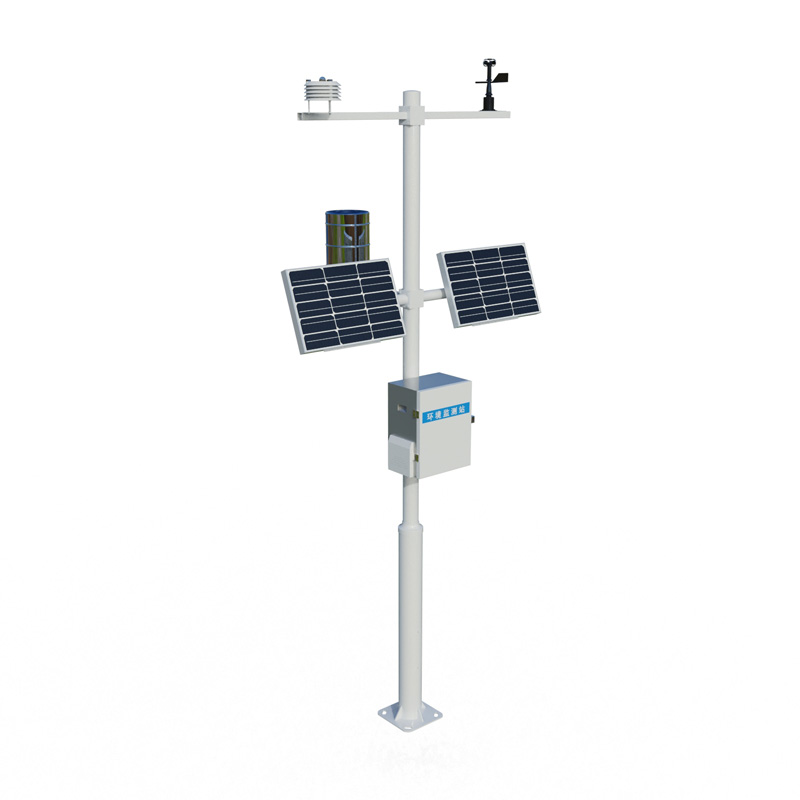
The installation price for an automated weather station varies between ¥3,900 and ¥9,800, depending on differences in configuration and functionality. Within the Fengtu brand series, the FT-QC4 model is priced at ¥3,900, while the FT-QC12 model sells for ¥9,800; users can make flexible choices based on their specific monitoring parameters and budgetary requirements.
"How much does it cost to install an automated weather station?" is the question users are most concerned about when purchasing weather monitoring equipment. The price range for automated weather station equipment varies significantly based on the number of monitoring parameters and the specific sensor configuration. Ranging from basic four-parameter weather stations to multi-functional portable models, the price spectrum typically falls between ¥3,900 and ¥9,800. As a professional manufacturer in the field of automated weather stations, the Fengtu brand offers a product line spanning various price points to suit user needs.
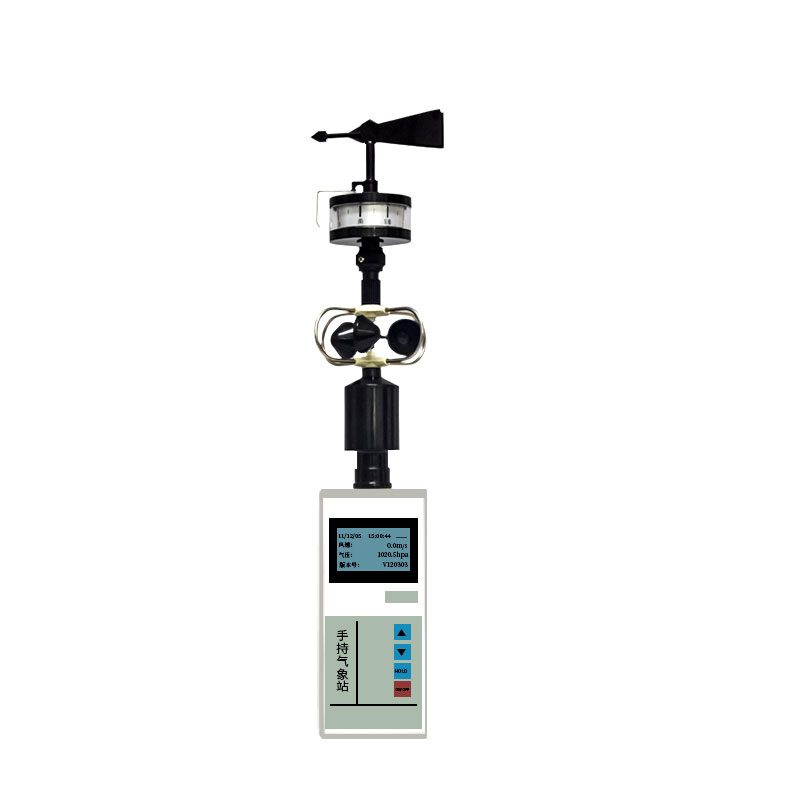
The number of monitoring parameters directly influences the price of an automated weather station. Taking the Fengtu brand as an example: the four-parameter FT-QC4 weather station monitors four data points—wind speed, wind direction, air temperature, and air humidity—and is priced at ¥3,900. The FT-QC5 model adds atmospheric pressure monitoring to these four parameters, bringing its price to ¥4,000. If a user requires monitoring for five specific indicators—wind speed, wind direction, temperature, humidity, and atmospheric pressure—and also requires portability, the Fengtu FT-QC12 portable weather station is available for ¥9,800. Generally, as the configuration becomes more advanced, the functionality more comprehensive, and the sensor precision higher, the price of the equipment increases accordingly. Ultrasonic automated weather stations, which utilize ultrasonic wind-sensing technology devoid of mechanical moving parts, typically command a higher price than their mechanical counterparts.
Automated weather stations designed to monitor six parameters—often utilized for government procurement or professional meteorological observation—are priced significantly higher than smaller-scale weather stations. These advanced stations are widely deployed in scenarios such as the dense observation networks of meteorological bureaus, high-standard farmland monitoring, and meteorological support for ecological conservation zones. Characterized by stable performance and highly authoritative data, these systems are ideally suited for professional users who require the continuous acquisition of meteorological data over the long term. Furthermore, the cost of weather stations designed for specific applications tends to be higher; for instance, the FT-CQX9 grassland weather station is priced at approximately 12,000 RMB, while highway weather stations—due to their integration of a greater number of sensors and remote transmission systems—carry a price tag of up to 128,000 RMB.
In addition to the cost of the equipment itself, the installation and deployment expenses for automated weather stations must also be factored into the budget. Basic installation and deployment fees are determined by the complexity of the installation site. For flat terrain, installation costs typically range from 1,000 to 3,000 RMB; however, in mountainous or remote regions—where transportation and construction challenges are more significant—these costs can rise to between 3,000 and 8,000 RMB. If a user purchases a portable or compact weather station, some manufacturers offer complimentary technical guidance; in scenarios where installation is straightforward, users may opt to perform the installation themselves, thereby saving on installation costs. For large-scale automated weather station projects procured by meteorological bureaus, the combined costs for installation and commissioning typically range from 5% to 15% of the equipment's purchase price.
Government procurement projects for automated weather stations typically utilize a bulk purchasing model, wherein the unit price encompasses a comprehensive package of services, including the equipment itself, installation and commissioning, and subsequent maintenance. For example, a project in Dawu County for the construction of automated weather stations in townships involved the procurement of 20 units, with an average unit price of approximately 92,958 RMB. Similarly, a project in Guannan County for the procurement of monitoring equipment for severe convective weather hazards involved the purchase of eight automated weather stations, each priced at 97,375 RMB. The unit prices in such bulk procurement projects are significantly higher than those of smaller weather stations; this is because the equipment must strictly adhere to national meteorological observation standards, requiring higher levels of sensor precision and data logger performance, and the costs include expenses for installation, commissioning, site modification, and warranty services. Consequently, users should select an automated weather station configuration that is best suited to their specific application scenarios and budgetary constraints.
This paper addresses:https://www.fengtuweather.com/company/934.html
Related products
Related article
-
Forest weather stations to protect against hill fires
2024-04-08 -
The price of meteorological monitoring systems varies from 3,900 to 39,800 yuan depending on the number of monitored elements
2026-07-23 -
Odor Online Monitoring System Enables 24-Hour Continuous Monitoring of Odor Concentration (OU), Ammonia, and Hydrogen Sulfide
2026-04-14 -
Handheld Radar SpeedGun Calculating the Speed of Moving Objects Based on the Doppler Effect
2026-04-28 -
How Photovoltaic Solar Environmental Monitoring System Empowers Fishery-Photovoltaic Complementation
2024-12-16 -
Essential Meteorological Parameters: The Foundation of Weather Forecasting and Climate Analysis
2024-11-04 -
Road Weather Stations: Transforming Highway Safety Through 24/7 Meteorological Monitoring
2025-09-24 -
Classification of automated weather stations
2024-02-19