

Product
-
Weather station
-
Road Weather Station
-
Photovoltaic Inspection
-
Atmospheric monitoring
-
Operating condition monitoring
Recommended article
- Odor gas detector Enabling Precision, Round-the-Clock Monitoring of Fugitive Emissions in Industrial Facilities
- Compact Weather Stations: High-Precision Field Monitoring for Diverse Scenarios
- Shandong Fengtu, a renowned manufacturer of environmental monitoring instruments, supplies a wide range of field and online monitoring equipment
- Weather Monitoring Equipment enables high-precision, automated environmental parameter monitoring in field settings
- Introduction to the Principles, Applications, and Technical Specifications of Speed enforcement system
- Forest Weather Station Facilitates Precise Monitoring and Scientific Prevention of Forest Fires
Contact us
Shandong Fengtu IOT Technology Co., Ltd
Sales Manager:Ms. Emily Wang
Cel,Whatsapp,Wechat:+86 15898932201
Email:info@fengtutec.com
Add:No. 155 Optoelectronic Industry Accelerator, Gaoxin District, Weifang, Shandong, China
Price Variations in Six-Element Weather Stations: Driven by Sensor Principles and Configuration Requirements
Article source:Weather station time:2026-05-09 09:59:59 viewed:302times
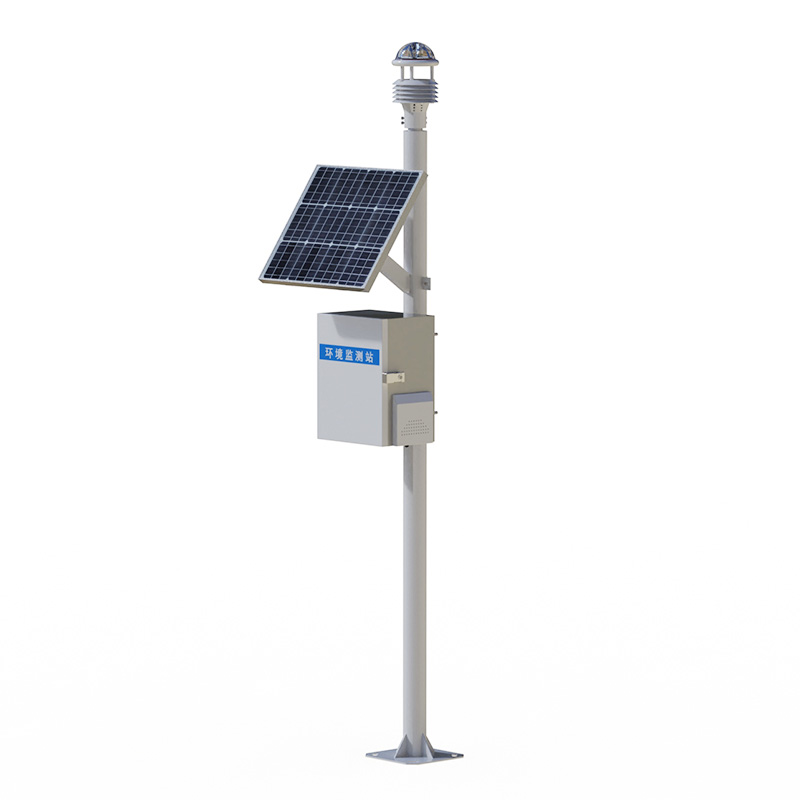
A six-element weather station is capable of real-time monitoring of six distinct meteorological parameters: wind speed, wind direction, temperature, humidity, atmospheric pressure, and optical rainfall. Prices for these stations typically range from 5,000 to 10,800 RMB. These price disparities stem primarily from differences in sensor type, measurement accuracy, data transmission methods, and system integration levels; users can select the appropriate configuration based on their specific application scenarios.
The price of a six-element weather station generally falls between 5,000 and 10,800 RMB. Taking products from Shandong Fengtu IoT Technology as an example: the FT-QC6 "Standard" six-element weather station has a market reference price of 5,000 RMB, while the FT-CQX6 "Ultrasonic" model is priced at 10,800 RMB. Both devices are capable of measuring the six core meteorological parameters—wind speed, wind direction, temperature, humidity, atmospheric pressure, and rainfall—but the price difference is largely attributable to variations in sensor operating principles and system integration levels. The Standard model employs traditional mechanical sensors for wind speed and direction, along with a tipping-bucket rain gauge; its structure is relatively simple, resulting in lower manufacturing costs. The Ultrasonic model, conversely, utilizes a single integrated ultrasonic sensor unit capable of capturing all six parameters simultaneously. Data is output via a digital communication interface in a single stream, offering a higher degree of integration, superior measurement accuracy, and a lower failure rate.
Price variations are also reflected in the data transmission methods and power supply solutions offered. The Ultrasonic model comes standard with multiple transmission options—including GPRS, Bluetooth, and RS485-to-USB connectivity—and features a housing constructed from imported ASA material. With an IP65-plus protection rating, the device is effectively shielded against harsh environmental conditions, such as salt spray. Furthermore, its solar power system—enhanced by MPPT (Maximum Power Point Tracking) technology—enables the device to operate stably over extended periods in the field without requiring frequent maintenance. Beyond sensor type, the price of a six-element weather station is also influenced by factors such as measurement precision, data logger performance, and the capabilities of the associated cloud platform. Basic-tier weather stations typically feature temperature sensors with an accuracy of approximately ±0.5°C and humidity sensors with an error margin within ±5%; their data acquisition and transmission functions are relatively rudimentary, making them suitable for simple meteorological observation needs—such as educational weather science activities in schools or basic monitoring on small-scale farms. The professional-grade temperature sensor offers an accuracy of up to ±0.2°C and is equipped with a more robust data logger as well as multiple communication options. It is ideally suited for users with rigorous data requirements—such as those in agricultural parks or meteorological research institutions. When selecting a six-parameter weather station, users should make a comprehensive assessment based on their specific application scenarios, budgetary constraints, and precision requirements to choose the device that best aligns with their needs.
This paper addresses:https://www.fengtuweather.com/company/937.html
Related products
Related article
-
Dust Monitoring Systems: Real-Time Solutions for Urban Dust Pollution Control
2025-05-19 -
Application of the Series power supply 1500V High-Voltage Output in EL Testing
2026-07-15 -
Integrated Road Weather Station: Simplifying Installation, Optimizing Monitoring
2025-04-02 -
Portable Ground Penetrating Radar: Detecting Hidden Pipelines and Curbing Illegal Discharges in Urban Settings
2025-02-27 -
Ground Penetrating Radar: The Core Tool for Advanced Geological Prediction in Underground Engineering
2025-07-25 -
The Hazards of Airborne Particulate Matter (PM) and the Role of PM2.5 Air Quality Monitor
2024-11-14 -
The PV module IV tester performs volt-ampere characteristic testing on outdoor PV modules
2026-08-07 -
How Landslide Monitoring Systems Work to Mitigate Geological Hazards
2024-12-04