

Product
-
Weather station
-
Road Weather Station
-
Photovoltaic Inspection
-
Atmospheric monitoring
-
Operating condition monitoring
Recommended article
- Electrical Power Analyzer enables multi-channel power grid parameter acquisition and the detection of harmonics and unbalance
- Shandong Fengtu, a manufacturer of meteorological stations, offers high-precision weather observation equipment designed for field use
- Series power supply for EL-Based Internal Defect Detection in Photovoltaic Modules
- Shandong Fengtu, a manufacturer of meteorological monitoring instruments, produces advanced weather observation equipment
- Odor gas detector On-site Monitoring of Odorous Pollutants in Compliance with the GB14554 Standard
- Integrated Four-Parameter Weather Station for Field Meteorological Data Collection (Temperature, Humidity, Wind Speed, and Wind Direction)
Contact us
Shandong Fengtu IOT Technology Co., Ltd
Sales Manager:Ms. Emily Wang
Cel,Whatsapp,Wechat:+86 15898932201
Email:info@fengtutec.com
Add:No. 155 Optoelectronic Industry Accelerator, Gaoxin District, Weifang, Shandong, China
Essential Meteorological Parameters: The Foundation of Weather Forecasting and Climate Analysis
Article source:Weather station time:2024-11-04 09:15:20 viewed:462times
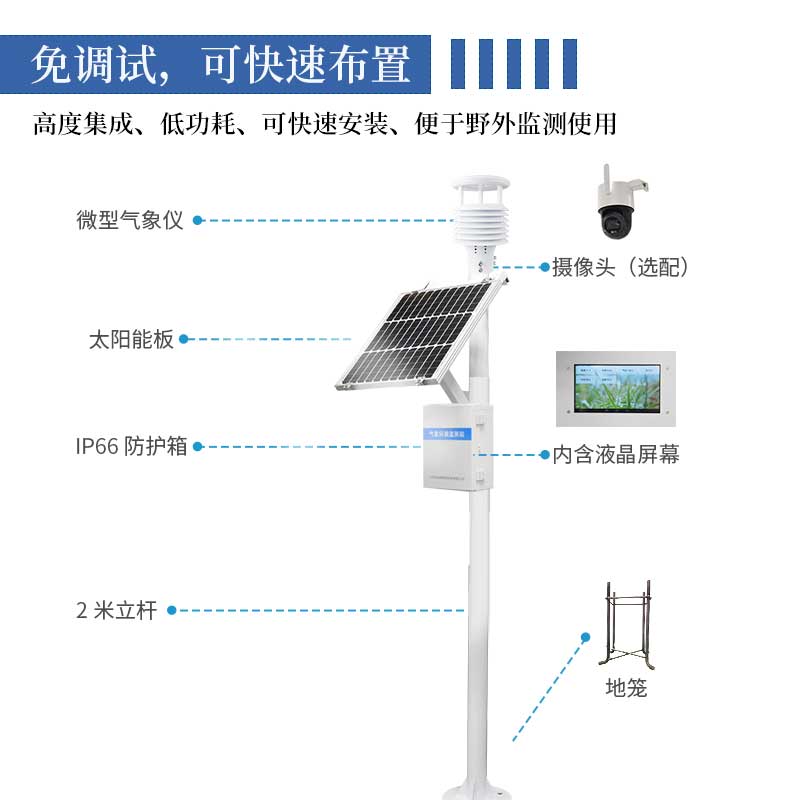
The "five elements" in meteorological data collectors include the most critical basic data in meteorological monitoring, which together form a basic description of weather conditions. These elements include the temperature of the air, which is the degree of cold or heat of the air; the content of water vapor in the air, also known as humidity, which reflects the richness of moisture in the air; wind speed, which is the intensity of the wind, describing the speed of air movement; wind direction, indicating the source direction of the wind; and atmospheric pressure, which measures the pressure of the atmosphere on the ground. These parameters provide core information for weather forecasting, climate analysis, and environmental monitoring, and are the basis for understanding and predicting weather changes.
Meteorological data collectors, also known as meteorological monitoring stations or climate monitoring devices, are instruments specifically designed to collect and record various meteorological information. These devices can measure and record key meteorological indicators such as temperature, humidity, wind speed, wind direction, atmospheric pressure, and precipitation. The performance of meteorological data collection equipment, including its measurement accuracy, stability, reliability, and adaptability, directly affects the effectiveness of the entire system.
They are not only used to provide immediate meteorological information to assist in weather forecasting but also to monitor extreme meteorological events and issue early warning information in a timely manner. They are also used to collect data over the long term to analyze global climate change, measure air quality and other environmental parameters to assess environmental quality, provide climate and soil information to agricultural workers to assist in agricultural production decisions, and predict the impact of meteorological conditions on traffic to ensure smooth and safe transportation.
This paper addresses:https://www.fengtuweather.com/industry/545.html
Related products
Related article
-
Meteorological observation station Enables High-Precision Automatic Acquisition of Meteorological Elements Across Multiple Scenarios
2026-06-25 -
One - Stop Dust Monitoring Solution
2025-01-16 -
Fengtu's Photovoltaic Module Dust Monitoring System: Ensuring Solar Efficiency through Precision Technology
2024-10-28 -
Ground Penetrating Radar for Detecting Roadway Surrounding Rock Loose Zone
2025-07-29 -
Construction Dust: Hazards and the Solution of Dust Monitoring Equipment
2024-11-22 -
Grassland weather stations protect against grassland fires
2024-04-30 -
Ground Penetrating Radar: Non-Destructive Precision Detection for Voids Beneath Building Floors
2025-07-17 -
Forest weather stations to protect against hill fires
2024-04-08