

Product
-
Weather station
-
Road Weather Station
-
Photovoltaic Inspection
-
Atmospheric monitoring
-
Operating condition monitoring
Recommended article
- Electrical Power Analyzer enables multi-channel power grid parameter acquisition and the detection of harmonics and unbalance
- Shandong Fengtu, a manufacturer of meteorological stations, offers high-precision weather observation equipment designed for field use
- Series power supply for EL-Based Internal Defect Detection in Photovoltaic Modules
- Shandong Fengtu, a manufacturer of meteorological monitoring instruments, produces advanced weather observation equipment
- Odor gas detector On-site Monitoring of Odorous Pollutants in Compliance with the GB14554 Standard
- Integrated Four-Parameter Weather Station for Field Meteorological Data Collection (Temperature, Humidity, Wind Speed, and Wind Direction)
Contact us
Shandong Fengtu IOT Technology Co., Ltd
Sales Manager:Ms. Emily Wang
Cel,Whatsapp,Wechat:+86 15898932201
Email:info@fengtutec.com
Add:No. 155 Optoelectronic Industry Accelerator, Gaoxin District, Weifang, Shandong, China
Real-Time Dust Monitoring: How Dust Detectors Protect Public Health and the Environment
Article source:Weather station time:2025-05-15 09:24:49 viewed:506times
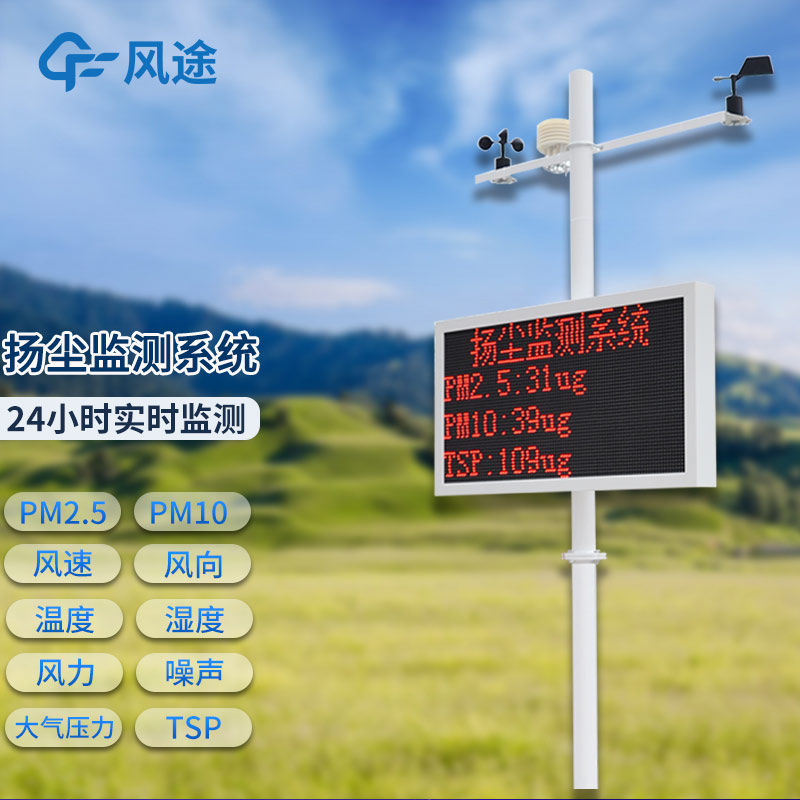
Dust pollution refers to the contamination phenomenon where particulate matter suspended in the air is generated by natural or human activities. In terms of natural factors, sandstorms and volcanic eruptions can produce large amounts of dust; in terms of human activities, construction operations, road cleaning, material transportation, open-air stacking, etc., can all cause ground dust to rise into the atmospheric environment. Inhalable particulate matter (PM10) with a diameter of less than 10 microns and fine particulate matter (PM2.5) with a diameter of less than 2.5 microns can remain suspended in the air for a long time and be inhaled by the human body, causing respiratory diseases, cardiovascular diseases, etc. They can also reduce visibility, affect traffic safety, and erode and damage ecosystems and buildings.
To address the problems caused by dust pollution, dust detectors use technologies such as laser scattering and β-ray absorption to real-time monitor the concentrations of dust pollutants in the air, such as PM2.5, PM10, and TSP (total suspended particulates), and can simultaneously monitor meteorological parameters such as wind speed, wind direction, temperature, humidity, and air pressure. These data are transmitted to a management platform via IoT technology, allowing managers to intuitively understand the dust pollution status in the monitored area.
Installing dust detectors on construction sites can real-time monitor construction dust and urge construction parties to take measures such as sprinkling water to reduce dust and covering with dust-proof nets; equipment at road monitoring points can analyze the degree of road dust pollution and provide a basis for sanitation departments to adjust the frequency and methods of cleaning; industrial parks can use detectors to grasp the dust emission situations during enterprise material stacking and production processes, achieving precise pollution control. As an important technological means for air pollution prevention and control, dust detectors provide strong support for improving air quality and protecting public health.
This paper addresses:https://www.fengtuweather.com/industry/701.html
Related products
Related article
-
Principle of field mini weather station
2024-04-09 -
Fighting Against Dust: The Role of Dust Detector in Urban Sustainability
2024-12-18 -
Handheld Radar SpeedGun Calculating the Speed of Moving Objects Based on the Doppler Effect
2026-04-28 -
Reducing Accident Risk with Road Weather Stations
2024-09-04 -
What do weather station monitoring systems bring to agriculture?
2024-02-23 -
Meteorological observation station Suitable for High-Precision Meteorological Monitoring Across Diverse Field Scenarios
2026-09-16 -
Odor gas detector Real-time Monitoring of Odor Concentration (OU) and Concentration of Multiple Odor Gases
2025-12-18 -
Vehicle - Mount Weather Station,Mobile Monitoring in Action
2024-12-27