

Product
-
Weather station
-
Road Weather Station
-
Photovoltaic Inspection
-
Atmospheric monitoring
-
Operating condition monitoring
Recommended article
- Electrical Power Analyzer enables multi-channel power grid parameter acquisition and the detection of harmonics and unbalance
- Shandong Fengtu, a manufacturer of meteorological stations, offers high-precision weather observation equipment designed for field use
- Series power supply for EL-Based Internal Defect Detection in Photovoltaic Modules
- Shandong Fengtu, a manufacturer of meteorological monitoring instruments, produces advanced weather observation equipment
- Odor gas detector On-site Monitoring of Odorous Pollutants in Compliance with the GB14554 Standard
- Integrated Four-Parameter Weather Station for Field Meteorological Data Collection (Temperature, Humidity, Wind Speed, and Wind Direction)
Contact us
Shandong Fengtu IOT Technology Co., Ltd
Sales Manager:Ms. Emily Wang
Cel,Whatsapp,Wechat:+86 15898932201
Email:info@fengtutec.com
Add:No. 155 Optoelectronic Industry Accelerator, Gaoxin District, Weifang, Shandong, China
Automated Monitoring for Geological Disasters: Solutions for Hazard Point Detection and Early Warning
Article source:Weather station time:2025-06-13 09:25:16 viewed:499times
Background
Geological disasters pose a serious threat to human life, property, and the ecological environment. They come in various types, including landslides, collapses, debris flows, land subsidence, and ground fissures. Against the backdrop of global climate change and increasingly frequent human engineering activities, the frequency and intensity of geological disasters have shown an upward trend. Traditional monitoring of geological disasters mainly relies on regular manual inspections and simple instrument measurements, suffering from low monitoring frequency, poor timeliness, limited coverage, and constraints from topography and weather conditions. These shortcomings make it difficult to meet the needs for real-time and precise monitoring and early warning of geological disasters. In this context, the construction project of automated geological disaster monitoring has become a key measure to enhance the capability of geological disaster prevention and control.
The construction project of automated geological disaster monitoring refers to a systematic engineering that uses modern technological means. By installing various automated monitoring devices, it conducts real-time, continuous, and dynamic monitoring of geological disaster hazard points, and timely transmits and analyzes monitoring data to achieve early warning and prevention of geological disasters.
Main Construction Contents
According to different types of geological disasters and the characteristics of hazard points, corresponding automated monitoring devices are installed:
Surface Displacement Monitoring System: The Global Navigation Satellite System (GNSS) receives satellite signals to achieve high-precision real-time acquisition of three-dimensional coordinate changes at monitoring points, enabling accurate monitoring of horizontal and vertical displacements of disaster bodies such as landslides and collapses.
Deformation Monitoring Devices:
Fissure Meters: Installed on both sides of fissures in geological disaster bodies, they continuously measure changes in fissure width, length, and depth, providing key data for judging the stability of disaster bodies.
Inclinometers: Used to measure changes in the inclination angle of geological bodies, they can promptly detect the tilting trend of mountains, buildings, etc., playing an important role in the early warning of landslides, collapses, and other disasters.
Hydrological Monitoring Devices:
Rain Gauges: Available in various types such as tipping bucket and piezoelectric, they accurately measure rainfall and rainfall intensity, providing basic data for early warning of geological disasters closely related to rainfall, such as debris flows and landslides.
Water Level Monitoring Station: Based on measurement principles like radar, it real-time monitors changes in river water levels, reservoir water levels, and groundwater levels, contributing to the prevention of geological disasters and land subsidence caused by floods.
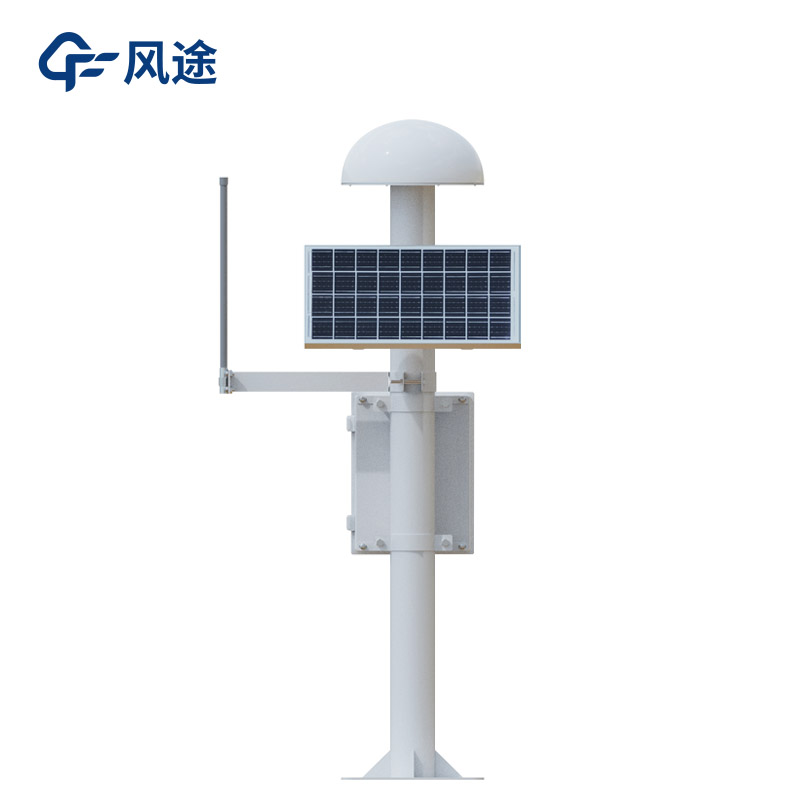
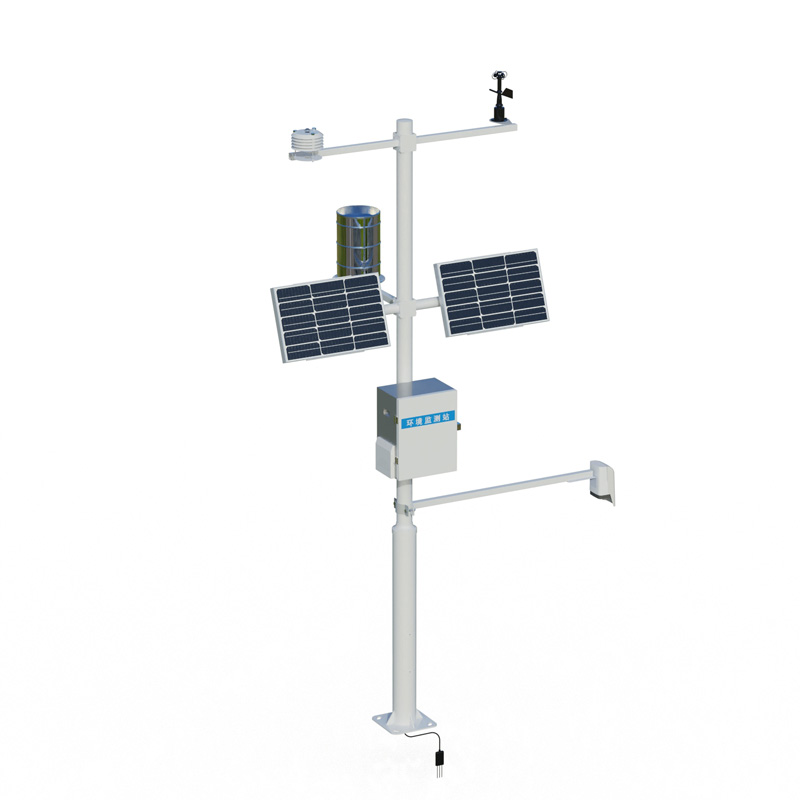
Meteorological Monitoring Devices: Meteorological elements such as temperature, humidity, wind speed, and wind direction have significant impacts on the occurrence and development of geological disasters. Meteorological stations integrate multiple sensors to real-time collect these meteorological data, providing comprehensive meteorological information for the comprehensive analysis and early warning of geological disasters.
After the hardware system is established, a stable and reliable communication network should also be built to real-time transmit the data collected by monitoring devices to the monitoring center. Multiple methods such as wired networks, wireless networks, and satellite communications can be utilized.
A professional geological disaster monitoring and early warning platform should also be developed to centrally store, sort, analyze, and display various collected monitoring data, realizing visual and information-based management of data.
Project Implementation Process
Preparatory Work:
Carry out investigations and evaluations of geological disasters to determine hazard points and key monitoring areas.
Formulate project plans and design schemes.
Prepare project construction funds.
Equipment Procurement and Installation:
Procure appropriate monitoring equipment according to the design scheme, and organize professional technicians for installation and debugging.
System Integration and Debugging:
Integrate each monitoring device with the monitoring platform, establish data transmission links, and conduct system joint debugging to ensure the normal operation of the system.
Operation, Maintenance, and Management:
Formulate operation and maintenance management systems, and designate specific personnel responsible for the daily operation and maintenance of the system.
Regularly inspect, calibrate, and repair monitoring equipment.
Timely update and upgrade the software of the monitoring platform.
This paper addresses:https://www.fengtuweather.com/industry/723.html
Related products
Related article
-
Meteorological instrument All-Weather, Multi-Parameter Meteorological Environment Monitoring
2026-03-12 -
FT - FZ5: All - in - One Negative Oxygen Ion Monitoring Station for Sanatoriums
2025-03-25 -
Fengtu Automated Weather Monitoring for the Modern Farm
2024-08-13 -
How Forestry Weather Stations Bolster Forest Fire Prevention Efforts
2025-01-15 -
Transmission Line Weather Station FT - WQX6: Guarding the 'Power Blood Vessels' of Cities
2025-04-24 -
Principles and Applications of Online dust particle counter
2025-11-21 -
Addressing Forest Fire Risks with Our Forestry Weather Station: Prevention & Early Warning
2025-08-19 -
Introduction of an environmental protection equipment - beta-ray method dust monitor
2024-03-04