

Product
-
Weather station
-
Road Weather Station
-
Photovoltaic Inspection
-
Atmospheric monitoring
-
Operating condition monitoring
Recommended article
- Electrical Power Analyzer enables multi-channel power grid parameter acquisition and the detection of harmonics and unbalance
- Shandong Fengtu, a manufacturer of meteorological stations, offers high-precision weather observation equipment designed for field use
- Series power supply for EL-Based Internal Defect Detection in Photovoltaic Modules
- Shandong Fengtu, a manufacturer of meteorological monitoring instruments, produces advanced weather observation equipment
- Odor gas detector On-site Monitoring of Odorous Pollutants in Compliance with the GB14554 Standard
- Integrated Four-Parameter Weather Station for Field Meteorological Data Collection (Temperature, Humidity, Wind Speed, and Wind Direction)
Contact us
Shandong Fengtu IOT Technology Co., Ltd
Sales Manager:Ms. Emily Wang
Cel,Whatsapp,Wechat:+86 15898932201
Email:info@fengtutec.com
Add:No. 155 Optoelectronic Industry Accelerator, Gaoxin District, Weifang, Shandong, China
Differences between grassland weather stations and other weather stations
Article source:Weather station time:2024-03-28 09:19:31 viewed:526times
The main role of grassland meteorological stations is to monitor and record meteorological data, such as temperature, humidity and wind speed, in grassland areas. These data are very helpful in protecting the grassland ecological environment, guiding agricultural and animal husbandry production, preventing natural disasters and conducting climate research. In short, the grassland weather station is an important tool for climate monitoring and environmental protection in grassland areas.
The difference between it and other weather stations is:
1. Environmental adaptability: Grassland weather stations are usually designed to be more adaptable to the openness of the grassland and extreme climatic conditions, such as strong winds and large temperature differences.
2. Monitoring focus: Focuses on monitoring meteorological elements closely related to grassland ecology and animal husbandry, and therefore may be equipped with sensors to monitor vegetation growth, soil condition and grassland degradation, which may not be standard for other types of weather stations.
3. Anti-sand and wind resistant design: As grassland areas may face more sandy and windy weather, grassland weather stations usually have stronger anti-sand and wind resistant designs to protect the equipment from damage and ensure the accuracy of data collection and the long-term stable operation of the equipment.
Grassland weather stations can scientifically prevent grassland fires. Through real-time monitoring of meteorological conditions and data analysis, they can provide instant information for fire risk early warning, guidance of fire-fighting actions and fire source management in grassland areas, thus helping to prevent and effectively respond to grassland fires.
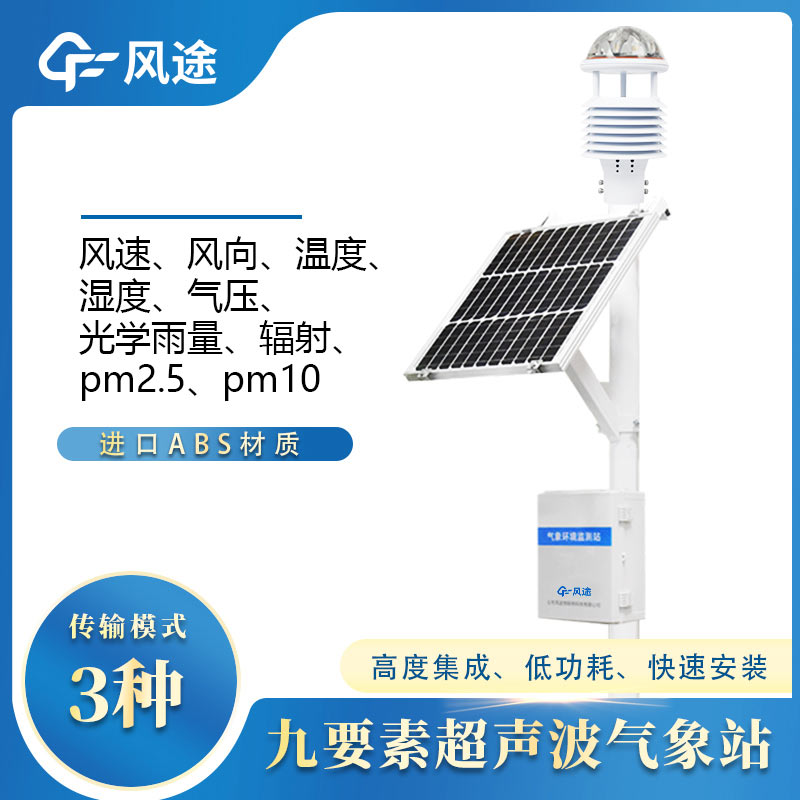
Grassland weather stations are mainly composed of weather sensors, data loggers and communication equipment. The sensors are used to measure temperature, humidity, wind speed and other meteorological data, the data logger collects and stores this information, and the communication equipment sends the data to the monitoring centre. These configurations enable the Grassland Weather Station to monitor the climate of the grassland in real time and provide data support for environmental protection and agriculture and animal husbandry.
This paper addresses:https://www.fengtuweather.com/industry/284.html
Related products
Related article
-
Farmland Weather Station: Enabling Scientific Crop "Health Checks" via Microclimate Sensing
2025-06-26 -
Unleashing the Power of Forestry Weather Stations for Fire Safety
2025-01-07 -
Windway Meteorological Observatory
2024-08-08 -
10-Component Dust Monitoring System for Playgrounds: Precision Tracking of PM2.5, PM10, and Meteorological Factors
2025-05-23 -
Small Automatic Weather Station: MEMS-based Portable Solution for Real-time Environmental Monitoring
2025-10-14 -
What are the advantages of the 12 metre manual pre-dischargeable lightning rod?
2024-05-28 -
The Vehicle-Mount Weather Station: Enabling Mobile Meteorological Monitoring for Emergency Response and Beyond
2025-09-26 -
Photovoltaic weather stations optimize power generation efficiency
2024-08-09