

Product
-
Weather station
-
Road Weather Station
-
Photovoltaic Inspection
-
Atmospheric monitoring
-
Operating condition monitoring
Recommended article
- Electrical Power Analyzer enables multi-channel power grid parameter acquisition and the detection of harmonics and unbalance
- Shandong Fengtu, a manufacturer of meteorological stations, offers high-precision weather observation equipment designed for field use
- Series power supply for EL-Based Internal Defect Detection in Photovoltaic Modules
- Shandong Fengtu, a manufacturer of meteorological monitoring instruments, produces advanced weather observation equipment
- Odor gas detector On-site Monitoring of Odorous Pollutants in Compliance with the GB14554 Standard
- Integrated Four-Parameter Weather Station for Field Meteorological Data Collection (Temperature, Humidity, Wind Speed, and Wind Direction)
Contact us
Shandong Fengtu IOT Technology Co., Ltd
Sales Manager:Ms. Emily Wang
Cel,Whatsapp,Wechat:+86 15898932201
Email:info@fengtutec.com
Add:No. 155 Optoelectronic Industry Accelerator, Gaoxin District, Weifang, Shandong, China
Fire Risk Factor Integrated Monitoring Station Instructions
Article source:Weather station time:2024-07-03 09:00:32 viewed:518times
The prediction of fire danger levels in forests and grasslands is a key part of the forest fire prevention strategy, which is "prevention and timely response". Accurate fire danger level forecasts enable the relevant departments to deploy fire prevention measures in advance, which plays a crucial role in fire prevention and initial fighting.
Such forecasting is also a key step in promoting the development of forest fire prevention towards a more scientific and systematic approach, which helps to raise public awareness of the potential threat of forest fires and deepen their understanding of the importance of fire prevention, thereby enhancing fire prevention awareness throughout the society. This has an immeasurable positive impact on the maintenance of forest resources, the protection of the ecological environment and the promotion of sustainable development.
Traditionally, the monitoring of forest and grassland fire risk has relied on basic detection tools and methods, which focus on the observation and recording of key fire risk factors to determine the potential risk of fire and its possible spread pattern. Although these methods have helped fire risk assessment to a certain extent, they also face some inherent shortcomings. To address these issues, Windway has launched a new generation of Fire Risk Factor Integrated Monitoring Station, which realises continuous, real-time and comprehensive monitoring of fire risk factors through advanced technology, thus significantly improving the accuracy and efficiency of fire risk assessment.
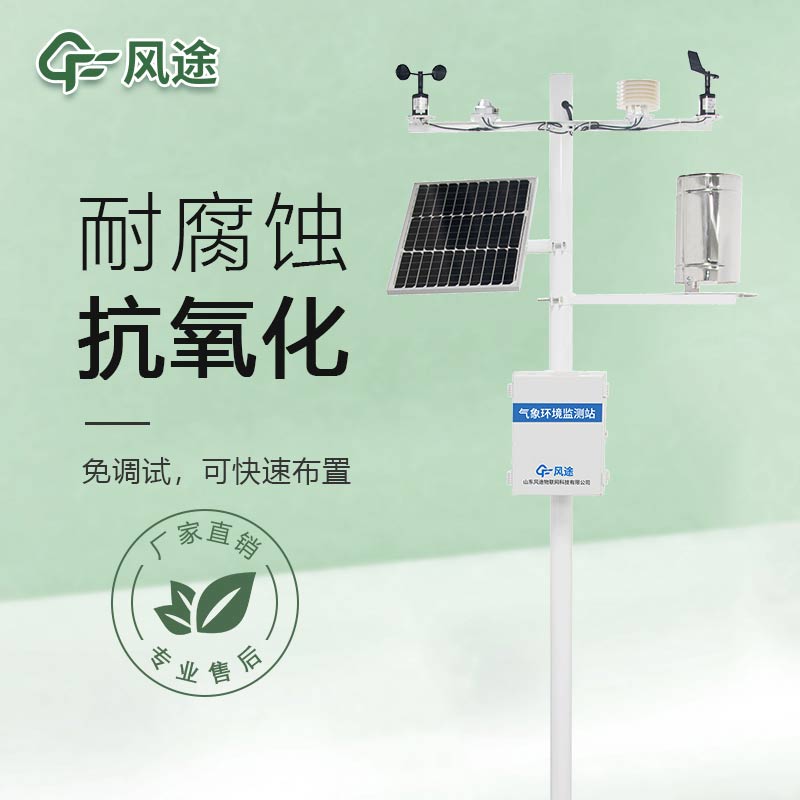
The Integrated Fire Risk Factor Monitoring Station is an integrated system that includes an array of smart sensors, a data communication controller, and the necessary installation components. The system utilises smart sensors for three-dimensional monitoring of a number of key fire risk parameters, including air temperature, relative humidity, light levels, wind speed and direction, rainfall, soil temperature and moisture status, carbon dioxide, and evapotranspiration, to achieve a comprehensive assessment of fire risk.
This paper addresses:https://www.fengtuweather.com/industry/422.html
Related products
Related article
-
System framework for digital weather stations
2024-05-10 -
Application of Forest Weather Station in Forestry Protection
2025-11-24 -
Road Weather Information System: Enhancing Road Safety and Efficiency
2024-09-27 -
Dust monitoring equipment selection points
2024-02-07 -
Portable Ground Penetrating Radar: Detecting Hidden Pipelines and Curbing Illegal Discharges in Urban Settings
2025-02-27 -
Online Dust Monitoring System: Intelligent Dust Suppression via Real-time PM Monitoring & Spraying Linkage
2025-06-24 -
Forest weather stations to protect against hill fires
2024-04-08 -
Road Weather Station FT - GQX8: Empowering Traffic Decisions with Real - time Weather Data
2025-02-10