

Product
-
Weather station
-
Road Weather Station
-
Photovoltaic Inspection
-
Atmospheric monitoring
-
Operating condition monitoring
Recommended article
- Electrical Power Analyzer enables multi-channel power grid parameter acquisition and the detection of harmonics and unbalance
- Shandong Fengtu, a manufacturer of meteorological stations, offers high-precision weather observation equipment designed for field use
- Series power supply for EL-Based Internal Defect Detection in Photovoltaic Modules
- Shandong Fengtu, a manufacturer of meteorological monitoring instruments, produces advanced weather observation equipment
- Odor gas detector On-site Monitoring of Odorous Pollutants in Compliance with the GB14554 Standard
- Integrated Four-Parameter Weather Station for Field Meteorological Data Collection (Temperature, Humidity, Wind Speed, and Wind Direction)
Contact us
Shandong Fengtu IOT Technology Co., Ltd
Sales Manager:Ms. Emily Wang
Cel,Whatsapp,Wechat:+86 15898932201
Email:info@fengtutec.com
Add:No. 155 Optoelectronic Industry Accelerator, Gaoxin District, Weifang, Shandong, China
How to select sensors for four-element automatic weather stations?
Article source:Weather station time:2024-07-08 09:04:02 viewed:605times
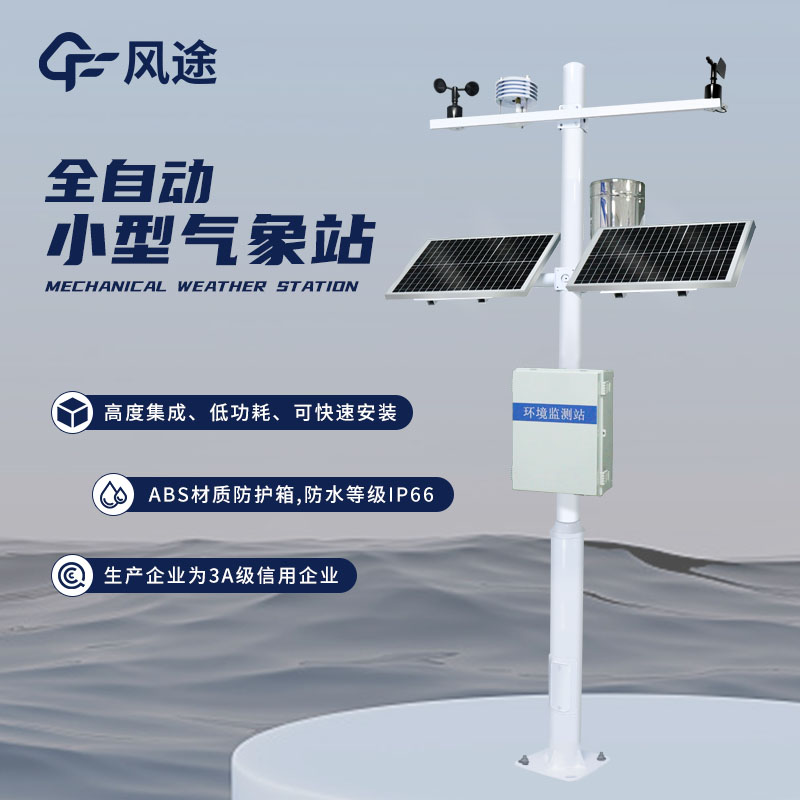
Weather stations are important equipment for monitoring and collecting climatic data, allowing real-time monitoring of factors such as temperature, humidity, wind speed and direction, which are often referred to as meteorological elements. A four-element automatic weather station refers to equipment that can monitor the four basic weather elements. Of course, weather elements are not static; they can be adjusted and customised according to the specific needs of users. For example, depending on the monitoring needs, the monitoring of certain elements can be increased or decreased, resulting in weather stations with different configurations, such as six-element weather stations.
According to different needs, weather stations can be equipped with the following sensors:
Temperature sensor: measures the ambient temperature.
Humidity sensor: monitors the moisture content of the air.
Anemometer and wind vane: measure wind speed and direction.
Rain gauge: records the amount of precipitation.
Barometer: monitors atmospheric pressure.
Light Sensor: Measures light intensity.
Radiation sensor: monitors solar radiation or UV intensity.
Evapotranspiration sensor: measures the rate of water evaporation.
And how to choose the right sensor depends on the needs. Different scenarios require different sensors-
For example, a forest fire weather station, designed for forest fire prevention, monitors meteorological elements that may affect the fire danger level. Sensors such as temperature and humidity, rainfall, wind speed and direction, radiation, evaporation, carbon dioxide, sunshine hours, dew point temperature, etc. will be used;
For example, the smart farmland weather station, which is a device for agriculture to provide accurate weather data to help farmers better crop management and decision-making, it will use sensors related to agriculture, like temperature and humidity, wind speed and direction, barometric pressure, rainfall, such commonly used sensors, as well as carbon dioxide, photosynthesis and transpiration less factors, and some soil sensors to measure PH, conductivity, nitrogen, phosphorus and potassium, temperature, Moisture and so on;
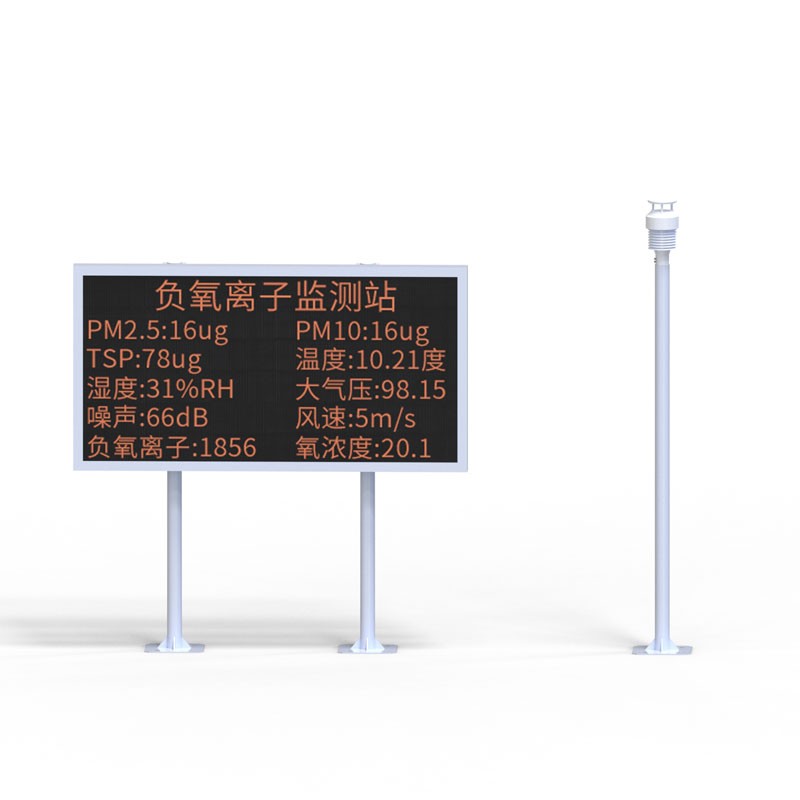
For example, environmental meteorological monitoring station: monitoring the city or a specific region of the environmental meteorological conditions, for environmental protection and urban planning to provide data support. This type of equipment will be used to measure air pollution sensors, measuring O3, CO, SO2, NO2, PM2.5, PM10, hydrogen sulphide, volatile organic pollutants, noise and so on.
This paper addresses:https://www.fengtuweather.com/industry/425.html
Related products
Related article
-
How Photovoltaic Solar Environmental Monitoring System Empowers Fishery-Photovoltaic Complementation
2024-12-16 -
Small weather station for rain, snow and wind monitoring
2024-05-17 -
Fengtu Road Weather Station
2025-05-28 -
Monitoring Forest Litter Moisture Content
2025-01-17 -
Photovoltaic Meteorological Monitoring Station for Distributed PV
2025-03-11 -
Vehicle Weather Station: Mobile Meteorological Sentinel on Patrol
2024-12-19 -
Scenic Weather Station: Empowering Tourism with Meteorological Resources
2024-09-26 -
Full Intelligent Control Soil and Water Conservation Digital High Precision Artificial Rainfall Simulation System
2024-04-17