

Product
-
Weather station
-
Road Weather Station
-
Photovoltaic Inspection
-
Atmospheric monitoring
-
Operating condition monitoring
Recommended article
- Electrical Power Analyzer enables multi-channel power grid parameter acquisition and the detection of harmonics and unbalance
- Shandong Fengtu, a manufacturer of meteorological stations, offers high-precision weather observation equipment designed for field use
- Series power supply for EL-Based Internal Defect Detection in Photovoltaic Modules
- Shandong Fengtu, a manufacturer of meteorological monitoring instruments, produces advanced weather observation equipment
- Odor gas detector On-site Monitoring of Odorous Pollutants in Compliance with the GB14554 Standard
- Integrated Four-Parameter Weather Station for Field Meteorological Data Collection (Temperature, Humidity, Wind Speed, and Wind Direction)
Contact us
Shandong Fengtu IOT Technology Co., Ltd
Sales Manager:Ms. Emily Wang
Cel,Whatsapp,Wechat:+86 15898932201
Email:info@fengtutec.com
Add:No. 155 Optoelectronic Industry Accelerator, Gaoxin District, Weifang, Shandong, China
Visibility, Road Condition & Wind Monitoring: Key Equipment Safeguarding Highway Traffic Against Meteorological Risks
Article source:Weather station time:2025-09-02 09:32:16 viewed:540times
In highway traffic operation, meteorological conditions are key factors affecting driving safety and traffic efficiency. Sudden or large-scale meteorological disasters not only easily cause traffic accidents but may also reduce road capacity, resulting in cascading losses. To address this issue, highway meteorological monitoring equipment based on modern technology has emerged. By collecting and analyzing meteorological and road condition data in real time, it provides support for traffic management and safety protection.
This type of monitoring equipment system includes core data collection components and supporting modules that ensure information processing, transmission, and application. Among them, the data collection components are crucial, directly determining the accuracy and reliability of monitoring. There are various common types of equipment, each focusing on monitoring different meteorological and road condition indicators:
The Visibility Sensor is an important part. It utilizes the principle of forward light scattering: by emitting specific light pulses, it detects the scattering intensity of light by suspended particles in the atmosphere, and then converts this into visibility values through algorithms. With this sensor, traffic management departments can quickly grasp visibility conditions, judge the level of road danger, and then take measures to ensure driving safety. It is widely used in ordinary highways and urban roads.
The Road Condition Monitor adopts remote sensing and multi-spectral measurement technology. It does not need to contact the road surface, thus avoiding damage to the road and interference with traffic. It can accurately identify whether there is ice, snow, or water on the road surface and measure their thickness. At the same time, it can monitor weather phenomena that affect driving, such as fog, rain, and snow, and supports 24-hour uninterrupted operation. Even in harsh weather, it can fully monitor road surface conditions and issue alarm prompts in a timely manner.
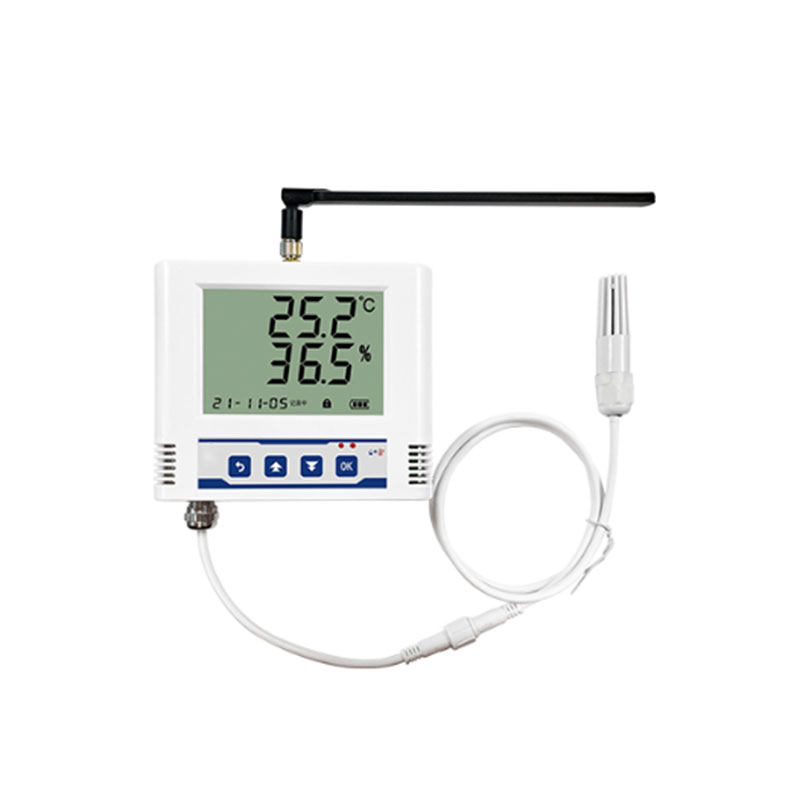
Atmospheric temperature, humidity, and pressure monitoring equipment focuses on measuring air temperature, relative humidity, and air pressure. Its outer shell has waterproof and anti-ultraviolet functions, and some can be equipped with special protective devices to avoid the impact of solar radiation and rainwater on monitoring accuracy. In traffic scenarios, the environmental data it provides helps management departments formulate traffic control measures and provides a basis for accident prevention. It is suitable for ordinary highways, tunnels, and other road sections.
Rainfall monitoring equipment converts rainfall into transmittable and processable signals through a specific structure, realizing rainwater collection, rainfall situation analysis, and intelligent early warning. It assists in highway traffic flow management, ensures orderly vehicle passage, and improves the level of traffic order management.
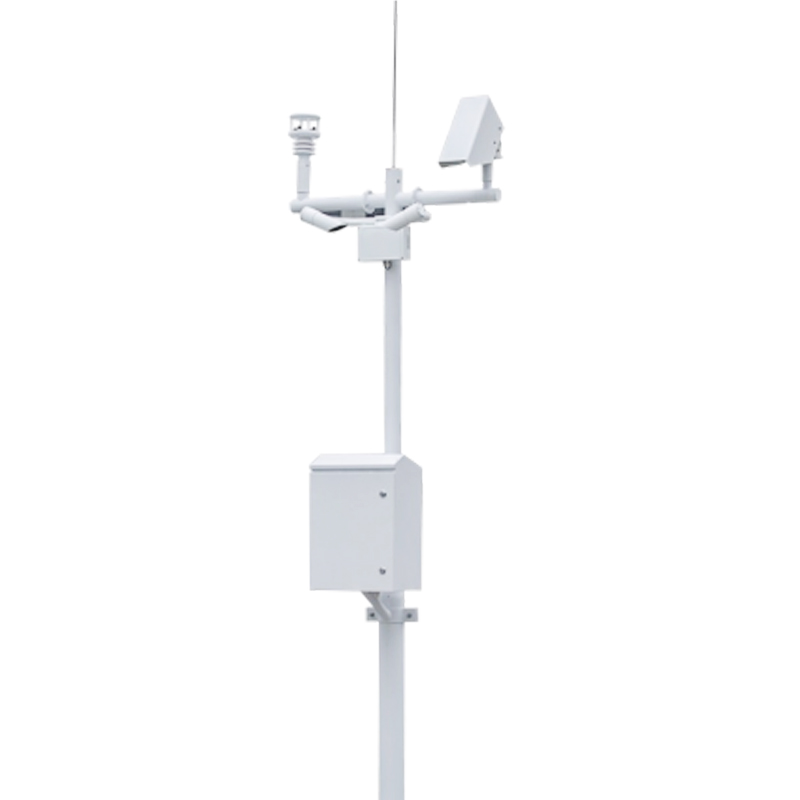
Wind speed and wind direction monitoring equipment are also indispensable. The wind speed equipment adopts a sensitive structural design, with high material strength and a low starting threshold, enabling accurate wind speed measurement. The wind direction equipment has built-in high-precision components; the wind vane made of lightweight materials can intuitively indicate the wind direction and has the characteristics of lightning resistance and good linearity. The combination of the two can provide early warnings for severe weather such as typhoons and strong winds, helping management departments and drivers prepare for danger avoidance and reducing accident risks.
Together, these monitoring equipment form a highway meteorological monitoring network, providing important technical support for improving the safety and efficiency of highway traffic.
This paper addresses:https://www.fengtuweather.com/industry/784.html
Related products
Related article
-
FT-CQX5 Micro Weather Station: Meteorological Monitoring at Your Fingertips
2024-11-05 -
Ultrasonic Snow Depth Detector Overcoming Snow Surface Detection Challenges Using Ultrasonic Measurement Principles
2026-04-27 -
Speed enforcement system Achieves Precise Speed Measurement and Evidence Collection Based on the Doppler Principle
2026-08-14 -
How many parameters can a park anion monitoring system measure?
2024-07-24 -
Classification of automated weather stations
2024-02-19 -
Negative Oxygen Ion Monitoring Station: An Automated Solution for 24/7 Air Cleanliness Monitoring in Scenic Areas
2025-09-01 -
FT - FZ5: All - in - One Negative Oxygen Ion Monitoring Station for Sanatoriums
2025-03-25 -
Vehicle-Mount Weather Stations: Mobile Solutions for Environmental Monitoring and Air Quality Analysis
2025-05-26