

Product
-
Weather station
-
Road Weather Station
-
Photovoltaic Inspection
-
Atmospheric monitoring
-
Operating condition monitoring
Recommended article
- Electrical Power Analyzer enables multi-channel power grid parameter acquisition and the detection of harmonics and unbalance
- Shandong Fengtu, a manufacturer of meteorological stations, offers high-precision weather observation equipment designed for field use
- Series power supply for EL-Based Internal Defect Detection in Photovoltaic Modules
- Shandong Fengtu, a manufacturer of meteorological monitoring instruments, produces advanced weather observation equipment
- Odor gas detector On-site Monitoring of Odorous Pollutants in Compliance with the GB14554 Standard
- Integrated Four-Parameter Weather Station for Field Meteorological Data Collection (Temperature, Humidity, Wind Speed, and Wind Direction)
Contact us
Shandong Fengtu IOT Technology Co., Ltd
Sales Manager:Ms. Emily Wang
Cel,Whatsapp,Wechat:+86 15898932201
Email:info@fengtutec.com
Add:No. 155 Optoelectronic Industry Accelerator, Gaoxin District, Weifang, Shandong, China
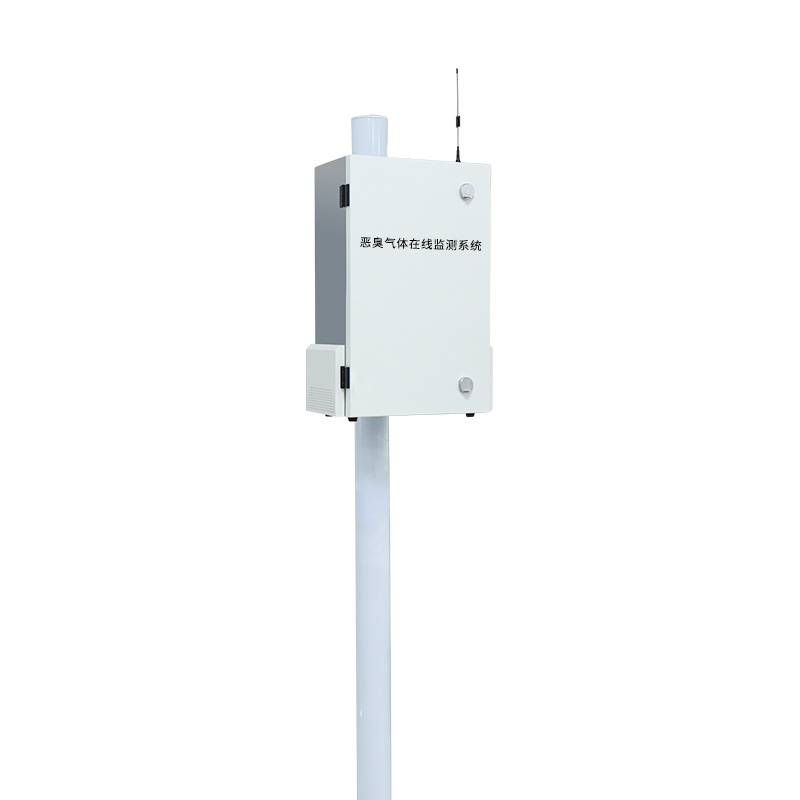
Odor Monitoring System is suitable for various complex malodorous gas detection environments
Article source:Weather station time:2025-11-27 09:55:10 viewed:630times
Odor Monitoring System is a real-time device for detecting multiple malodorous gases, capable of measuring parameters such as odor concentration (OU value), ammonia, and hydrogen sulfide. This system is suitable for complex environments such as landfills, sewage treatment plants, and chemical plants, providing data support for environmental management through continuous monitoring, assisting in the control and management of odor pollution.
Odor Monitoring System is an important technological equipment in modern environmental management, specifically designed for continuous monitoring and analysis of various malodorous gases. This system can simultaneously detect multiple odorous substances, including overall odor concentration (OU value) and specific components such as ammonia and hydrogen sulfide, providing a scientific basis for odor pollution control.
In terms of application scope, Odor Monitoring System covers numerous locations that may generate odor pollution. Urban landfills, waste treatment plants, waste-to-energy plants, and waste incineration sites are its main application areas, as these places easily produce complex mixtures of malodorous substances during waste treatment. Sewage treatment plants' aeration tanks and sludge treatment areas also require the installation of such systems. Chemical plants and pharmaceutical factories often emit harmful substances with special odors during production. Livestock farms generate large amounts of ammonia and sulfides due to the decomposition of animal waste. Furthermore, places often overlooked, such as electronics factories, furniture factories, and car dealerships, also release malodorous substances during processes like painting and bonding, requiring corresponding monitoring.
From a technical perspective, Odor Monitoring System typically employs sensor array technology, with different sensors corresponding to different odorous components. Odor concentration detection is often based on semiconductor, electrochemical, or photoionization principles. Ammonia detection commonly uses electrochemical sensors, while hydrogen sulfide detection may use metal oxide semiconductor technology. These sensors are integrated into a single system, capable of working simultaneously without interference. The system's sampling unit continuously draws in ambient air, which is pre-processed and then sent to the detection unit, ultimately converting chemical signals into electrical signals for data analysis.
The design and construction of the system fully consider the complexity of practical applications. The monitoring probes typically have dustproof and waterproof functions, adapting to harsh outdoor weather conditions. The analyzer's casing uses corrosion-resistant materials to withstand the acidic or alkaline gas corrosion common in malodorous environments. The system also includes an automatic calibration function, periodically calibrating with standard gases to ensure long-term monitoring accuracy. In terms of data transmission, most systems support wired or wireless transmission methods, allowing real-time data to be sent to the monitoring center.
In actual operation, the workflow of the Odor Monitoring System system includes sampling, pre-processing, detection, data processing, and transmission. Ambient air is drawn into the system by a sampling pump, and after pre-processing such as filtration and dehumidification, it enters the sensor chamber. After the sensor generates a response, the data acquisition unit digitizes the signal and calculates the concentration values of various pollutants using a built-in algorithm. This data can be stored locally or uploaded to the environmental monitoring platform in real time. When the monitored value exceeds the set threshold, the system automatically issues an alarm, reminding management personnel to take countermeasures.
The selection of the installation location for the Odor Monitoring System system requires consideration of multiple factors. Monitoring points should be located downwind of odor pollutants, avoiding building wake areas, at a certain height above the ground, and should be easily accessible for daily maintenance. In large factory areas, multiple monitoring points are usually required to form a monitoring network to comprehensively understand the distribution of odors within and around the factory.
This monitoring system brings significant benefits to environmental management. It has achieved a shift from manual intermittent monitoring to automatic continuous monitoring, greatly improving the representativeness and reliability of monitoring data. Environmental regulatory departments can use the data provided by the system to implement precise management of pollution sources. Companies can use the monitoring data to optimize production processes and the operating parameters of pollution control facilities, reducing the risk of odor complaints.
With the development of sensor technology and the Internet of Things technology, the Odor Monitoring System system is evolving towards a more precise and intelligent direction. Future systems may integrate more types of sensors, and the detection range will be further expanded. Data analysis capabilities will also be continuously improved, enabling advanced functions such as pollution trend prediction and source tracing analysis.
This paper addresses:https://www.fengtuweather.com/technical/845.html
Related products
Related article
-
Functions of automatic meteorological monitoring station for field microclimate
2024-07-25 -
Dust monitoring and warning system function
2024-01-30 -
Essential Meteorological Parameters: The Foundation of Weather Forecasting and Climate Analysis
2024-11-04 -
Scenic Weather Station: Empowering Tourism with Meteorological Resources
2024-09-26 -
Fighting Against Dust: The Role of Dust Detector in Urban Sustainability
2024-12-18 -
The Hazards of Airborne Particulate Matter (PM) and the Role of PM2.5 Air Quality Monitor
2024-11-14 -
photovoltaic testers High Voltage and Current Field Testing
2026-02-03 -
Forest Fire Detection Provides Automatic Meteorological Monitoring and Forest Fire Warning
2025-12-30