

Product
-
Weather station
-
Road Weather Station
-
Photovoltaic Inspection
-
Atmospheric monitoring
-
Operating condition monitoring
Recommended article
- Odor gas detector Enabling Precision, Round-the-Clock Monitoring of Fugitive Emissions in Industrial Facilities
- Compact Weather Stations: High-Precision Field Monitoring for Diverse Scenarios
- Shandong Fengtu, a renowned manufacturer of environmental monitoring instruments, supplies a wide range of field and online monitoring equipment
- Weather Monitoring Equipment enables high-precision, automated environmental parameter monitoring in field settings
- Introduction to the Principles, Applications, and Technical Specifications of Speed enforcement system
- Forest Weather Station Facilitates Precise Monitoring and Scientific Prevention of Forest Fires
Contact us
Shandong Fengtu IOT Technology Co., Ltd
Sales Manager:Ms. Emily Wang
Cel,Whatsapp,Wechat:+86 15898932201
Email:info@fengtutec.com
Add:No. 155 Optoelectronic Industry Accelerator, Gaoxin District, Weifang, Shandong, China
How EL series of DC power supply Solves the EL Testing Challenge in Photovoltaic Power Plants
Article source:Weather station time:2026-05-18 10:16:13 viewed:268times
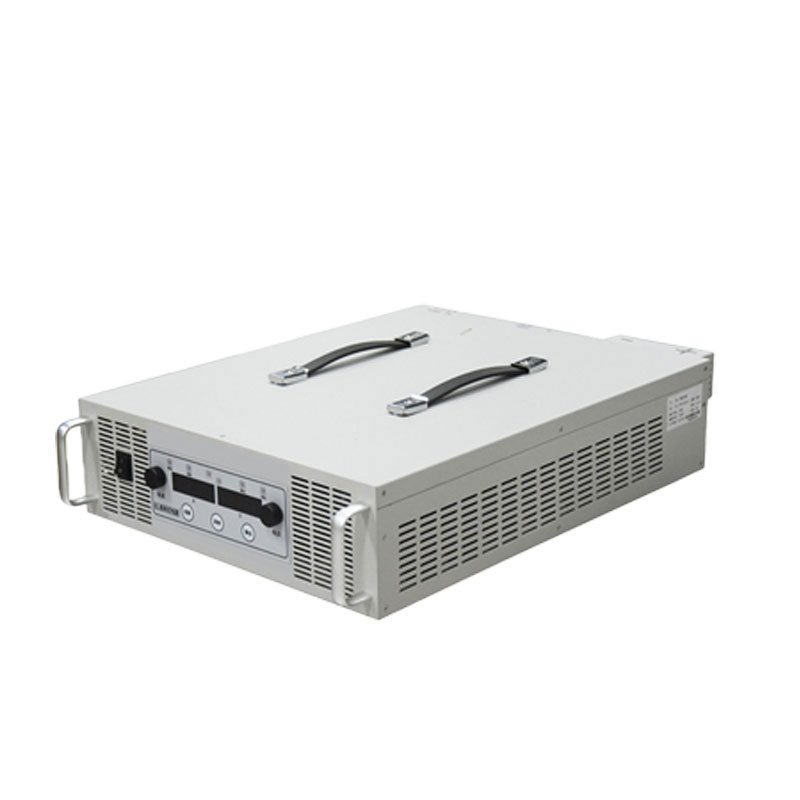
EL series of DC power supply is specifically developed for the reverse-energizing characteristics of photovoltaic power plant strings. It converts AC power into DC power, inputting it to the solar panels to excite electroluminescence, allowing for safe power-on of the entire string of modules. The voltage and current are highly adjustable, supporting multi-module series testing.
EL series of DC power supply is a programmable DC power supply device designed for the reverse-energizing characteristics of photovoltaic power plant strings. Traditional photovoltaic EL testing requires disassembling and powering each module individually, which is cumbersome and inefficient. EL series of DC power supply changes this testing method. This power supply can be directly connected to both ends of the photovoltaic string, converting the on-site AC power into DC power and applying it to the series-connected solar panels. This excites the semiconductor materials inside the modules to emit near-infrared light, which, combined with an infrared camera, completes EL imaging testing. This synchronous power-on method for the entire string eliminates the need to disconnect individual modules, significantly shortening the test preparation time. It is particularly suitable for scenarios requiring extensive testing, such as power plant construction acceptance and operation and maintenance inspections.
The technical specifications of EL series of DC power supply cover power supply requirements from single modules to entire strings of modules. Commonly available models offer output voltage ranges from 0 to 1500V, current outputs from 0 to 10A, and power outputs up to 16kW, sufficient for testing power supplies for up to 30 photovoltaic modules connected in series. Regarding voltage and current accuracy, some high-end models achieve levels of 0.001V and 0.001A, with power stability controlled within ±0.002%. This level of accuracy ensures that the power supply can adaptively match output parameters when modules of different power ratings are connected in series, avoiding module damage or image distortion due to voltage and current deviations. Users can manually or programmatically switch between high and low currents according to testing needs, enabling targeted stimulation of different types of defects. For example, high-current testing is used to reveal microcracks and broken grids, while low-current testing is used to identify PID and mixed-band issues.
Safety protection mechanisms are one of the core features that distinguish EL series of DC power supply from ordinary DC power supplies. Photovoltaic modules may still retain reverse voltage after power generation stops; directly connecting them to a regular power supply may cause backflow and equipment damage. To address this issue, EL series of DC power supply incorporates a reverse current protection module with a set reverse current impedance threshold, automatically disconnecting the circuit when the reverse current from the photovoltaic module reaches a safe threshold. Furthermore, the device integrates multiple mechanisms including short-circuit protection, reverse connection protection, programmable buffer protection, overload protection, overheat protection, and input voltage fluctuation protection. The programmable buffer protection employs a buffered power-on/off design to prevent large currents from directly impacting the photovoltaic panel and causing diode breakdown; this design is particularly important in multi-module series scenarios.
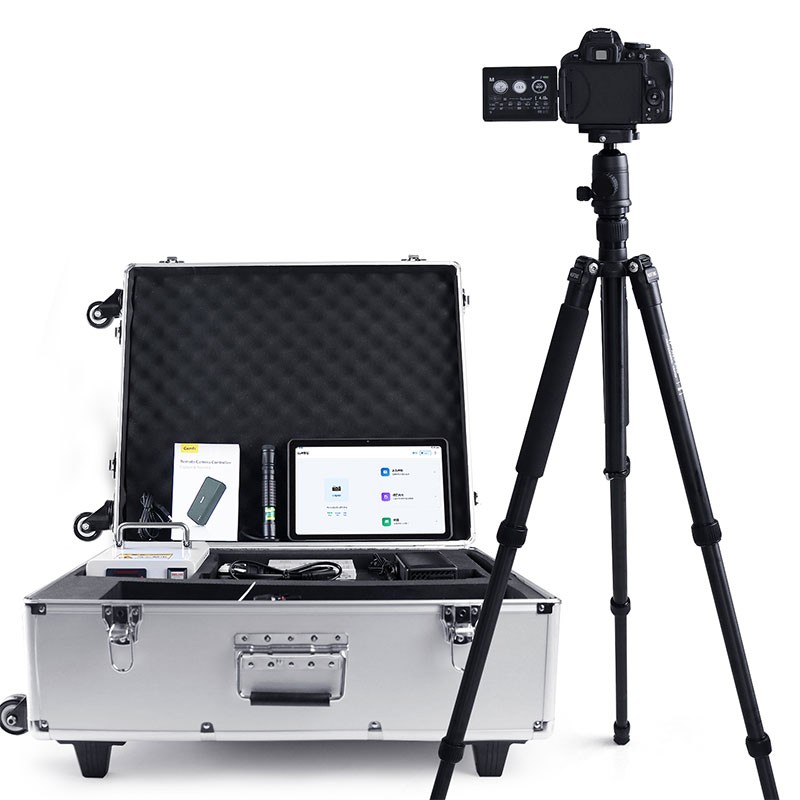
In field applications, EL series of DC power supply has been widely used in full-scale inspection projects and routine maintenance testing of photovoltaic power plants. The device can be powered on by connecting to combiner boxes, inverters, string ports, or module ports without modifying the existing power plant wiring. A constant-temperature control module supporting 24-hour uninterrupted operation allows it to adapt to testing operations under various climatic conditions. Some models also feature a 4G Wi-Fi transceiver system and APP IoT control functionality, allowing testing personnel to remotely set power parameters and perform power-on/off operations via tablet, achieving one-click imaging in conjunction with infrared camera detection. In actual operation and maintenance, regular testing using EL series of DC power supply can effectively detect potential faults such as microcracks and PID effects, allowing for the early replacement of aging components, which helps improve the power generation efficiency of the power plant and extend the service life of the components.
This paper addresses:https://www.fengtuweather.com/technical/942.html
Related products
Related article
-
Handheld Radar SpeedGun Supports Both Manual and Automatic Sampling Modes
2026-04-30 -
The Mobile Edge in Meteorology: Vehicle - Mount Weather Stations
2025-04-07 -
The Link between Weather and Forest Fires: Unveiled by Forestry Weather Station
2024-10-14 -
Radar speed gun with Printing Function for Mobile Speed Enforcement
2026-01-27 -
The price of fully automatic mini weather stations varies from 3900 to 9800 yuan depending on the number of monitored parameters
2026-05-15 -
Taming Dust Pollution with the Dust Monitoring System
2025-01-24 -
Are field microclimate observatories useful?
2024-04-15 -
Meteorological Science Popularization in Schools: Campus Weather Station Introduction
2024-10-21