

Product
-
Weather station
-
Road Weather Station
-
Photovoltaic Inspection
-
Atmospheric monitoring
-
Operating condition monitoring
Recommended article
- Electrical Power Analyzer enables multi-channel power grid parameter acquisition and the detection of harmonics and unbalance
- Shandong Fengtu, a manufacturer of meteorological stations, offers high-precision weather observation equipment designed for field use
- Series power supply for EL-Based Internal Defect Detection in Photovoltaic Modules
- Shandong Fengtu, a manufacturer of meteorological monitoring instruments, produces advanced weather observation equipment
- Odor gas detector On-site Monitoring of Odorous Pollutants in Compliance with the GB14554 Standard
- Integrated Four-Parameter Weather Station for Field Meteorological Data Collection (Temperature, Humidity, Wind Speed, and Wind Direction)
Contact us
Shandong Fengtu IOT Technology Co., Ltd
Sales Manager:Ms. Emily Wang
Cel,Whatsapp,Wechat:+86 15898932201
Email:info@fengtutec.com
Add:No. 155 Optoelectronic Industry Accelerator, Gaoxin District, Weifang, Shandong, China
Application Analysis of Road Weather Information System
Article source:Weather station time:2025-11-20 09:58:01 viewed:723times
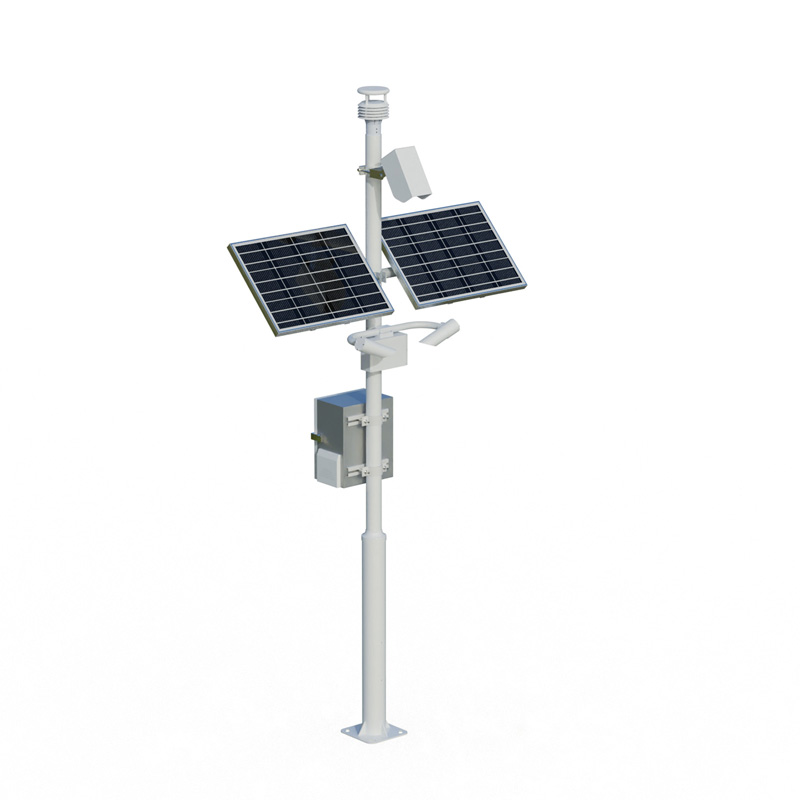
Road Weather Information System utilizes an integrated road weather station, monitoring visibility, wind speed, wind direction, temperature, humidity, atmospheric pressure, rainfall, and road surface conditions through ultrasonic sensors and atmospheric visibility meters.
Combining meteorological observation equipment, data acquisition, processing, and communication technologies, Road Weather Information System provides real-time weather information, capable of determining the presence of standing water, snow, or ice on the road surface. Its aim is to enhance the support capabilities of transportation meteorological services, promote technological innovation in transportation meteorology, and improve safety in the transportation sector.
The core equipment of Road Weather Information System is an integrated road weather station. This weather station integrates multiple sensors, including an ultrasonic integrated sensor for measuring wind speed and direction, and an atmospheric visibility meter for monitoring visibility. In addition, the weather station is equipped with temperature, humidity, and atmospheric pressure sensors, as well as a rain gauge and a road surface condition detection device. These sensors work together to comprehensively collect meteorological data along the transportation route. The system converts the sensor signals into digital information through a data acquisition module, processes the data, and transmits it to the monitoring center via a communication module.
In terms of monitoring functions, the system can monitor visibility parameters in real time. Visibility data is particularly important for transportation scenarios such as highways, airports, and ports, directly impacting traffic safety management decisions. Wind speed and direction monitoring uses ultrasonic principles, eliminating the need for mechanical rotating parts, thus improving measurement accuracy and reliability. Temperature, humidity, and atmospheric pressure monitoring data helps analyze trends in meteorological conditions. Rainfall monitoring records precipitation intensity and cumulative rainfall, providing a basis for flood control and drainage. Road surface condition monitoring is a distinctive feature of the system, using dedicated sensors to determine the presence of standing water, snow, or ice on the road surface. This information is of great value in preventing traffic accidents.
The technical architecture of Road Weather Information System includes multiple layers. The sensing layer consists of various sensors responsible for raw data acquisition. The transmission layer uses wired or wireless communication methods to send field data to the data center. The processing layer performs quality control, analysis, and storage of the collected data. The application layer provides data display, early warning issuance, and decision support functions. The entire system adopts a modular design for easy maintenance and expansion. In terms of communication, the system supports multiple transmission methods such as 4G/5G, fiber optics, and microwave, ensuring the timeliness and reliability of data transmission.
This system plays a significant role in improving transportation meteorological service capabilities. By real-time monitoring of meteorological elements and road conditions, the system provides accurate decision-making basis for traffic management departments. When dangerous conditions such as low visibility, strong winds, and road icing are detected, the system automatically generates warning information, prompting the implementation of control measures such as speed limits and road closures. At the same time, the accumulated monitoring data can be used to analyze traffic weather patterns, providing a reference for road planning, design, and maintenance management. In promoting technological innovation in traffic meteorology, this system has facilitated the deep integration of meteorological monitoring technology and intelligent transportation systems, and promoted the improvement and development of relevant technical standards.
The application scenarios of Road Weather Information System are very broad. In the field of highways, the system is deployed in key sections to monitor meteorological changes in real time, ensuring driving safety. In urban roads, monitoring data can be used for intelligent traffic signal control, optimizing traffic flow organization. Special road sections such as bridges and tunnels are more sensitive to meteorological conditions and require a professional monitoring system. Airports and ports, as transportation hubs, can install this system to promptly grasp local meteorological information and ensure operational safety. In addition, the system can also be applied to railway and water transportation, forming a comprehensive traffic weather monitoring network.
In actual operation, Road Weather Information System requires regular maintenance and calibration to ensure the accuracy of monitoring data. The installation location of sensors needs to be scientifically selected to avoid interference from the local environment. Data processing algorithms need to be continuously optimized to improve the accuracy of early warnings. With the development of new technologies such as the Internet of Things and artificial intelligence, Road Weather Information System is evolving towards intelligence and networking. In the future, the system will have stronger data analysis capabilities, able to predict meteorological changes and provide more advanced early warning services.
In summary, Road Weather Information System provides professional support for traffic safety management by integrating various monitoring equipment and technical means. The system's real-time monitoring and early warning functions help reduce the impact of meteorological factors on traffic operations and improve the efficiency and safety of transportation. With the advancement of technology and the accumulation of application experience, Road Weather Information System will play an increasingly important role in the construction of intelligent transportation.
This paper addresses:https://www.fengtuweather.com/company/840.html
Related products
Related article
-
Scenic Weather Station: Empowering Negative Oxygen Ion Marketing in Tourist Attractions
2025-07-01 -
EL series of DC power supply Completes EL Inspection of Internal Defects in Photovoltaic Power Plant Modules
2026-08-31 -
The price of small weather stations varies depending on their model and configuration
2026-08-06 -
Evaluating Photovoltaic Module Quality with Portable EL Detectors
2025-08-04 -
What do weather station monitoring systems bring to agriculture?
2024-02-23 -
How Negative Ion Monitoring Enhances Air Quality and Boosts Tourism in Forest Areas
2024-12-31 -
What are the main classifications and common equipment of meteorological instruments?
2026-02-25 -
Odor Monitoring System is suitable for various complex malodorous gas detection environments
2025-11-27