

Product
-
Weather station
-
Road Weather Station
-
Photovoltaic Inspection
-
Atmospheric monitoring
-
Operating condition monitoring
Recommended article
- Electrical Power Analyzer enables multi-channel power grid parameter acquisition and the detection of harmonics and unbalance
- Shandong Fengtu, a manufacturer of meteorological stations, offers high-precision weather observation equipment designed for field use
- Series power supply for EL-Based Internal Defect Detection in Photovoltaic Modules
- Shandong Fengtu, a manufacturer of meteorological monitoring instruments, produces advanced weather observation equipment
- Odor gas detector On-site Monitoring of Odorous Pollutants in Compliance with the GB14554 Standard
- Integrated Four-Parameter Weather Station for Field Meteorological Data Collection (Temperature, Humidity, Wind Speed, and Wind Direction)
Contact us
Shandong Fengtu IOT Technology Co., Ltd
Sales Manager:Ms. Emily Wang
Cel,Whatsapp,Wechat:+86 15898932201
Email:info@fengtutec.com
Add:No. 155 Optoelectronic Industry Accelerator, Gaoxin District, Weifang, Shandong, China
Automatic ambient air monitoring stations to protect the ecological environment
Article source:Weather station time:2024-07-31 09:04:48 viewed:503times
With the continuous progress of information technology, traditional manual monitoring methods have been difficult to keep up with the requirements of modern ecological and environmental management in terms of speed, accuracy and efficiency. Automated and intelligent monitoring means are gradually becoming a new trend in the field of environmental monitoring. By utilizing these advanced monitoring technologies, the key role of the monitoring system in environmental supervision can be more effectively brought into play.
Through automated and intelligent monitoring systems, not only can the efficiency of data collection be improved, but also the accuracy and real-time nature of the data can be ensured, thus providing strong support for environmental management and decision-making.
Automated Environmental Monitoring Stations (AEMS) are a suite of facilities integrating advanced technologies specifically designed to perform unattended continuous monitoring tasks of environmental quality. These stations are capable of automating sample collection, real-time measurements, instantaneous data transmission, and subsequent processing to build an efficient monitoring system. They usually consist of fixed monitoring stations, but sometimes include mobile monitoring units for flexible deployment. All these monitoring units are connected to a central monitoring center and a data communication network, enabling comprehensive and continuous monitoring of environmental quality.
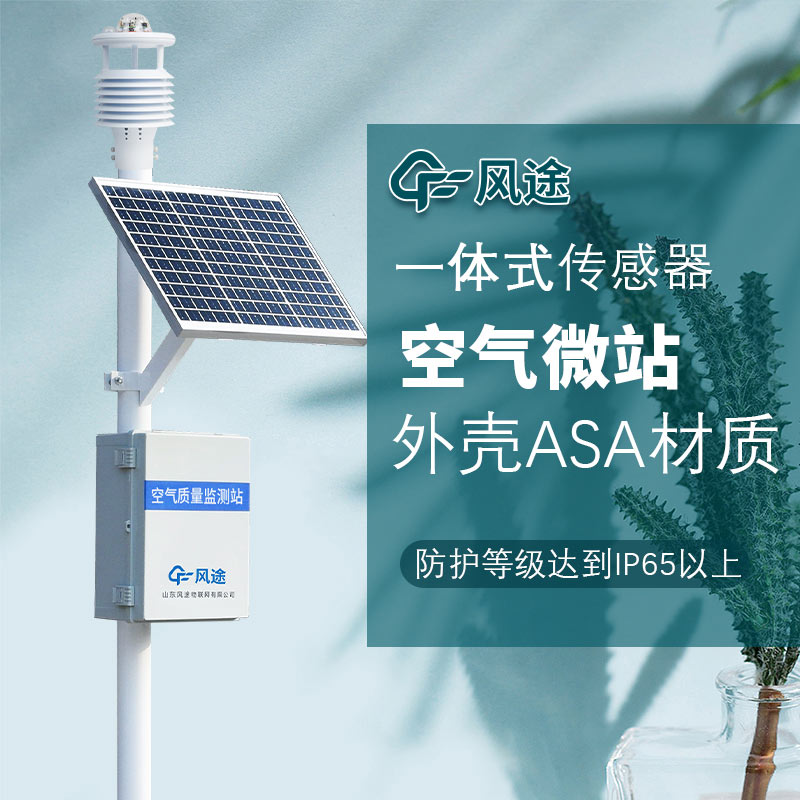
Automatic ambient air monitoring stations use automated instruments to continuously monitor air conditions, monitoring and analyzing data in real time. These instruments monitor fine particulate matter (PM2.5 and PM10), hazardous gases (e.g., sulfur dioxide, nitrogen dioxide, carbon monoxide, and ozone), as well as basic meteorological conditions (wind speed, wind direction, temperature, humidity, and barometric pressure). The monitoring data will be sent directly to the environmental protection authorities via the Internet, helping them to quickly understand the air quality and take necessary measures.
This paper addresses:https://www.fengtuweather.com/industry/456.html
Related products

Related article
-
System framework for digital weather stations
2024-05-10 -
Series power supply for Photovoltaic Power Plant Module Defect Detection
2025-12-16 -
Fengtu Automated Weather Monitoring for the Modern Farm
2024-08-13 -
Forestry Weather Stations: Building a Multi-Dimensional Fire Prevention Barrier for Forests via "Technological Prevention + Human Prevention"
2025-07-22 -
Power Quality Monitoring Equipment Enables Precise Real-Time Monitoring of Multi-Dimensional Power Grid Parameters
2026-09-07 -
Weather Monitoring Equipment Low-Power Design and Advantages for Field Applications
2026-03-30 -
FT-SW2: An River Level Monitoring Station
2025-11-06 -
Automated systems for meteorological stations
2024-04-18