

Product
-
Weather station
-
Road Weather Station
-
Photovoltaic Inspection
-
Atmospheric monitoring
-
Operating condition monitoring
Recommended article
- Odor gas detector Enabling Precision, Round-the-Clock Monitoring of Fugitive Emissions in Industrial Facilities
- Compact Weather Stations: High-Precision Field Monitoring for Diverse Scenarios
- Shandong Fengtu, a renowned manufacturer of environmental monitoring instruments, supplies a wide range of field and online monitoring equipment
- Weather Monitoring Equipment enables high-precision, automated environmental parameter monitoring in field settings
- Introduction to the Principles, Applications, and Technical Specifications of Speed enforcement system
- Forest Weather Station Facilitates Precise Monitoring and Scientific Prevention of Forest Fires
Contact us
Shandong Fengtu IOT Technology Co., Ltd
Sales Manager:Ms. Emily Wang
Cel,Whatsapp,Wechat:+86 15898932201
Email:info@fengtutec.com
Add:No. 155 Optoelectronic Industry Accelerator, Gaoxin District, Weifang, Shandong, China
Weather Monitoring Equipment Low-Power Design and Advantages for Field Applications
Article source:Weather station time:2026-03-30 10:12:21 viewed:342times
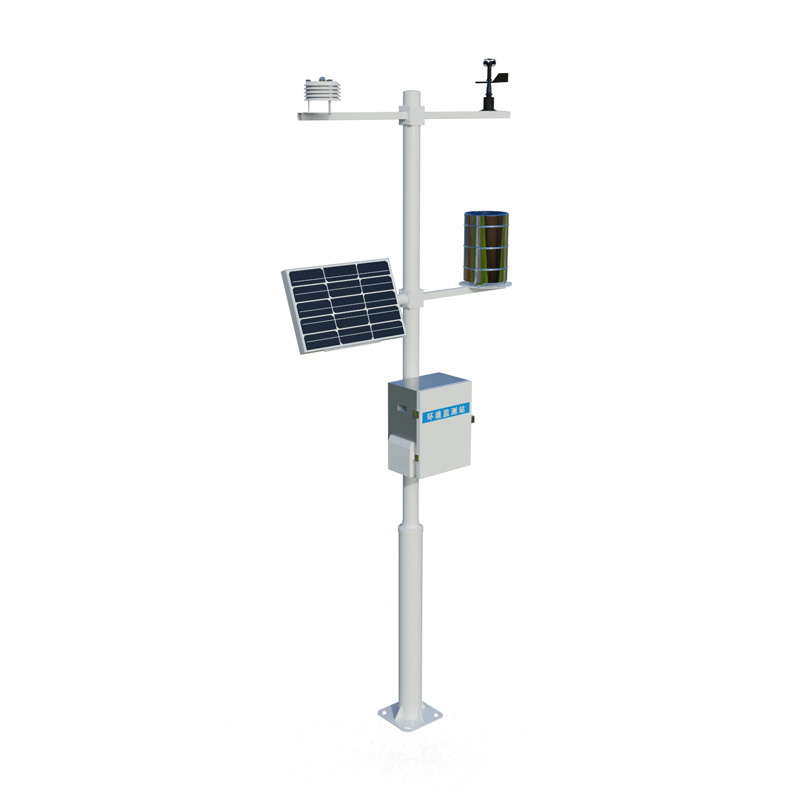
The Weather Monitoring Equipment features a low-power data logger and solar charge management system, supporting both GPRS and wired data transmission. Equipped with a 3-meter carbon steel mounting pole and a waterproof enclosure, the unit allows for sensor expansion to facilitate remote meteorological data transmission and SMS alerts for threshold breaches, thereby meeting the requirements for unattended monitoring in remote field environments.
The design of the Weather Monitoring Equipment prioritizes balancing power consumption with the continuity of data acquisition. At the system's core lies a low-power data logger with a static power consumption of less than 1 mA, enabling the device to operate continuously for extended periods—powered solely by solar panels—in remote areas lacking access to mains electricity. By utilizing Maximum Power Point Tracking (MPPT) technology, solar charging efficiency is optimized, ensuring that the internal battery can sustain device operation even during overcast or rainy weather. Regarding data transmission, the device comes standard with a GPRS networking module, allowing it to automatically upload meteorological parameters to a cloud platform upon startup; additionally, it retains Bluetooth and wired transmission interfaces to accommodate diverse deployment environments.
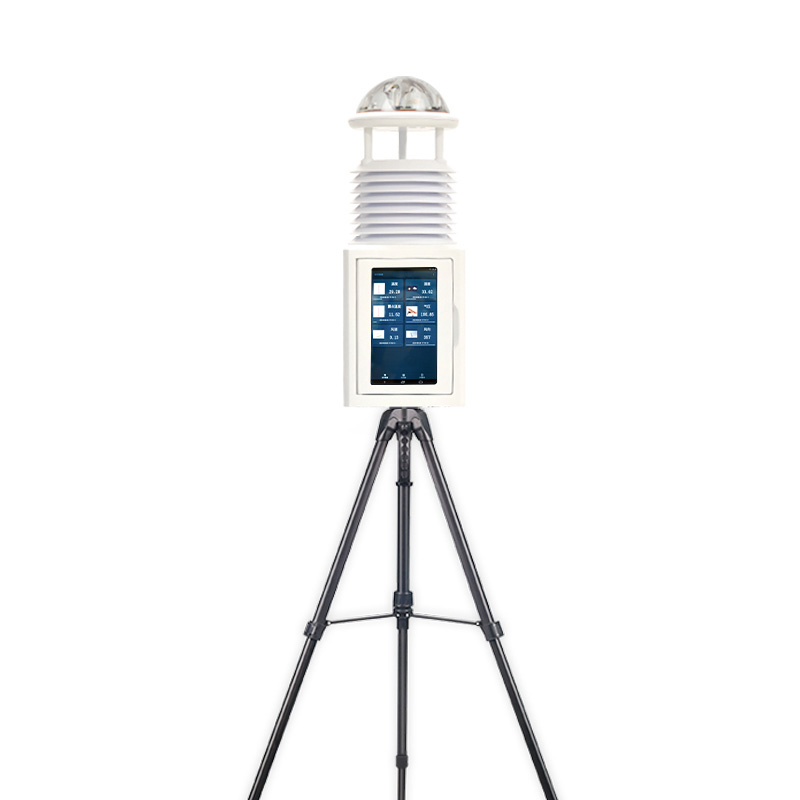
Structurally, the Weather Monitoring Equipment features a 3-meter carbon steel mounting pole designed with a two-section flanged connection. This design facilitates easy transport and rapid on-site assembly, significantly reducing the time required for infrastructure setup. The external protective enclosure is constructed from stainless steel and boasts an IP66 waterproof rating, effectively shielding the internal data logger and battery pack against outdoor corrosion and oxidation. User interaction is facilitated via a 7-inch Android touchscreen interface; the screen features a built-in quad-core processor and internal storage, supporting both local data viewing and parameter configuration.
In terms of monitoring scalability, the Weather Monitoring Equipment includes a reserved Modbus-485 sensor interface, allowing for the integration of additional sensors—such as those for soil temperature and humidity, UV radiation, or particulate matter—as specific requirements dictate. Regarding early warning mechanisms, the system supports an SMS alert function: whenever monitored values exceed pre-configured thresholds, an alert message is automatically dispatched to a designated mobile phone number. This integrated design eliminates the complexity typically associated with installing multiple independent devices, making it ideally suited for applications such as agricultural weather stations, environmental monitoring sites, and geological hazard early warning systems in mountainous regions. The entire system—from power supply, data acquisition, and transmission to structural protection—is constructed using a modular approach, which not only ensures data accuracy but also significantly reduces the workload associated with long-term maintenance.
This paper addresses:https://www.fengtuweather.com/industry/902.html
Related products
Related article
-
All-in-one vehicle-mounted weather station
2024-04-10 -
What are the four conditions of agricultural monitoring?
2024-02-26 -
GNSS Monitoring Stations for Reservoir Subsidence: High-Precision, All-Weather Solutions
2025-06-06 -
Dust Monitoring Equipment & Supporting Data Platform
2025-09-03 -
Road weather stations to monitor road weather
2024-04-03 -
Introduction to the Features of the Small Automatic Weather Station
2024-09-09 -
Fengtu's Photovoltaic Module Dust Monitoring System: Ensuring Solar Efficiency through Precision Technology
2024-10-28 -
Inhalable Dust Continuous Tester: A Portable Solution for Dust Concentration Monitoring
2025-01-08