

Product
-
Weather station
-
Road Weather Station
-
Photovoltaic Inspection
-
Atmospheric monitoring
-
Operating condition monitoring
Recommended article
- Electrical Power Analyzer enables multi-channel power grid parameter acquisition and the detection of harmonics and unbalance
- Shandong Fengtu, a manufacturer of meteorological stations, offers high-precision weather observation equipment designed for field use
- Series power supply for EL-Based Internal Defect Detection in Photovoltaic Modules
- Shandong Fengtu, a manufacturer of meteorological monitoring instruments, produces advanced weather observation equipment
- Odor gas detector On-site Monitoring of Odorous Pollutants in Compliance with the GB14554 Standard
- Integrated Four-Parameter Weather Station for Field Meteorological Data Collection (Temperature, Humidity, Wind Speed, and Wind Direction)
Contact us
Shandong Fengtu IOT Technology Co., Ltd
Sales Manager:Ms. Emily Wang
Cel,Whatsapp,Wechat:+86 15898932201
Email:info@fengtutec.com
Add:No. 155 Optoelectronic Industry Accelerator, Gaoxin District, Weifang, Shandong, China
Enhancing Traffic Safety with the Road Weather Information System
Article source:Weather station time:2024-09-06 09:13:49 viewed:505times
With the rapid expansion of the highway network, the challenges that come with it are also increasing. The frequency and intensity of extreme weather events such as typhoons and heavy rains are rising year by year, posing a serious threat to traffic safety and leading to a continuous increase in the incidence of traffic accidents. Therefore, how to effectively reduce traffic safety accidents caused by adverse meteorological conditions under the framework of intelligent transportation systems has become an urgent problem to be solved.
The Road Weather Information System is designed to provide real-time and accurate meteorological information for traffic safety and efficiency. This system can monitor traffic meteorological and environmental elements in real-time through intelligent sensor technology, information collection technology, communication technology, and early warning release technology. These data are transmitted to remote traffic integrated management platforms, mobile phone users, early warning information screens, etc., via wireless IoT technologies such as 4G/5G, NB-IoT, LoRa, etc., ensuring timely delivery and extensive coverage of information.
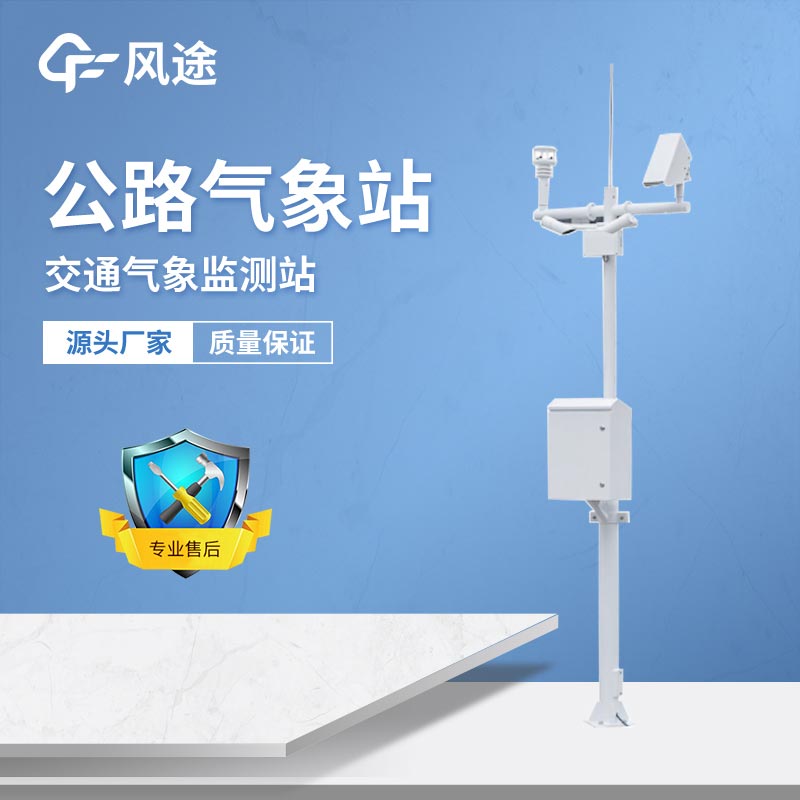
The Road Weather Information System typically includes several parts: road meteorological stations, intelligent control devices, video monitoring, and cloud platforms. These devices and systems can monitor weather conditions on the road in real-time, such as wind speed, wind direction, rainfall, etc., and transmit the data to remote monitoring centers. In this way, highway management departments and drivers can receive timely meteorological information to help ensure driving safety.
Meteorological stations can also conduct in-depth analysis of meteorological data closely related to transportation, build problem diagnosis models, and thus enhance the capabilities of traffic management departments in resource allocation, public decision-making, and public services.
This paper addresses:https://www.fengtuweather.com/industry/486.html
Related products
Related article
-
Electrical Power Analyzer enables multi-channel power grid parameter acquisition and the detection of harmonics and unbalance
2026-10-23 -
Building a Meteorological Station: Steps and Considerations
2024-10-09 -
Harnessing the Power of Dust Detector for a Dust-Free Environment
2024-12-24 -
Combatting Urban Dust Pollution: The Role of Dust Detectors in Real-Time Monitoring
2025-05-27 -
Which IoT devices are suitable for weather stations?
2024-03-13 -
Odor Monitoring Equipment Covers Nine Odor Pollutant Indicators
2026-05-11 -
Small Automatic Weather Station: MEMS-based Portable Solution for Real-time Environmental Monitoring
2025-10-14 -
Power Quality Measurement For Rapid On-Site Troubleshooting of Electrical Circuits
2026-04-20